CDL Research, University Medical Center Utrecht, Utrecht 3584CX, The Netherlands.
Department of Experimental Cardiology, University Medical Center Utrecht, Utrecht 3584CX, The Netherlands.
Nano Lett. 2021 Feb 24;21(4):1888-1895. doi: 10.1021/acs.nanolett.1c00094. Epub 2021 Feb 11.
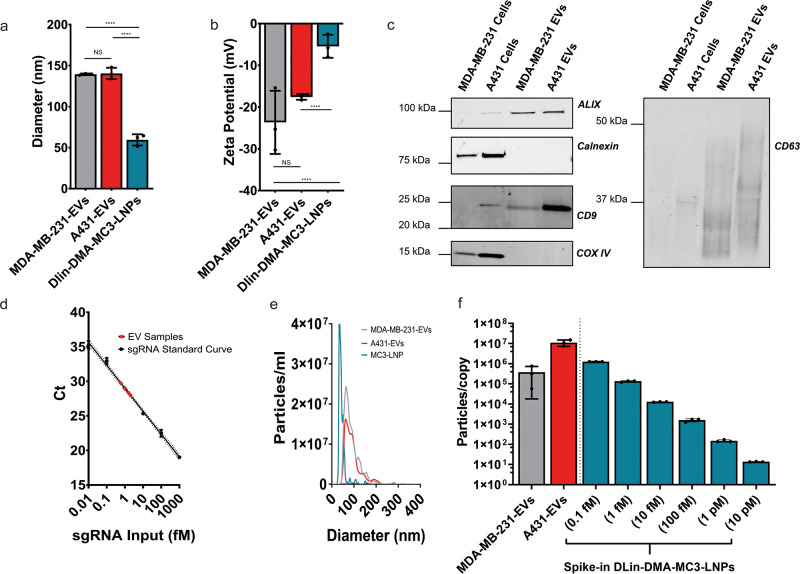
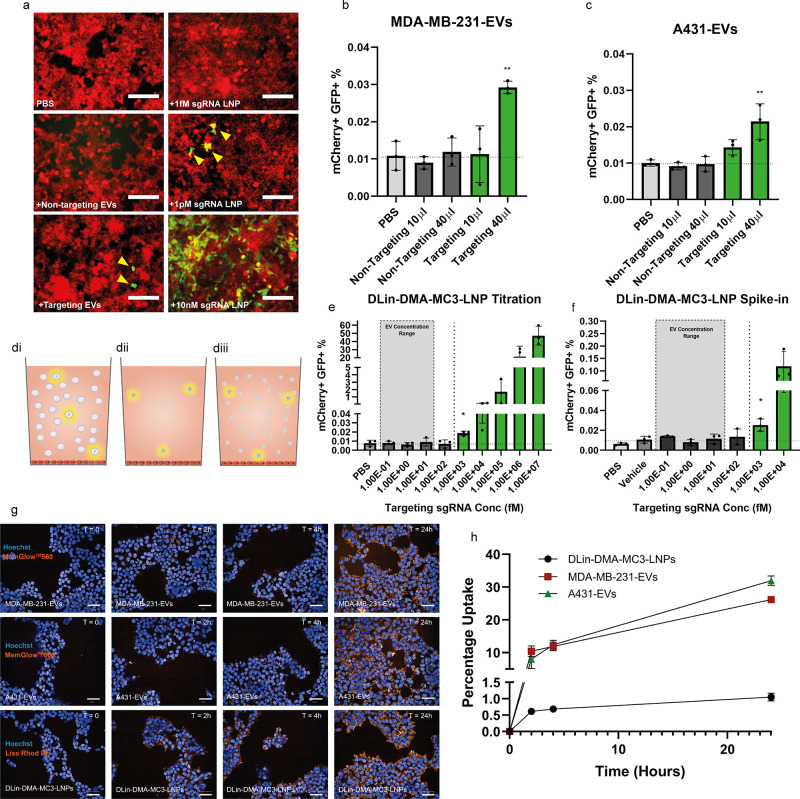
RNA therapeutics have high potential that is yet to be fully realized, largely due to challenges involved in the appropriate delivery to target cells. Extracellular vesicles (EVs) are lipid bound nanoparticles released by cells of all types and possess numerous features that may help overcome this hurdle and have emerged as a promising RNA delivery vehicle candidate. Despite extensive research into the engineering of EVs for RNA delivery, it remains unclear how the intrinsic RNA delivery efficiency of EVs compares to currently used synthetic RNA delivery vehicles. Using a novel CRISPR/Cas9-based RNA transfer reporter system, we compared the delivery efficiency of EVs to clinically approved state-of-the-art DLin-MC3-DMA lipid nanoparticles and several transfection reagents. We found that EVs delivered RNA several orders of magnitude more efficiently than these synthetic systems. This finding supports the continued research into EVs as potential RNA delivery vehicles.
RNA 疗法具有很高的潜力,但尚未得到充分实现,这主要是由于将其递送到靶细胞的过程中存在挑战。细胞外囊泡 (EVs) 是由各种类型的细胞释放的带有脂质的纳米颗粒,具有许多特性,可能有助于克服这一障碍,并已成为一种很有前途的 RNA 递药载体候选物。尽管对 EVs 进行了大量的 RNA 递药工程研究,但仍不清楚 EVs 的内在 RNA 递药效率与目前使用的合成 RNA 递药载体相比如何。本研究使用一种新型基于 CRISPR/Cas9 的 RNA 转移报告系统,比较了 EVs 与临床批准的最先进的 DLin-MC3-DMA 脂质纳米颗粒和几种转染试剂的递药效率。我们发现,EVs 递药 RNA 的效率比这些合成系统高几个数量级。这一发现支持继续研究 EVs 作为潜在的 RNA 递药载体。