Department of Internal Medicine, "St. Spiridon" Emergency Clinical Hospital, 700111 Iași, Romania.
Faculty of Medicine, "Gr. T. Popa" University of Medicine and Pharmacy, 700115 Iași, Romania.
Medicina (Kaunas). 2021 Jan 29;57(2):121. doi: 10.3390/medicina57020121.
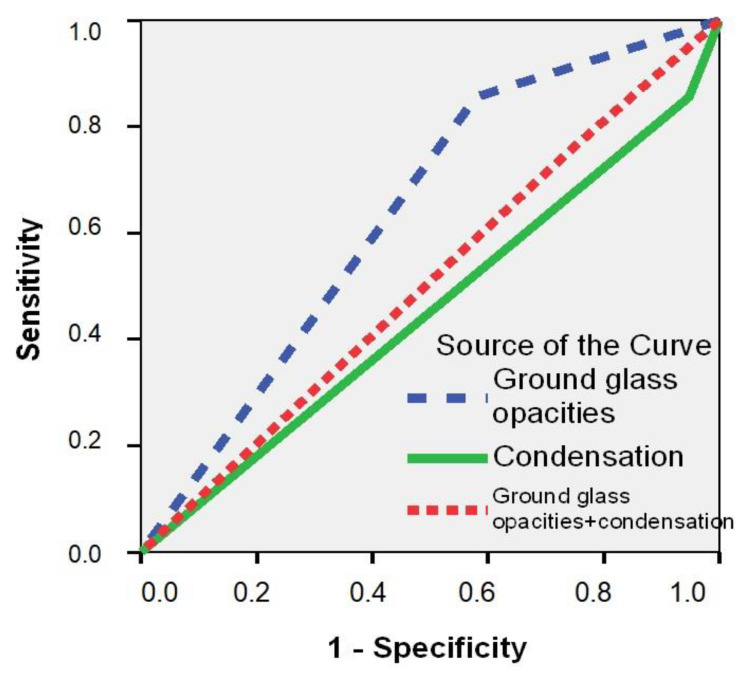
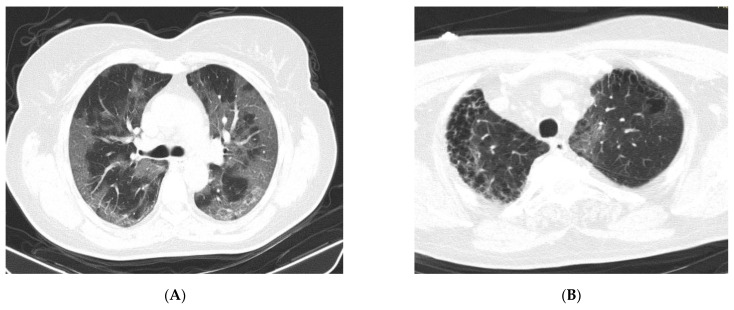
: During the coronavirus disease 2019 (COVID-19) pandemic, patients with chronic diseases suffering exacerbations have required acute medical care. The purpose of our study was to determine useful criteria for the differentiation of patients with acute clinical syndromes and suspicion of severe acute respiratory syndrome coronavirus 2 (SARS-CoV-2) infection. : This was an observational retrospective study, conducted in an internal medicine clinic from April to May 2020. We collected clinical, biological, and computed tomography (CT) data on patients with exacerbations of chronic diseases and clinical suspicion of SARS-CoV-2 infection. Patients with an already-positive real-time reverse-transcription polymerase chain reaction (RT-PCR) test for SARS-CoV-2 on presentation at the emergency department were excluded from our study. : Of 253 suspected cases, 20 were laboratory-confirmed as having SARS-CoV-2 infection by RT-PCR, whereas COVID-19 diagnosis was ruled out in the remaining 233. Venous thromboembolism (VTE) correlated significantly with COVID-19 diagnosis in suspected patients, while laboratory markers were not significantly different between the two groups. Of the suspected patients, significantly higher percentages of dry cough, fever, myalgias, sore throat, loss of smell and appetite, and ground-glass opacities (GGOs) on CT were found in SARS-CoV-2-positive individuals. : The study demonstrated that, until receiving the result of an RT-PCR test for SARS-CoV-2 (usually 12-24 h), association with VTE as a comorbidity, fever, dry cough, and myalgia as clinical features, and GGO on CT are the main markers for the identification of COVID-19 patients among those suspected with acute clinical syndromes. Our results also provide evidence for doctors not to rely solely on biological markers in the case of suspected SARS-CoV-2 infection in patients with exacerbations of chronic diseases. These data are useful for faster decision-making with regard to suspected COVID-19 patients before receiving RT-PCR test results, thus avoiding keeping patients in crowded emergency departments.
在 2019 年冠状病毒病(COVID-19)大流行期间,患有慢性病且病情加重的患者需要进行急性医疗护理。我们研究的目的是确定区分有急性临床综合征和疑似严重急性呼吸综合征冠状病毒 2(SARS-CoV-2)感染的有用标准。
这是一项观察性回顾性研究,于 2020 年 4 月至 5 月在内科诊所进行。我们收集了患有慢性疾病加重且有 SARS-CoV-2 感染临床疑似的患者的临床、生物学和计算机断层扫描(CT)数据。在急诊科就诊时已进行 SARS-CoV-2 实时逆转录聚合酶链反应(RT-PCR)检测呈阳性的患者被排除在本研究之外。
在 253 例疑似病例中,20 例经 RT-PCR 实验室确认为 SARS-CoV-2 感染,而其余 233 例排除 COVID-19 诊断。疑似患者中静脉血栓栓塞症(VTE)与 COVID-19 诊断显著相关,而两组之间的实验室标志物无显著差异。在疑似患者中,SARS-CoV-2 阳性个体中更常见干咳、发热、肌痛、咽痛、嗅觉和味觉丧失以及磨玻璃影(GGO)。
该研究表明,在获得 SARS-CoV-2 RT-PCR 检测结果(通常为 12-24 小时)之前,将 VTE 作为合并症、发热、干咳和肌痛作为临床特征以及 CT 上的 GGO 与 COVID-19 患者的识别相关联是对患有慢性疾病加重且疑似有急性临床综合征患者进行 COVID-19 患者识别的主要标志物。我们的研究结果还为医生在疑似 SARS-CoV-2 感染的慢性疾病加重患者中,提供了不要仅依赖于生物学标志物的证据。这些数据有助于在获得 RT-PCR 检测结果之前,更快地对疑似 COVID-19 患者做出决策,从而避免让患者滞留在拥挤的急诊室。