Clinic of Psychiatry, Jessenius Faculty of Medicine in Martin, Comenius University in Bratislava, University Hospital Martin, 03659 Martin, Slovakia.
Department of Pharmacology, Jessenius Faculty of Medicine in Martin, Comenius University in Bratislava, 03601 Martin, Slovakia.
Int J Mol Sci. 2021 Jan 29;22(3):1333. doi: 10.3390/ijms22031333.
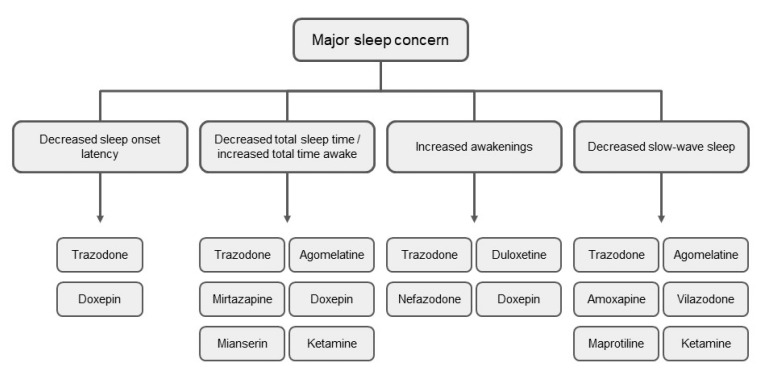
Sleep problems are frequently associated with the principal diagnostic criteria for many mental disorders. Alterations in the sleep of depressive patients are of high clinical significance because continuous sleep problems raise the chance of relapse, recurrence, or suicide, as well as the need for augmenting medications. Most antidepressants have been proven to influence the sleep architecture. While some classes of antidepressants improve sleep, others may cause sleep impairment. The successful treatment of depressive disorder also requires an understanding of the effects of antidepressants on sleep. This article briefly reviews the physiology of sleep and the typical alterations in the sleep architecture in depressive patients and updates the different effects of the majority of antidepressants including novel drugs in clinical practice on sleep. The summary of the updated scientific findings of the relationship between depression and sleep disturbances could be clinically beneficial in choosing the best medication for depressive patients with concurrent sleep disorders.
睡眠问题常与许多精神障碍的主要诊断标准相关。抑郁患者睡眠的改变具有重要的临床意义,因为持续的睡眠问题会增加复发、再发或自杀的风险,以及需要增加药物治疗的可能性。大多数抗抑郁药已被证明会影响睡眠结构。虽然某些类别的抗抑郁药可以改善睡眠,但其他药物可能会导致睡眠障碍。成功治疗抑郁障碍还需要了解抗抑郁药对睡眠的影响。本文简要回顾了睡眠生理学以及抑郁患者睡眠结构的典型改变,并更新了大多数抗抑郁药(包括临床实践中的新型药物)对睡眠的不同影响。总结关于抑郁和睡眠障碍之间关系的最新科学发现,可能有助于临床医生在选择治疗伴有睡眠障碍的抑郁患者的最佳药物时获益。