Red Cross College of Nursing, Chung-Ang University, Seoul, Korea.
Department of Clinical Epidemiology and Biostatistics, Asan Medical Center, University of Ulsan College of Medicine, Seoul, Korea.
BMC Pulm Med. 2021 Feb 11;21(1):56. doi: 10.1186/s12890-021-01424-7.
The effects of comorbidities on chronic obstructive pulmonary disease (COPD) have been usually studied individually in the past. In this study, we aimed to investigate the comorbidities associated with mortality, the effect of multimorbidity on mortality and other factors associated with mortality among Korean COPD population.
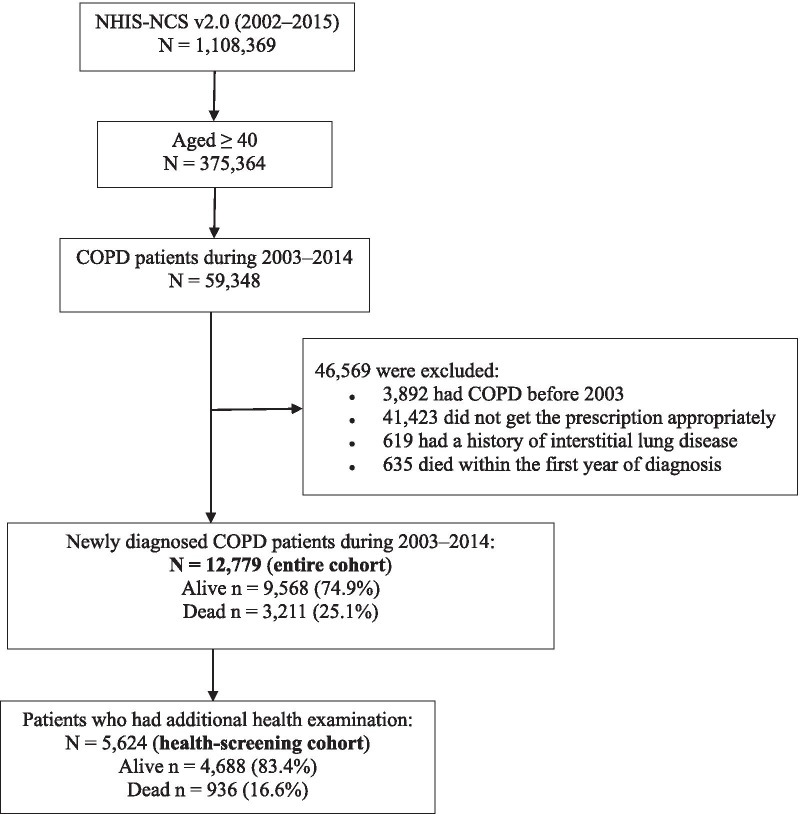
The Korean National Health Insurance Service-National Sample Cohort version 2.0, collected between 2002 and 2015, was used. Among COPD patients [entire cohort (EC), N = 12,779], 44% of the participants underwent additional health examination, and they were analysed separately [health-screening cohort (HSC), N = 5624]. Fifteen comorbidities previously reported as risk factors for mortality were studied using Cox proportional hazards regression models.
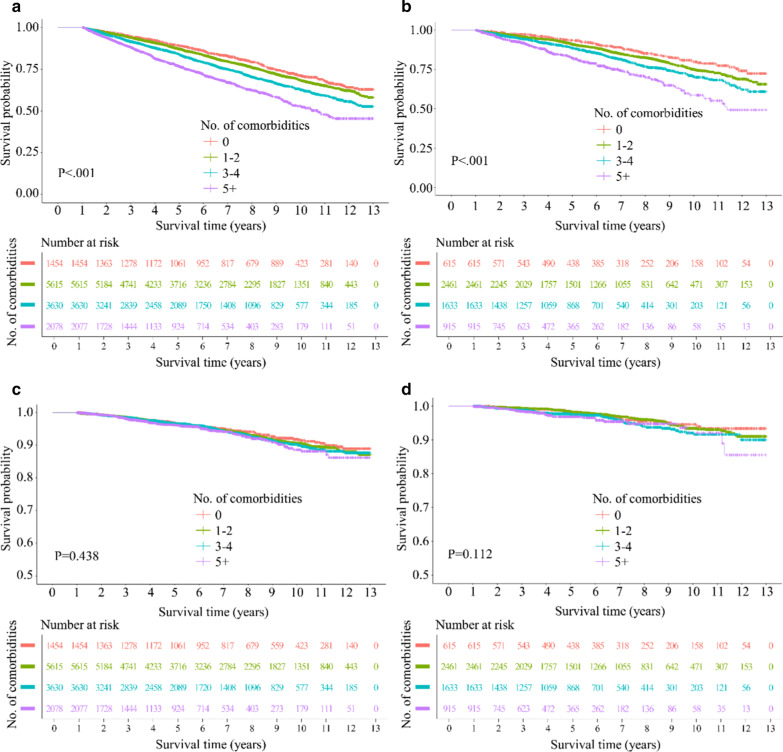
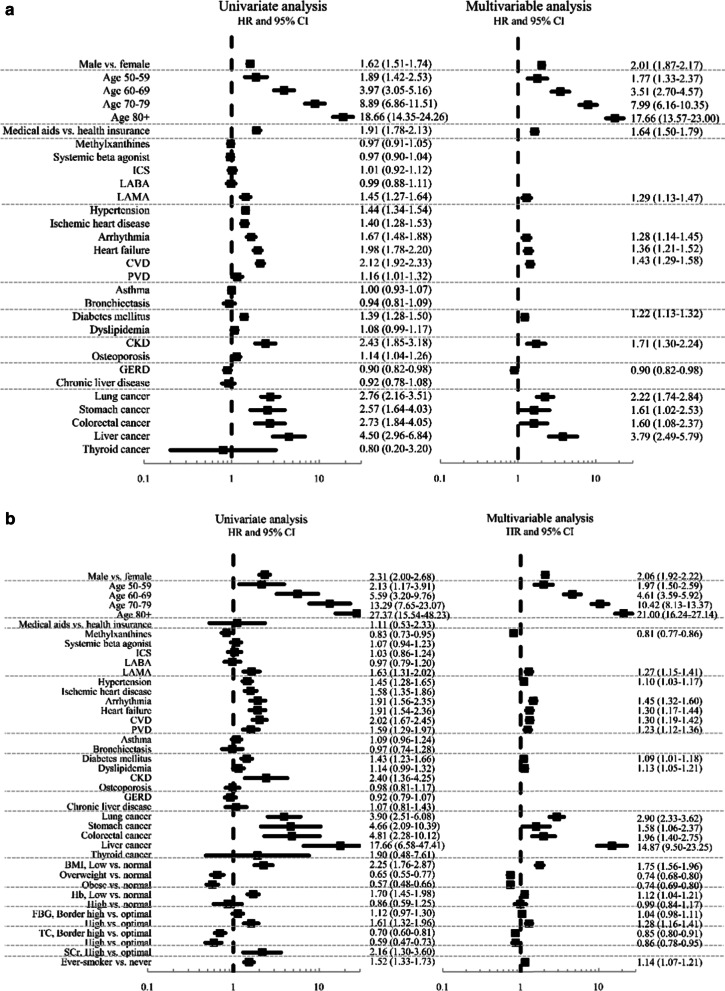
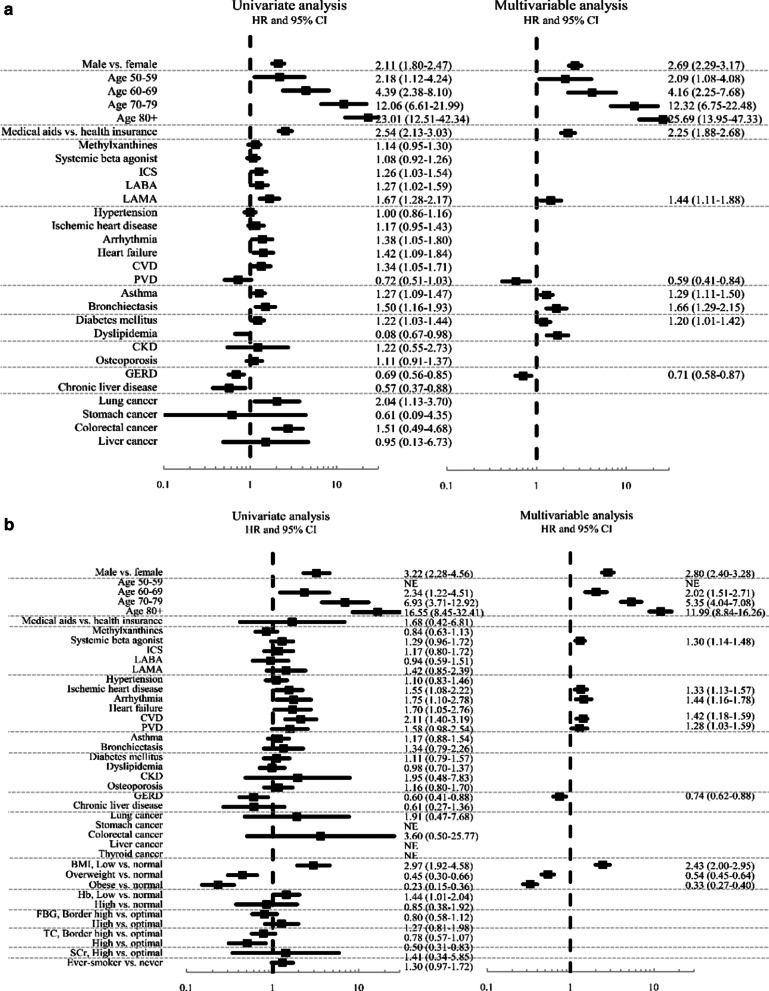
Total mortality rates were 38.6 per 1000 person-years (95% CI 37.32-40.01) and 27.4 per 1000 person-years (95% CI 25.68-29.22) in EC and HSC, respectively. The most common causes of death were disease progression, lung cancer, and pneumonia. Only some of the comorbidities had a direct impact on mortality. Multimorbidity, assessed by the number of comorbid diseases, was an independent risk factor of all-cause mortality in both cohorts and was a risk factor of respiratory mortality only in HSC. The Kaplan-Meier analysis showed significant differences in survival trajectories according to the number of comorbidities in all-cause mortality but not in respiratory mortality. Low BMI, old age and male sex were independent risk factors for both mortalities in both cohorts.
The number of comorbidities might be an independent risk factor of COPD mortality. Multimorbidity contributes to all-cause mortality in COPD, but the effect of multimorbidity is less evident on respiratory mortality.
过去,合并症对慢性阻塞性肺疾病(COPD)的影响通常是单独研究的。在这项研究中,我们旨在调查与死亡率相关的合并症、多种合并症对死亡率的影响以及韩国 COPD 人群中与死亡率相关的其他因素。
使用了 2002 年至 2015 年间收集的韩国国家健康保险服务-国家样本队列 2.0 版。在 COPD 患者(整个队列[EC],N=12779)中,44%的参与者接受了额外的健康检查,并对他们进行了单独分析[健康筛查队列[HSC],N=5624]。使用 Cox 比例风险回归模型研究了以前报道为死亡率危险因素的 15 种合并症。
EC 和 HSC 的总死亡率分别为 38.6/1000 人年(95%CI 37.32-40.01)和 27.4/1000 人年(95%CI 25.68-29.22)。最常见的死亡原因是疾病进展、肺癌和肺炎。只有一些合并症对死亡率有直接影响。在两个队列中,通过合并症数量评估的多种合并症是全因死亡率的独立危险因素,而在 HSC 中仅为呼吸死亡率的危险因素。Kaplan-Meier 分析显示,全因死亡率的合并症数量与生存轨迹有显著差异,但在呼吸死亡率方面则无差异。低 BMI、年龄大和男性是两个队列中全因和呼吸死亡率的独立危险因素。
合并症的数量可能是 COPD 死亡率的一个独立危险因素。多种合并症导致 COPD 患者全因死亡率增加,但对呼吸死亡率的影响不太明显。