Department of Pulmonary and Critical Care Medicine, The Affiliated Changzhou Second People's Hospital of Nanjing Medical University, Changzhou, Jiangsu, 213004, People's Republic of China.
Int J Chron Obstruct Pulmon Dis. 2023 Oct 18;18:2289-2303. doi: 10.2147/COPD.S413912. eCollection 2023.
This study was to evaluate the association between C-reactive protein (CRP) to albumin (ALB) ratio (CAR) and the risk of mortality in patients with chronic obstructive pulmonary disease (COPD).
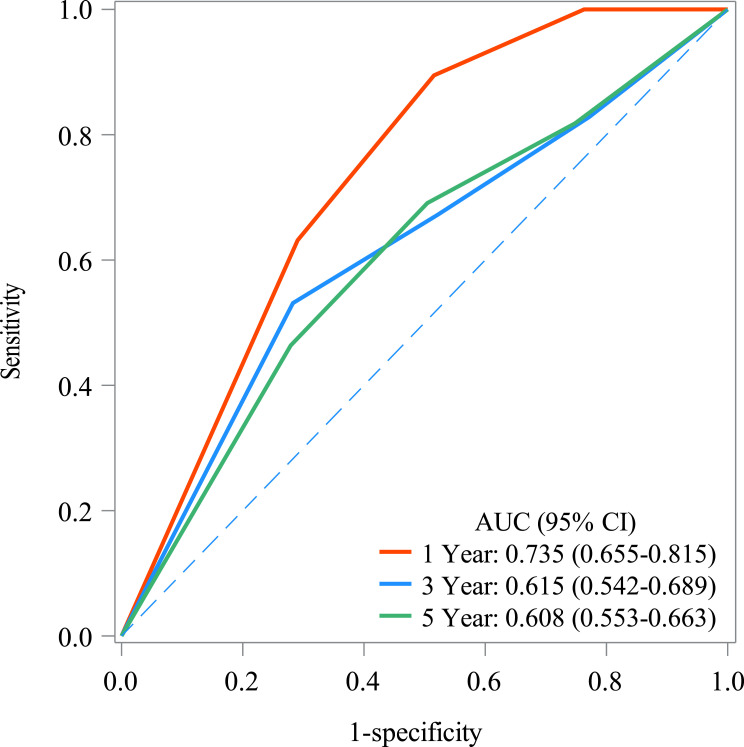
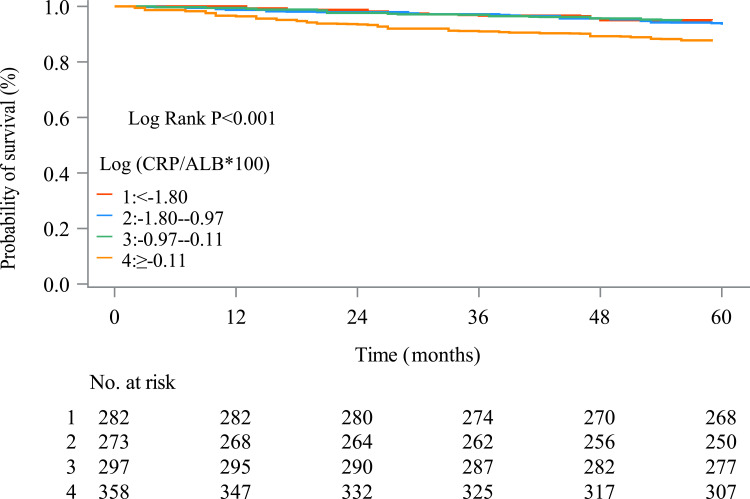
In this retrospective cohort study, clinical data were extracted from the National Institutes of Health National Health and Nutrition Examination Survey (NHANES) database between 2007 and 2010. Cox proportional hazard regressions were performed to assess the association between CAR and 5-year mortality in COPD patients. Subgroup analyses were applied to identify the consistency of the association based on the severity of COPD, gender, body mass index (BMI), smoking status, cardiovascular disease (CVD), and chronic kidney disease (CKD), and diabetes. The area under the curve (AUC) of the receiver operator characteristic (ROC) curve analysis was used to evaluate the predictive performance of CAR.
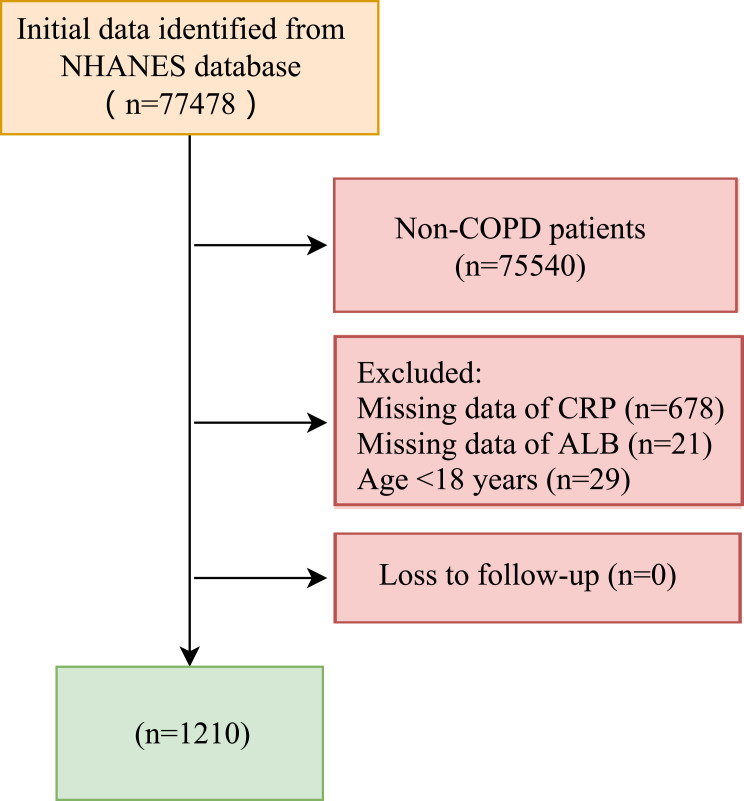
A total of 1210 COPD patients were included, of which 110 COPD patients (9.09%) had 5-year mortality. The mean follow-up was 57.76 (0.33) months. A higher CAR was associated with an increased risk of 5-year mortality in COPD patients [hazard ratio (HR): 1.94, 95% confidence interval (CI): 1.07 to 3.50, =0.029)]. Subgroup analysis showed that the association between CAR and mortality was especially suitable for COPD patients with mild COPD, in COPD patients who were still smoking, in COPD patients with BMI <=29.9 kg/m, in COPD patients who were without CVD, in COPD patients who were without diabetes, and COPD patients who were without CKD. The AUCs of CAR for predicting 1-year, 3-year, and 5-year mortality in COPD patients were 0.735, 0.615, and 0.608, respectively.
CAR is strongly correlated with mortality in patients with COPD and CAR could be served as a prognostic biomarker for patients with COPD. This study may provide a promising prognostic biomarker for risk stratification and clinical management of patients with COPD.
本研究旨在评估 C 反应蛋白(CRP)与白蛋白(ALB)比值(CAR)与慢性阻塞性肺疾病(COPD)患者死亡风险之间的关联。
在这项回顾性队列研究中,从 2007 年至 2010 年的美国国立卫生研究院国家健康和营养检查调查(NHANES)数据库中提取临床数据。采用 Cox 比例风险回归评估 CAR 与 COPD 患者 5 年死亡率之间的关系。进行亚组分析,根据 COPD 的严重程度、性别、体重指数(BMI)、吸烟状况、心血管疾病(CVD)和慢性肾脏病(CKD)以及糖尿病,确定关联的一致性。受试者工作特征(ROC)曲线分析的曲线下面积(AUC)用于评估 CAR 的预测性能。
共纳入 1210 例 COPD 患者,其中 110 例(9.09%)患者在 5 年内死亡。平均随访时间为 57.76(0.33)个月。较高的 CAR 与 COPD 患者 5 年死亡风险增加相关[风险比(HR):1.94,95%置信区间(CI):1.07 至 3.50, =0.029)]。亚组分析表明,CAR 与死亡率之间的关联特别适用于轻度 COPD 患者、仍在吸烟的 COPD 患者、BMI<=29.9 kg/m 的 COPD 患者、无 CVD 的 COPD 患者、无糖尿病的 COPD 患者和无 CKD 的 COPD 患者。CAR 预测 COPD 患者 1 年、3 年和 5 年死亡率的 AUC 分别为 0.735、0.615 和 0.608。
CAR 与 COPD 患者的死亡率密切相关,CAR 可作为 COPD 患者的预后生物标志物。本研究可能为 COPD 患者的风险分层和临床管理提供一种有前途的预后生物标志物。