Department of Pharmaceutics Rajarambapu College of Pharmacy, Kasegaon, Walwa, Sangli, Maharashtra, 415404, India.
Department of Pharmaceutical Chemistry Rajarambapu College of Pharmacy, Kasegaon, Walwa, Sangli, Maharashtra, 415404, India.
J Mater Sci Mater Med. 2021 Feb 12;32(2):19. doi: 10.1007/s10856-021-06489-8.
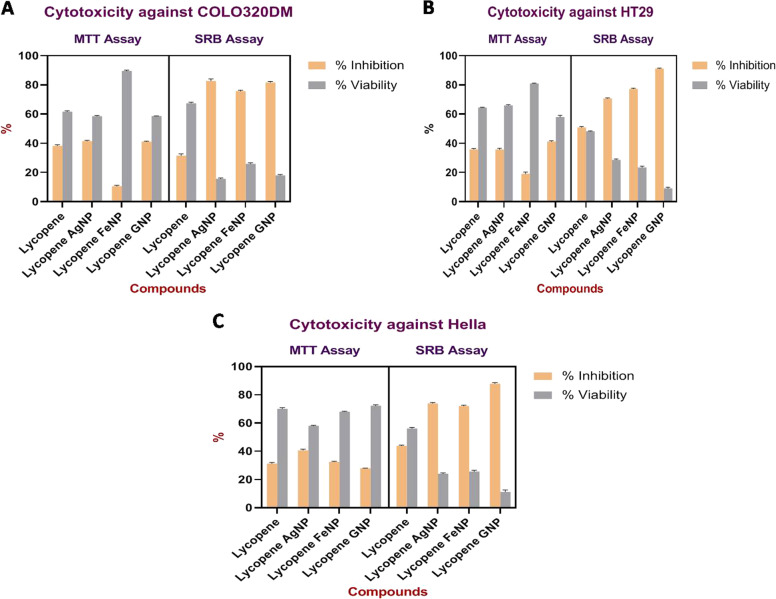
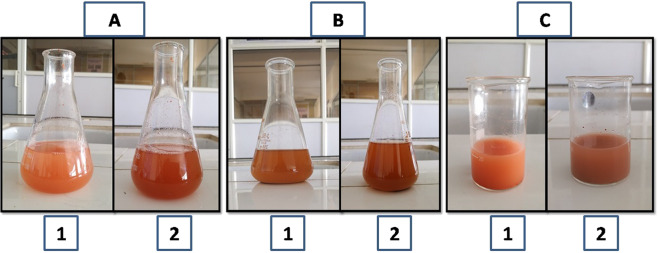
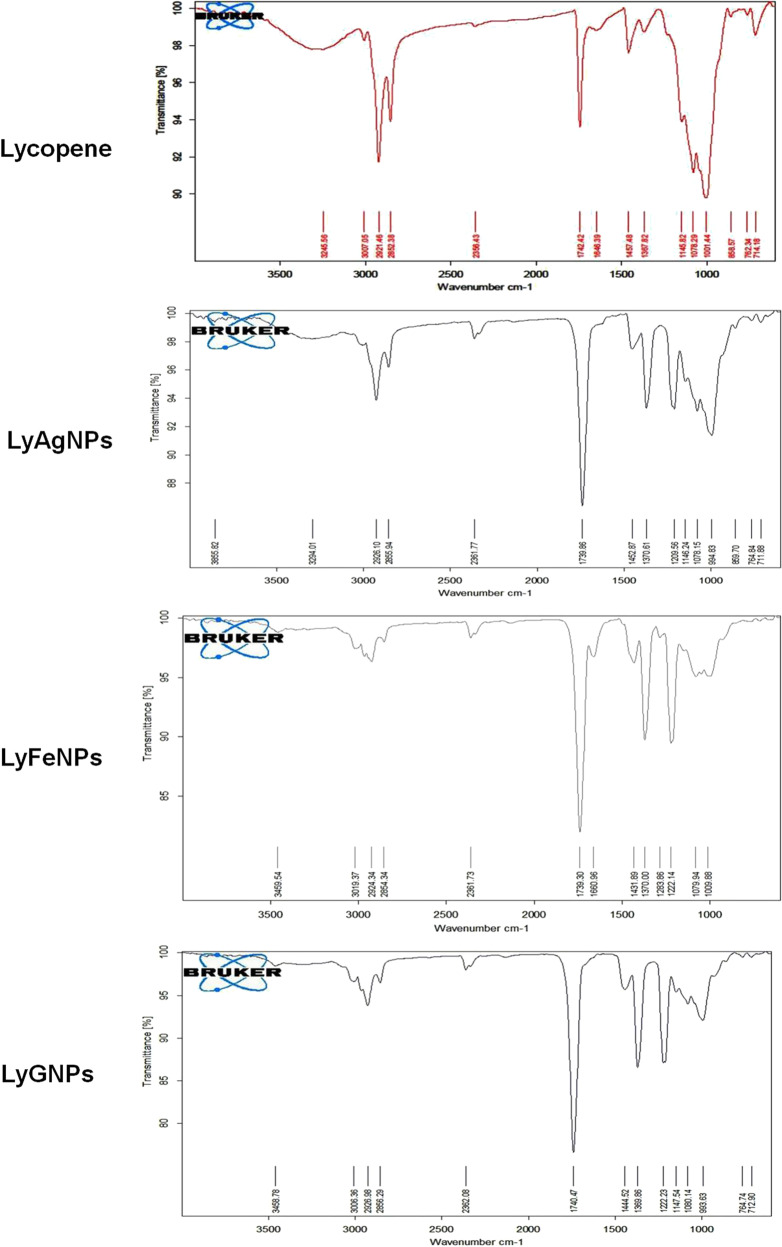
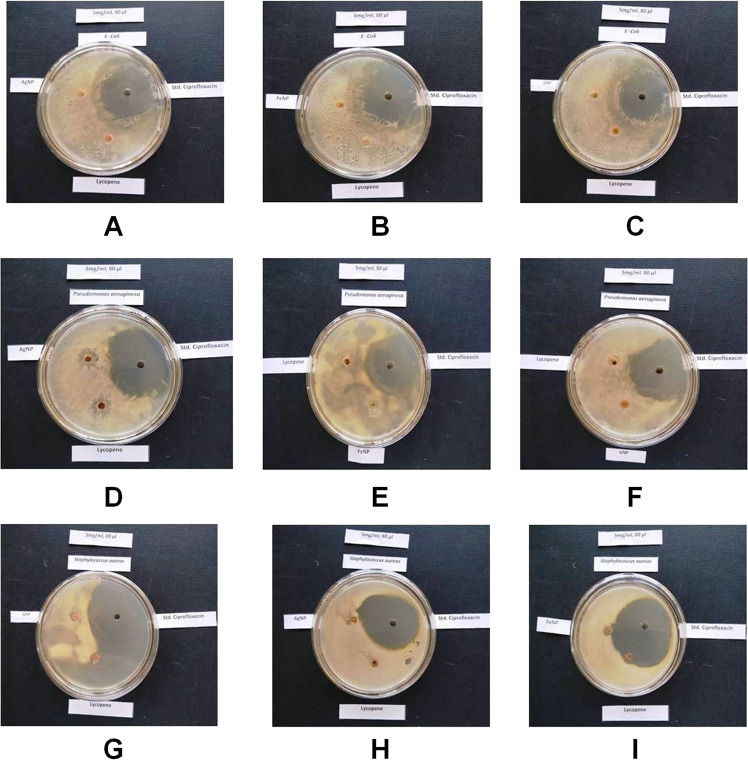
Our study aimed at development of Silver, Iron and Gold nanoparticles of Lycopene isolated from tomato by using green synthesis technique and to evaluate its anticancer potential against colorectal and cervical cancer. Lycopene was extracted by benzene extraction method and the silver, iron and gold nanoparticles were developed by green synthesis method. 1% aqueous extract of isolated Lycopene was mixed with 1% solutions of AgNO, FeCl and HAuCl solutions and incubated at ambient temperature for 3-4 h separately and observed for the color change which is an indicative of formation of the nanoparticles. The prepared nanoparticles were characterized by FTIR, SEM, XRD analysis and evaluated for their antimicrobial potential. The cytotoxicity studies were carried out by in vitro assay like MTT, SRB and Tryphan blue method against Colo 320 DM, HT 29, and Hella. SEM showed nanosized particles of 50-100 nm range, whereas no antimicrobial activity was exhibited by the prepared nanoparticles. In MTT assay the LyAgNP showed maximum 41.41 ± 0.4124% inhibition against COLO320DM, whereas LyGNP exhibited 41.47 ± 0.4469% inhibition against HT 29 and LyAgNP showed 40.9 ± 0.6908% inhibition against Hella cells. In SRB assay LyAgNP showed maximum 82.68 ± 1.1798% inhibition against COLO320DM, whereas LyGNP exhibited maximum 91.21 ± 0.2372% inhibition against HT29 and 87.98 ± 0.5878% inhibition against Hella cells. In tryphan blue assay against COLO320DM, HT29 and Hella cells, the maximum inhibition exhibited by the prepared nanoparticles were observed as LyGNP 83.45 ± 0.4694%, LyAgNP 88.05 ± 0.1870% and LyAgNP65.47 ± 0.4766%. We conclude that the developed nanoparticles of Lycopene exhibited potential anticancer activity against Colorectal and cervical cancer cell as compared with pure Lycopene.
我们的研究旨在通过绿色合成技术从番茄中分离出番茄红素,制备银、铁和金纳米粒子,并评估其对结直肠癌和宫颈癌的抗癌潜力。采用苯提取法提取番茄红素,采用绿色合成法制备银、铁和金纳米粒子。将分离的番茄红素的 1%水溶液与 1%的 AgNO、FeCl 和 HAuCl 溶液混合,在环境温度下分别孵育 3-4 小时,并观察颜色变化,这是形成纳米粒子的指示。用 FTIR、SEM、XRD 分析对制备的纳米粒子进行了表征,并评估了其抗菌潜力。通过体外 MTT、SRB 和台盼蓝法对 Colo 320 DM、HT 29 和 Hella 进行了细胞毒性研究。SEM 显示纳米粒子的尺寸为 50-100nm,而制备的纳米粒子没有显示出抗菌活性。在 MTT 测定中,LyAgNP 对 COLO320DM 的最大抑制率为 41.41±0.4124%,LyGNP 对 HT 29 的最大抑制率为 41.47±0.4469%,LyAgNP 对 Hella 细胞的最大抑制率为 40.9±0.6908%。在 SRB 测定中,LyAgNP 对 COLO320DM 的最大抑制率为 82.68±1.1798%,LyGNP 对 HT29 的最大抑制率为 91.21±0.2372%,对 Hella 细胞的最大抑制率为 87.98±0.5878%。在台盼蓝法测定中,对 COLO320DM、HT29 和 Hella 细胞的最大抑制率为 LyGNP 83.45±0.4694%,LyAgNP 88.05±0.1870%和 LyAgNP65.47±0.4766%。我们的结论是,与纯番茄红素相比,番茄红素制备的纳米粒子对结直肠癌和宫颈癌细胞表现出潜在的抗癌活性。