
使用虚拟现实技术对前颅底脑膜瘤患者进行脑解剖检测和手术规划
Cerebral Anatomy Detection and Surgical Planning in Patients with Anterior Skull Base Meningiomas Using a Virtual Reality Technique.
作者信息
Zawy Alsofy Samer, Nakamura Makoto, Suleiman Ayman, Sakellaropoulou Ioanna, Welzel Saravia Heinz, Shalamberidze David, Salma Asem, Stroop Ralf
机构信息
Department of Medicine, Faculty of Health, Witten/Herdecke University, 58448 Witten, Germany.
Department of Neurosurgery, St. Barbara-Hospital, Academic Hospital of Westfälische Wilhelms-University Münster, 59073 Hamm, Germany.
出版信息
J Clin Med. 2021 Feb 10;10(4):681. doi: 10.3390/jcm10040681.
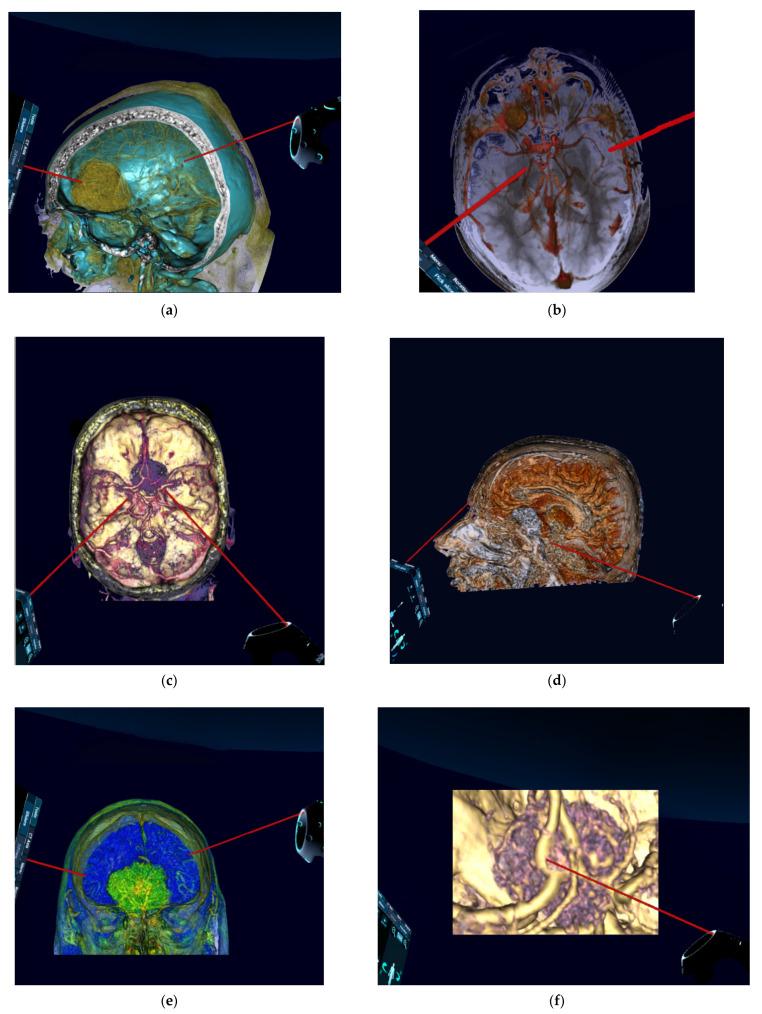
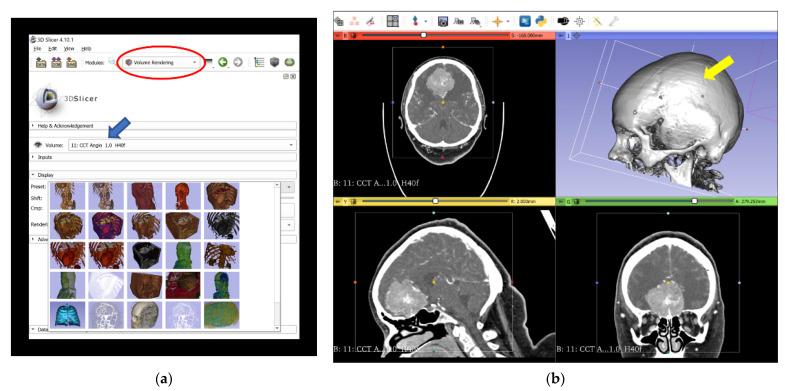
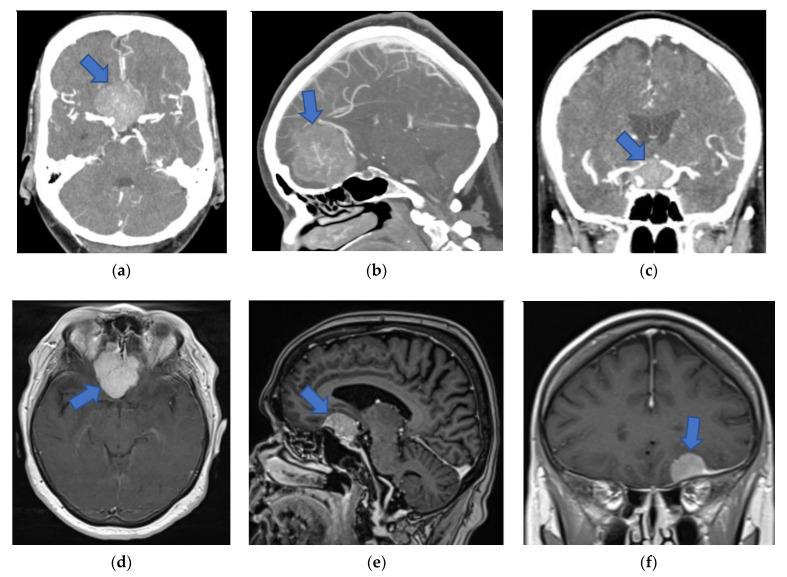
Anterior skull base meningiomas represent a wide cohort of tumors with different locations, extensions, configurations, and anatomical relationships. Diagnosis of these tumors and review of their therapies are inseparably connected with cranial imaging. We analyzed the influence of three-dimensional-virtual reality (3D-VR) reconstructions versus conventional computed tomography (CT) and magnetic resonance imaging (MRI) images (two-dimensional (2D) and screen 3D) on the identification of anatomical structures and on the surgical planning in patients with anterior skull base meningiomas. Medical files were retrospectively analyzed regarding patient- and disease-related data. Preoperative 2D-CT and 2D-MRI scans were retrospectively reconstructed to 3D-VR images and visualized via VR software to detect the characteristics of tumors. A questionnaire of experienced neurosurgeons evaluated the influence of the VR visualization technique on identification of tumor morphology and relevant anatomy and on surgical strategy. Thirty patients were included and 600 answer sheets were evaluated. The 3D-VR modality significantly influenced the detection of tumor-related anatomical structures ( = 0.002), recommended head positioning ( = 0.005), and surgical approach ( = 0.03). Therefore, the reconstruction of conventional preoperative 2D scans into 3D images and the spatial and anatomical presentation in VR models enabled greater understanding of anatomy and pathology, and thus influenced operation planning and strategy.
前颅底脑膜瘤是一组具有不同位置、范围、形态及解剖关系的肿瘤。这些肿瘤的诊断及其治疗评估与颅脑成像密切相关。我们分析了三维虚拟现实(3D-VR)重建与传统计算机断层扫描(CT)及磁共振成像(MRI)图像(二维(2D)和屏幕3D)在前颅底脑膜瘤患者解剖结构识别及手术规划方面的影响。对患者及疾病相关数据的医疗档案进行回顾性分析。将术前2D-CT和2D-MRI扫描图像回顾性重建为3D-VR图像,并通过VR软件进行可视化处理,以检测肿瘤特征。一份由经验丰富的神经外科医生填写的问卷评估了VR可视化技术对肿瘤形态及相关解剖结构识别以及手术策略的影响。纳入30例患者,共评估600份答卷。3D-VR模式对肿瘤相关解剖结构的检测(P = 0.002)、推荐的头部定位(P = 0.005)及手术入路(P = 0.03)有显著影响。因此,将传统术前2D扫描重建为3D图像并在VR模型中进行空间及解剖展示,能够更深入地理解解剖结构和病理情况,从而影响手术规划和策略。
 Zotero 插件