Department of Physiology, Institute for Biological Research "Siniša Stanković"- National Institute of Republic of Serbia, University of Belgrade, 11000, Belgrade, Serbia; Center for Electron Microscopy, Faculty of Biology, University of Belgrade, 11000, Belgrade, Serbia.
Department of Physiology, Institute for Biological Research "Siniša Stanković"- National Institute of Republic of Serbia, University of Belgrade, 11000, Belgrade, Serbia.
Redox Biol. 2021 Jun;42:101887. doi: 10.1016/j.redox.2021.101887. Epub 2021 Feb 4.
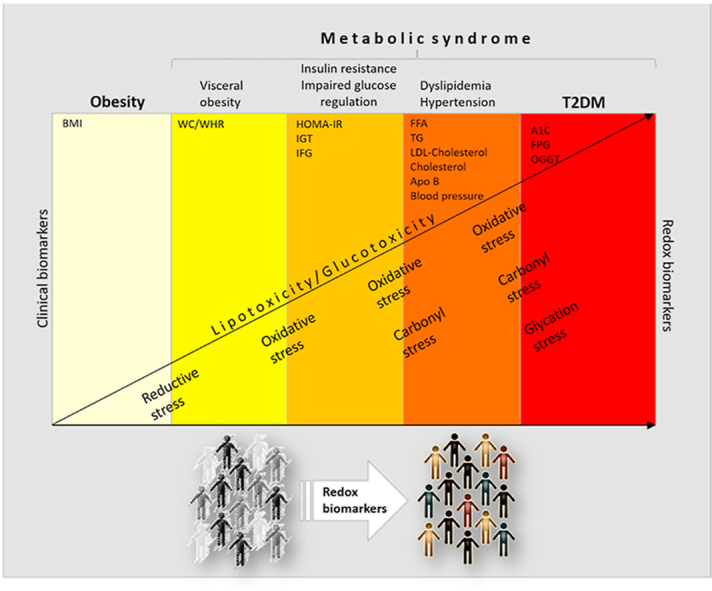
"Life is an instantaneous encounter of circulating matter and flowing energy" (Jean Giaja, Serbian physiologist), is one of the most elegant definitions not only of life but the relationship of redox biology and metabolism. Their evolutionary liaison has created inseparable yet dynamic homeostasis in health, which, when disrupted, leads to disease. This interconnection is even more pertinent today, in an era of increasing metabolic diseases of epidemic proportions such as obesity, metabolic syndrome, and diabetes. Despite great advances in understanding the molecular mechanisms of redox and metabolic regulation, we face significant challenges in preventing, diagnosing, and treating metabolic diseases. The etiological association and temporal overlap of these syndromes present significant challenges for the discrimination of appropriate clinical biomarkers for diagnosis, treatment, and outcome prediction. These multifactorial, multiorgan metabolic syndromes with complex etiopathogenic mechanisms are accompanied by disturbed redox equilibrium in target tissues and circulation. Free radicals and reactive species are considered both a causal factor and a consequence of disease status. Thus, determining the subtypes and levels of free radicals and reactive species, oxidatively damaged biomolecules (lipids, proteins, and nucleic acids) and antioxidant defense components as well as redox-sensitive transcription factors and fluxes of redox-dependent metabolic pathways will help define existing and establish novel redox biomarkers for stratifying metabolic diseases. This review aims to discuss diverse redox/metabolic aspects in obesity, metabolic syndrome, and diabetes, with the imperative to help establish a platform for emerging and future redox-metabolic biomarkers research in precision medicine. Future research warrants detailed investigations into the status of redox biomarkers in healthy subjects and patients, including the use of emerging 'omic' profiling technologies (e.g., redox proteomes, lipidomes, metabolomes, and transcriptomes), taking into account the influence of lifestyle (diet, physical activity, sleep, work patterns) as well as circadian ~24h fluctuations in circulatory factors and metabolites.
“生命是循环物质和流动能量的瞬间相遇”(塞尔维亚生理学家让·贾亚贾),不仅是生命的最优雅定义之一,也是氧化还原生物学和新陈代谢关系的定义。它们的进化联系在健康中创造了不可分割但动态的体内平衡,当这种联系被打破时,就会导致疾病。在当今这个代谢性疾病流行的时代,这种联系更为重要,如肥胖症、代谢综合征和糖尿病等代谢性疾病。尽管在理解氧化还原和代谢调节的分子机制方面取得了巨大进展,但我们在预防、诊断和治疗代谢性疾病方面仍面临重大挑战。这些综合征的病因关联和时间重叠给诊断、治疗和预后预测的适当临床生物标志物的鉴别带来了重大挑战。这些多因素、多器官的代谢综合征具有复杂的病因发病机制,伴随着靶组织和循环中氧化还原平衡的紊乱。自由基和活性物质被认为既是疾病状态的原因,也是疾病状态的结果。因此,确定自由基和活性物质、氧化损伤生物分子(脂质、蛋白质和核酸)和抗氧化防御成分以及氧化还原敏感转录因子和氧化还原依赖代谢途径的通量的亚型和水平,将有助于确定现有的和建立新的氧化还原生物标志物,用于对代谢疾病进行分层。这篇综述旨在讨论肥胖症、代谢综合征和糖尿病中的不同氧化还原/代谢方面,以期为精准医学中新兴和未来的氧化还原代谢生物标志物研究建立一个平台。未来的研究需要详细调查健康受试者和患者氧化还原生物标志物的状况,包括使用新兴的“组学”分析技术(例如,氧化还原蛋白质组学、脂质组学、代谢组学和转录组学),同时考虑生活方式(饮食、体育活动、睡眠、工作模式)以及循环因子和代谢物 24 小时昼夜节律波动的影响。