Center for Neurodegenerative Science, Van Andel Institute, Grand Rapids, MI, USA.
Laboratory of Neurodegenerative Diseases, Institut François Jacob, MIRCen, CEA, CNRS, Fontenay-aux-Roses, France.
J Parkinsons Dis. 2021;11(2):585-603. doi: 10.3233/JPD-202351.
α-Synuclein (α-syn) is the predominant protein in Lewy-body inclusions, which are pathological hallmarks of α-synucleinopathies, such as Parkinson's disease (PD) and multiple system atrophy (MSA). Other hallmarks include activation of microglia, elevation of pro-inflammatory cytokines, as well as the activation of T and B cells. These immune changes point towards a dysregulation of both the innate and the adaptive immune system. T cells have been shown to recognize epitopes derived from α-syn and altered populations of T cells have been found in PD and MSA patients, providing evidence that these cells can be key to the pathogenesis of the disease.ObjectiveTo study the role of the adaptive immune system with respect to α-syn pathology.
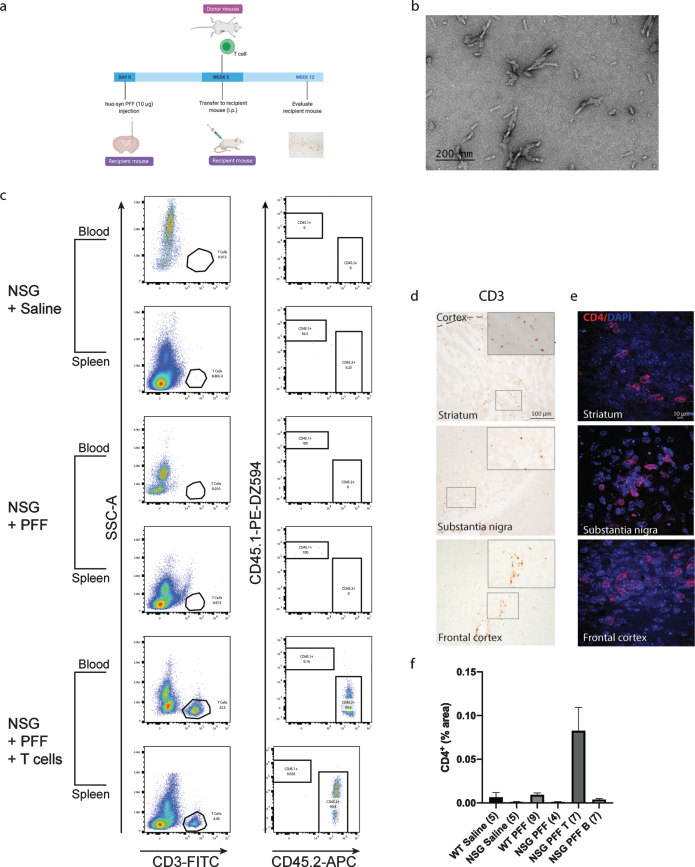
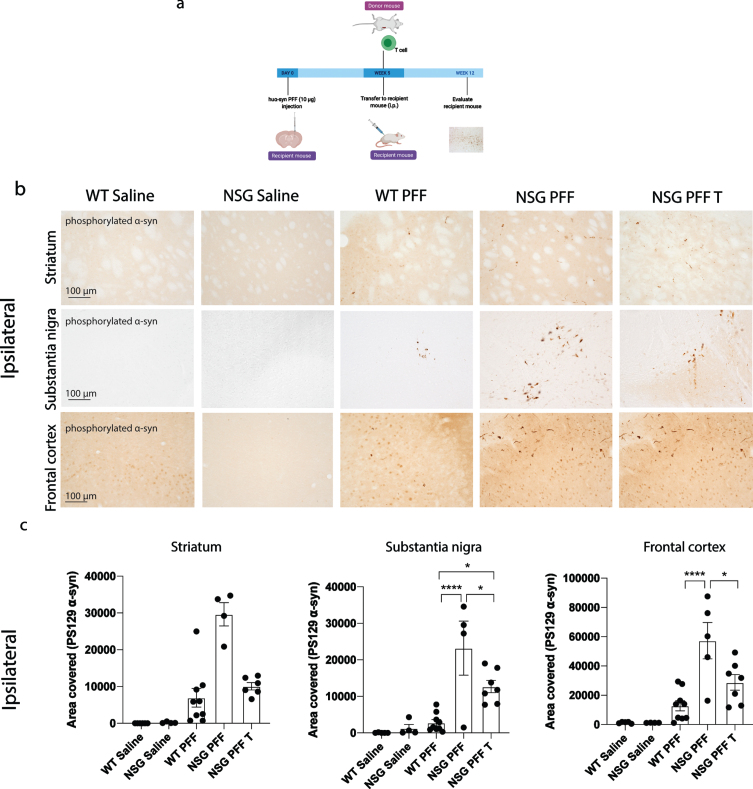
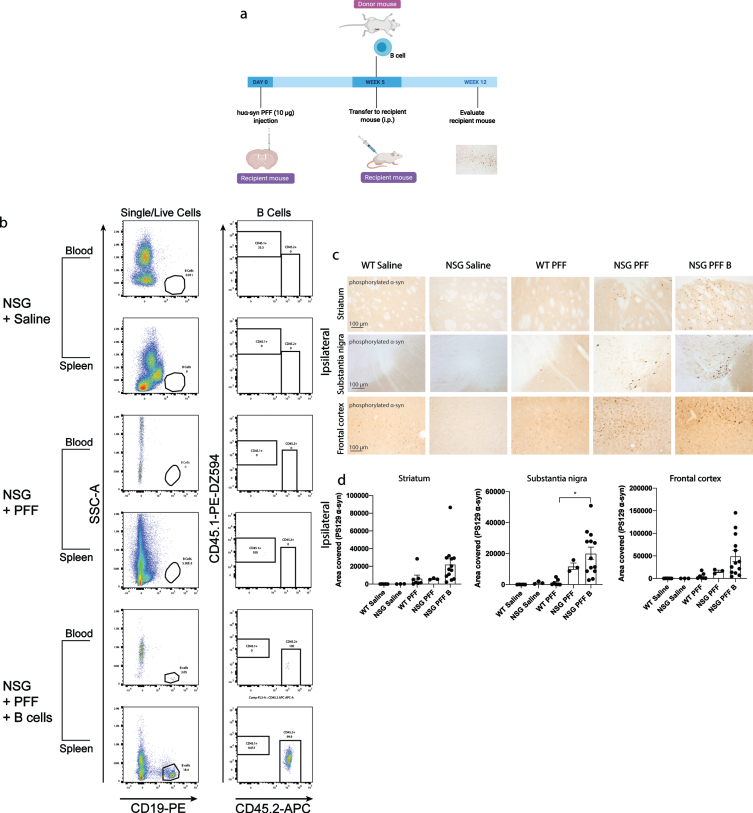
We injected human α-syn preformed fibrils (PFFs) into the striatum of immunocompromised mice (NSG) and assessed accumulation of phosphorylated α-syn pathology, proteinase K-resistant α-syn pathology and microgliosis in the striatum, substantia nigra and frontal cortex. We also assessed the impact of adoptive transfer of naïve T and B cells into PFF-injected immunocompromised mice.
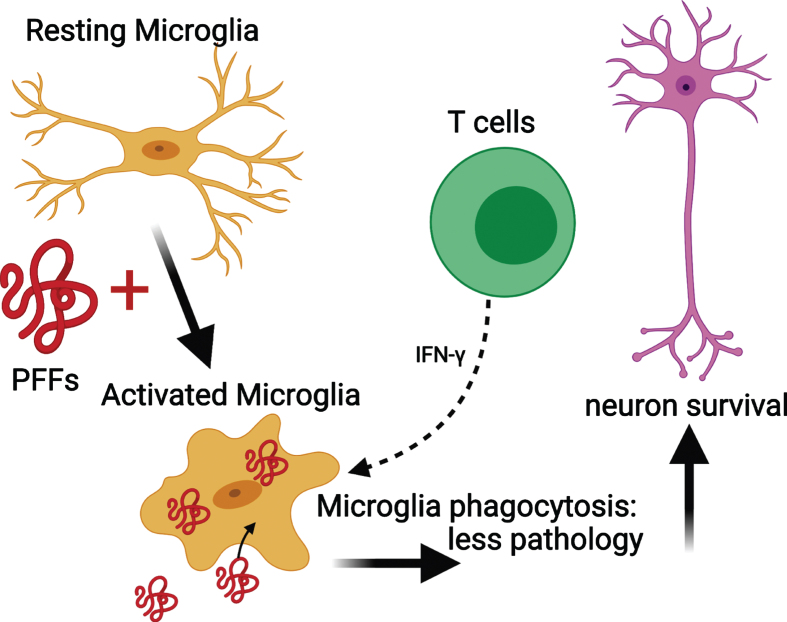
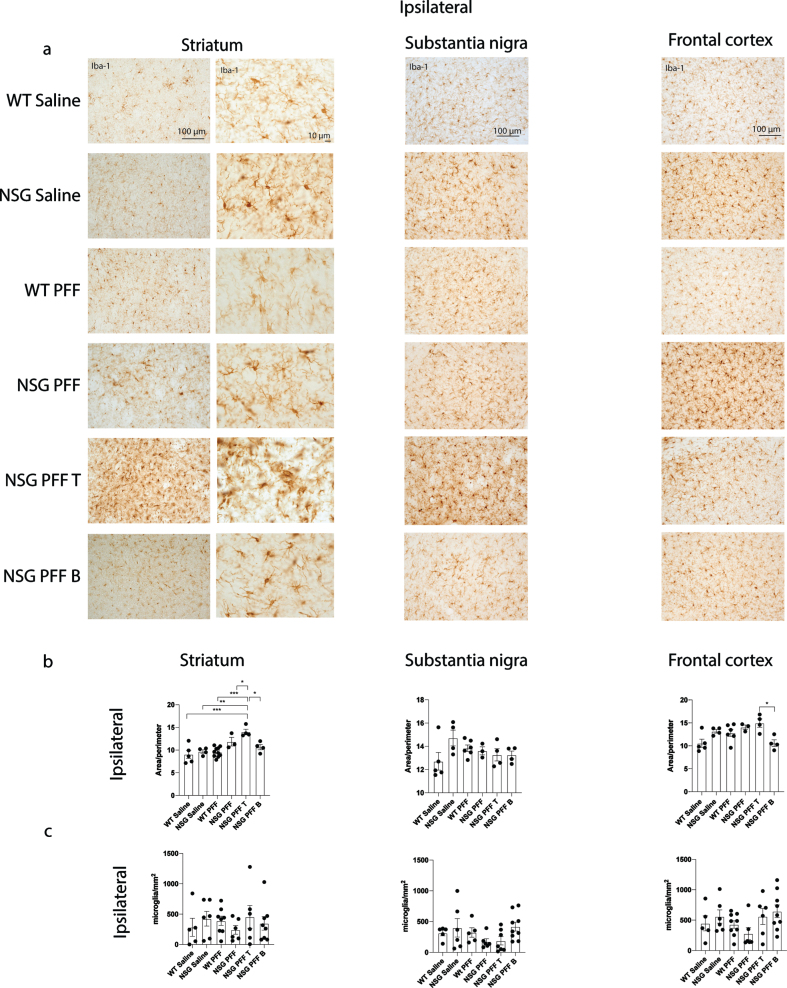
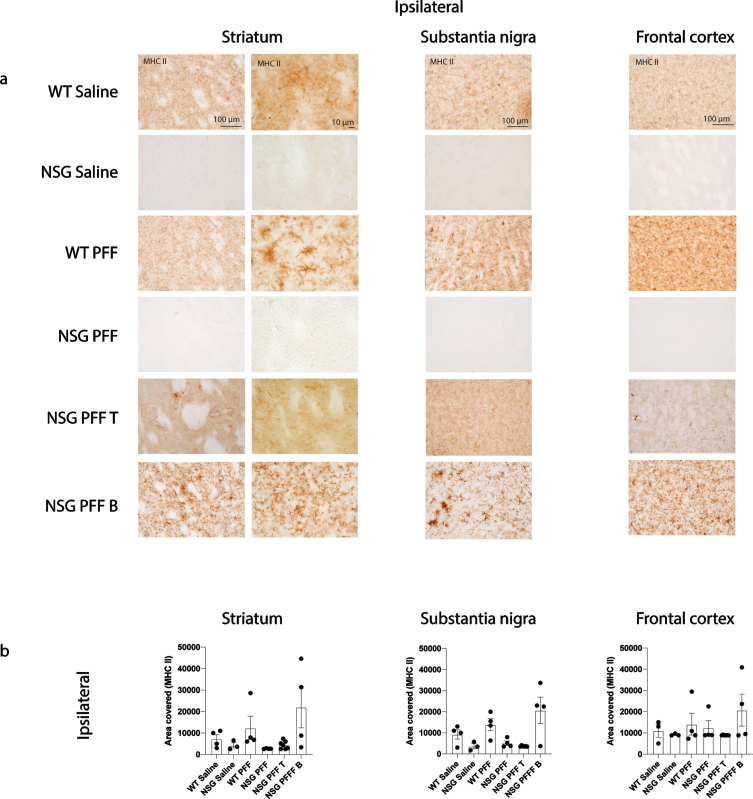
Compared to wildtype mice, NSG mice had an 8-fold increase in phosphorylated α-syn pathology in the substantia nigra. Reconstituting the T cell population decreased the accumulation of phosphorylated α-syn pathology and resulted in persistent microgliosis in the striatum when compared to non-transplanted mice.
Our work provides evidence that T cells play a role in the pathogenesis of experimental α-synucleinopathy.
α-突触核蛋白(α-syn)是路易小体中的主要蛋白,路易小体是α-突触核蛋白病的病理学标志物,如帕金森病(PD)和多系统萎缩(MSA)。其他标志物包括小胶质细胞的激活、促炎细胞因子的升高以及 T 细胞和 B 细胞的激活。这些免疫变化表明先天和适应性免疫系统都出现了失调。已经证明 T 细胞能够识别来自 α-syn 的表位,并且在 PD 和 MSA 患者中发现了改变的 T 细胞群体,这提供了证据表明这些细胞可能是疾病发病机制的关键。
研究适应性免疫系统与 α-syn 病理学的关系。
我们将人 α-syn 原纤维(PFF)注入免疫缺陷小鼠(NSG)的纹状体,并评估纹状体、黑质和额叶皮质中磷酸化的 α-syn 病理学、蛋白水解酶抗性的 α-syn 病理学和小胶质细胞增生的积累情况。我们还评估了将幼稚 T 和 B 细胞过继转移到 PFF 注射的免疫缺陷小鼠中的影响。
与野生型小鼠相比,NSG 小鼠黑质中的磷酸化 α-syn 病理学增加了 8 倍。与未移植的小鼠相比,重建 T 细胞群可减少磷酸化的 α-syn 病理学的积累,并导致纹状体中持续的小胶质细胞增生。
我们的工作提供了证据表明 T 细胞在实验性 α-突触核蛋白病的发病机制中起作用。