Popa Laura Ioana, Gheorghe Irina, Barbu Ilda Czobor, Surleac Marius, Paraschiv Simona, Măruţescu Luminiţa, Popa Marcela, Pîrcălăbioru Graţiela Grădişteanu, Talapan Daniela, Niţă Mihai, Streinu-Cercel Anca, Streinu-Cercel Adrian, Oţelea Dan, Chifiriuc Mariana Carmen
Department of Botany and Microbiology, Faculty of Biology, University of Bucharest, Bucharest, Romania.
Research Institute of the University of Bucharest, Bucharest, Romania.
Front Microbiol. 2021 Jan 11;11:610296. doi: 10.3389/fmicb.2020.610296. eCollection 2020.
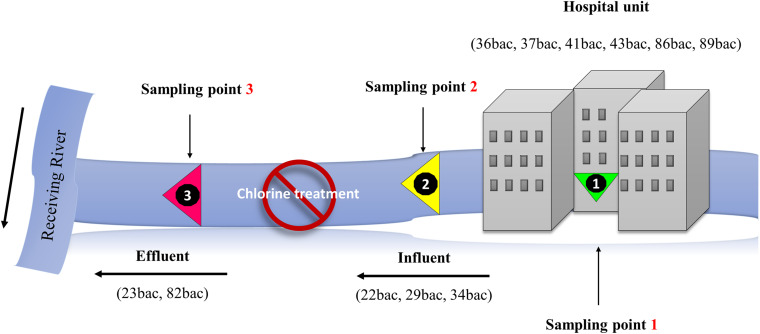
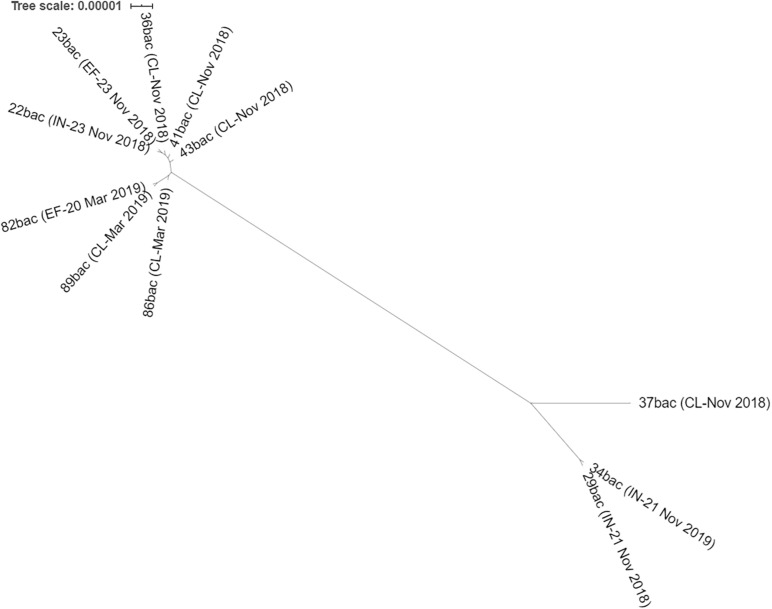
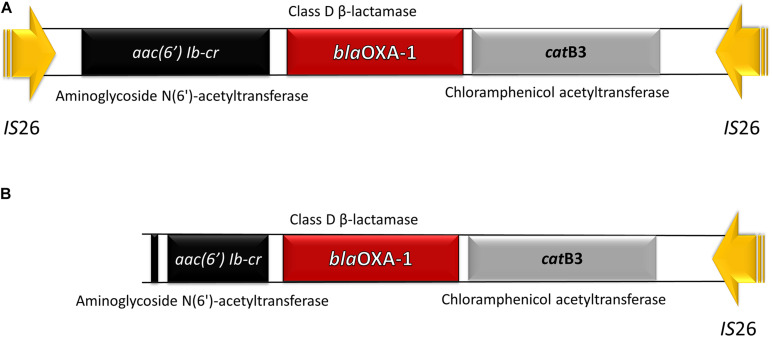
In this paper we describe the transmission of a multi-drug resistant ST101 clone from hospital to wastewater and its persistence after chlorine treatment. Water samples from influents and effluents of the sewage tank of an infectious diseases hospital and clinical strains collected from the intra-hospital infections, during a period of 10 days prior to wastewater sampling were analyzed. Antibiotic resistant strains from wastewaters were recovered on selective media. Based on antibiotic susceptibility profiles and PCR analyses of antibiotic resistance (AR) genetic background, as well as whole-genome sequencing (Illumina MiSeq) and subsequent bioinformatic analyses, 11 ST101 strains isolated from hospital wastewater influent, wastewater effluent and clinical sector were identified as clonally related. The SNP and core genome analyses pointed out that five strains were found to be closely related (with ≤18 SNPs and identical cgMLST profile). The strains belonging to this clone harbored multiple acquired AR genes [ , , , , , , , A10, B17, A, B3, A14, (D)] and chromosomal mutations involved in AR (Δ, Δ, amino acid substitutions in GyrA Ser83Tyr, Asp87Asn, ParC Ser80Tyr). Twenty-nine virulence genes involved in iron acquisition, biofilm and pili formation, adherence, and the type six secretion system - T6SS-III were identified. Our study proves the transmission of MDR from hospital to the hospital effluent and its persistence after the chlorine treatment, raising the risk of surface water contamination and further dissemination to different components of the trophic chain, including humans.
在本文中,我们描述了一种多重耐药性ST101克隆从医院传播到废水以及其在氯处理后的持久性。对一家传染病医院污水池进水和出水的水样以及在废水采样前10天内从医院内感染中收集的临床菌株进行了分析。在选择性培养基上回收了来自废水的抗生素耐药菌株。基于抗生素敏感性谱、抗生素耐药(AR)遗传背景的PCR分析、全基因组测序(Illumina MiSeq)以及后续的生物信息学分析,从医院废水进水、废水出水和临床科室分离出的11株ST101菌株被鉴定为克隆相关。SNP和核心基因组分析指出,发现5株菌株密切相关(SNP≤18个且cgMLST图谱相同)。属于该克隆的菌株携带多个获得性AR基因[ , , , , , , , A10, B17, A, B3, A14, (D)]以及与AR相关的染色体突变(Δ, Δ, GyrA中Ser83Tyr、Asp87Asn的氨基酸替换,ParC中Ser80Tyr)。鉴定出29个与铁获取、生物膜和菌毛形成、黏附以及六型分泌系统 - T6SS-III相关的毒力基因。我们的研究证明了多重耐药菌从医院传播到医院废水以及其在氯处理后的持久性,增加了地表水受到污染并进一步传播到包括人类在内的营养链不同组成部分的风险。