Nestel Nathalie, Hvass Josephine D, Bahl Martin I, Hansen Lars H, Krych Lukasz, Nielsen Dennis S, Dragsted Lars Ove, Roager Henrik M
Department of Nutrition, Exercise and Sports, University of Copenhagen, Frederiksberg, Denmark.
National Food Institute, Technical University of Denmark, Kgs. Lyngby, Denmark.
Front Nutr. 2021 Jan 14;7:594850. doi: 10.3389/fnut.2020.594850. eCollection 2020.
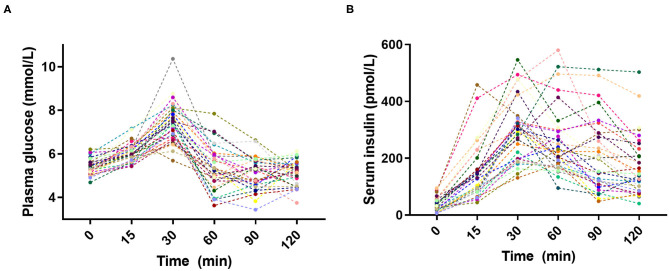
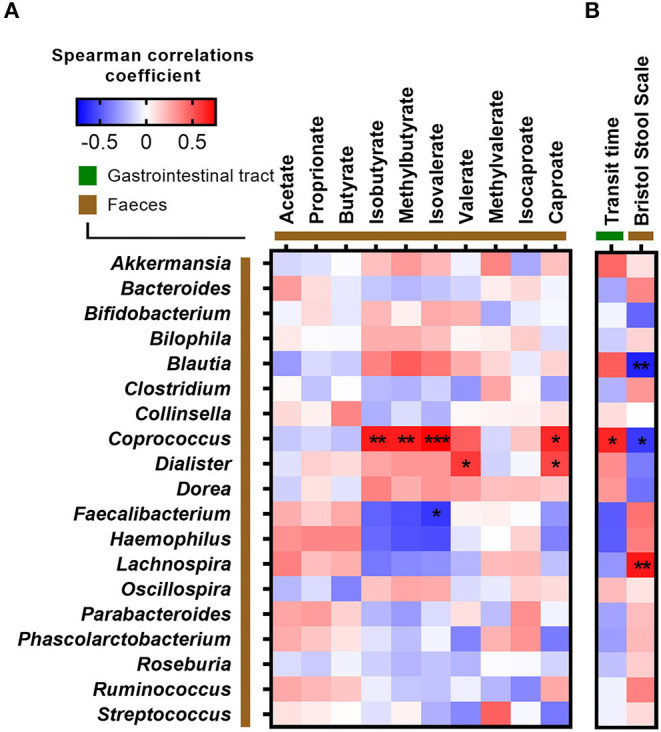
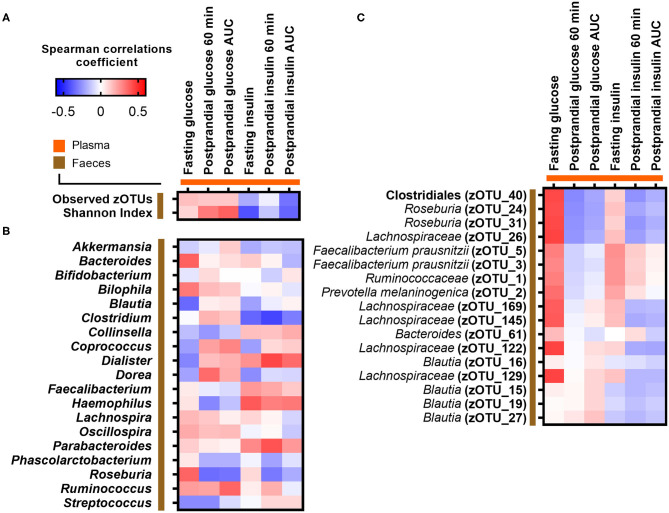
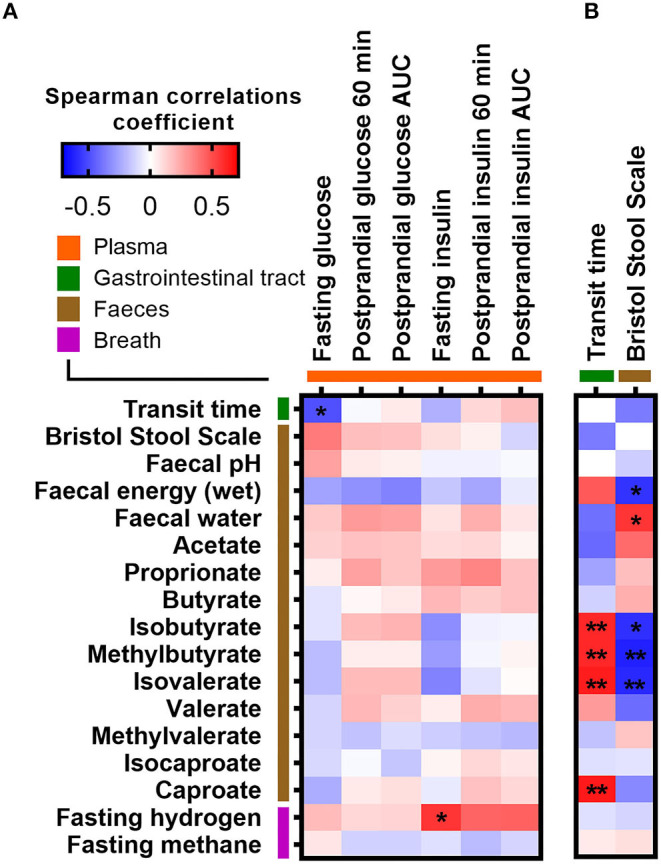
The gut microbiome has combined with other person-specific information, such as blood parameters, dietary habits, anthropometrics, and physical activity been found to predict personalized postprandial glucose responses (PPGRs) to various foods. Yet, the contributions of specific microbiome taxa, measures of fermentation, and abiotic factors in the colon to glycemic control remain elusive. We tested whether PPGRs 60 min after a standardized breakfast was associated with gut microbial α-diversity (primary outcome) and explored whether postprandial responses of glucose and insulin were associated with specific microbiome taxa, colonic fermentation as reflected by fecal short-chain fatty acids (SCFAs), and breath hydrogen and methane exhalation, as well as abiotic factors including fecal pH, fecal water content, fecal energy density, intestinal transit time (ITT), and stool consistency. A single-arm meal trial was conducted. A total of 31 healthy (24 female and seven male) subjects consumed a standardized evening meal and a subsequent standardized breakfast (1,499 kJ) where blood was collected for analysis of postprandial glucose and insulin responses. PPGRs to the same breakfast varied across the healthy subjects. The largest inter-individual variability in PPGRs was observed 60 min after the meal but was not associated with gut microbial α-diversity. In addition, no significant associations were observed between postprandial responses and specific taxa of the gut microbiome, measures of colonic fermentation, ITT, or other abiotic factors. However, fasting glucose concentrations were negatively associated with ITT, and fasting insulin was positively associated with fasting breath hydrogen. In conclusion, the gut microbiome, measures of colonic fermentation, and abiotic factors were not shown to be significantly associated with variability in postprandial responses, suggesting that contributions of the gut microbiome, colonic fermentation, and abiotic factors to PPGRs may be subtle in healthy adults.
肠道微生物群已与其他个体特异性信息相结合,如血液参数、饮食习惯、人体测量学和身体活动,被发现可预测对各种食物的个性化餐后血糖反应(PPGRs)。然而,特定微生物群分类群、发酵指标以及结肠中的非生物因素对血糖控制的贡献仍不明确。我们测试了标准化早餐后60分钟的PPGRs是否与肠道微生物α多样性(主要结果)相关,并探讨了葡萄糖和胰岛素的餐后反应是否与特定微生物群分类群、粪便短链脂肪酸(SCFAs)反映的结肠发酵、呼气氢气和甲烷呼出量以及包括粪便pH值、粪便含水量、粪便能量密度、肠道转运时间(ITT)和大便稠度在内的非生物因素相关。进行了一项单臂膳食试验。共有31名健康受试者(24名女性和7名男性)食用了标准化晚餐和随后的标准化早餐(1499千焦),并采集血液以分析餐后葡萄糖和胰岛素反应。健康受试者对同一早餐的PPGRs各不相同。餐后60分钟观察到PPGRs个体间差异最大,但与肠道微生物α多样性无关。此外,未观察到餐后反应与肠道微生物群的特定分类群、结肠发酵指标、ITT或其他非生物因素之间存在显著关联。然而,空腹血糖浓度与ITT呈负相关,空腹胰岛素与空腹呼气氢气呈正相关。总之,肠道微生物群、结肠发酵指标和非生物因素未显示与餐后反应的变异性显著相关,这表明在健康成年人中,肠道微生物群、结肠发酵和非生物因素对PPGRs的贡献可能很细微。