Université Paris-Saclay, INRAE, MGP, Jouy-en-Josas, France.
Department of Agricultural Sciences, University of Naples Federico II, Portici, Italy.
Gut. 2020 Jul;69(7):1258-1268. doi: 10.1136/gutjnl-2019-320438. Epub 2020 Feb 19.
This study aimed to explore the effects of an isocaloric Mediterranean diet (MD) intervention on metabolic health, gut microbiome and systemic metabolome in subjects with lifestyle risk factors for metabolic disease.
Eighty-two healthy overweight and obese subjects with a habitually low intake of fruit and vegetables and a sedentary lifestyle participated in a parallel 8-week randomised controlled trial. Forty-three participants consumed an MD tailored to their habitual energy intakes (MedD), and 39 maintained their regular diets (ConD). Dietary adherence, metabolic parameters, gut microbiome and systemic metabolome were monitored over the study period.
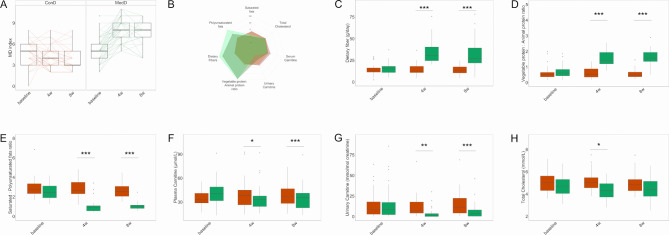
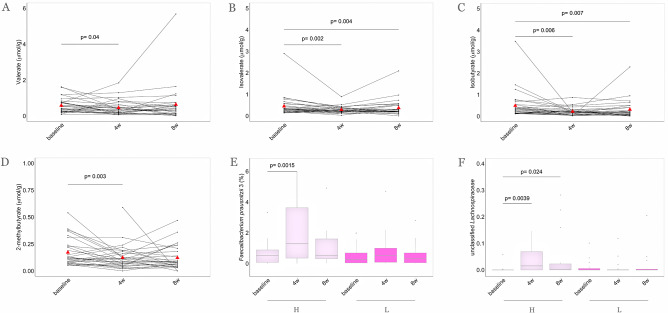
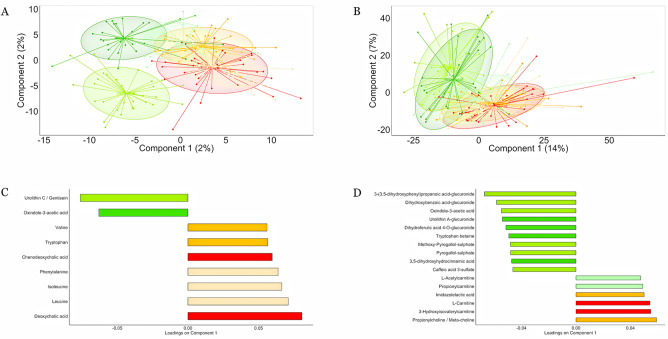
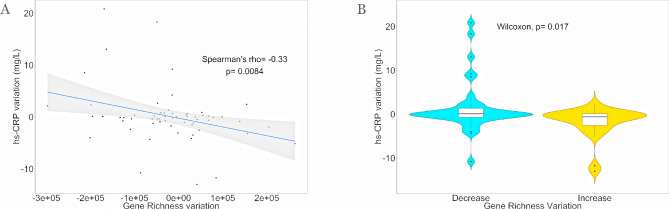
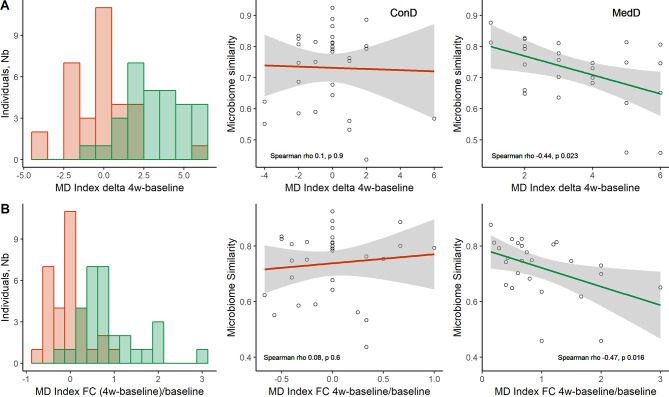
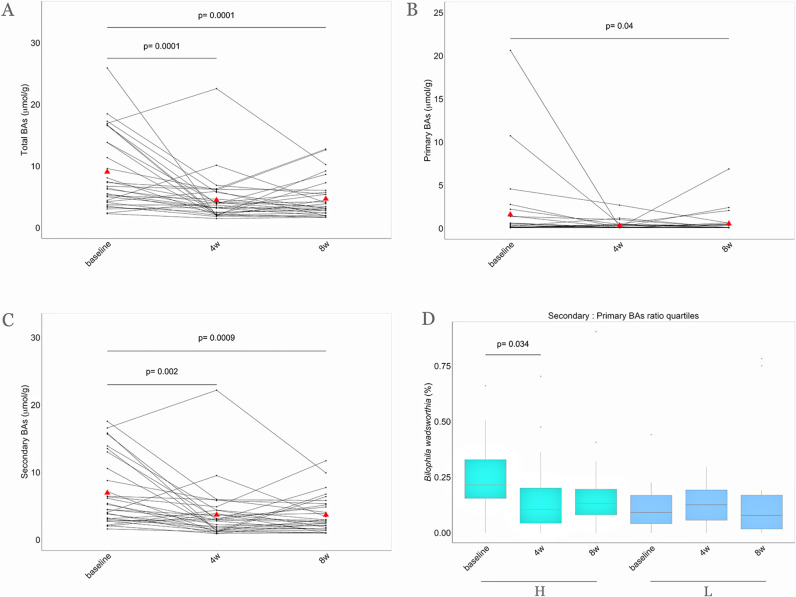
Increased MD adherence in the MedD group successfully reprogrammed subjects' intake of fibre and animal proteins. Compliance was confirmed by lowered levels of carnitine in plasma and urine. Significant reductions in plasma cholesterol (primary outcome) and faecal bile acids occurred in the MedD compared with the ConD group. Shotgun metagenomics showed gut microbiome changes that reflected individual MD adherence and increase in gene richness in participants who reduced systemic inflammation over the intervention. The MD intervention led to increased levels of the fibre-degrading and of genes for microbial carbohydrate degradation linked to butyrate metabolism. The dietary changes in the MedD group led to increased urinary urolithins, faecal bile acid degradation and insulin sensitivity that co-varied with specific microbial taxa.
Switching subjects to an MD while maintaining their energy intake reduced their blood cholesterol and caused multiple changes in their microbiome and metabolome that are relevant in future strategies for the improvement of metabolic health.
本研究旨在探讨等热量的地中海饮食(Mediterranean diet,MD)干预对存在代谢性疾病生活方式风险因素的受试者代谢健康、肠道微生物组和系统代谢组的影响。
82 名超重和肥胖且习惯性低摄入水果和蔬菜、久坐不动的健康受试者参与了一项为期 8 周的平行随机对照试验。43 名受试者摄入了根据其习惯性能量摄入量身定制的 MD(MedD),39 名受试者维持了他们的常规饮食(ConD)。在研究期间监测了饮食依从性、代谢参数、肠道微生物组和系统代谢组。
MedD 组 MD 依从性的增加成功地改变了受试者对纤维和动物蛋白的摄入量。血浆和尿液中肉碱水平的降低证实了依从性。与 ConD 组相比,MedD 组的血浆胆固醇(主要结果)和粪便胆汁酸显著降低。 shotgun 宏基因组学显示,肠道微生物组发生了变化,反映了个体 MD 依从性和参与者体内炎症减少的基因丰富度增加。MD 干预导致纤维降解酶和与丁酸代谢相关的微生物碳水化合物降解基因的水平增加。MedD 组的饮食变化导致尿中 urolithin 增加、粪便胆汁酸降解和胰岛素敏感性增加,这些变化与特定的微生物类群相关。
在维持能量摄入的情况下,将受试者转换为 MD 可降低其血液胆固醇,并导致其微生物组和代谢组发生多种变化,这些变化与改善代谢健康的未来策略相关。