Wyler Emanuel, Mösbauer Kirstin, Franke Vedran, Diag Asija, Gottula Lina Theresa, Arsiè Roberto, Klironomos Filippos, Koppstein David, Hönzke Katja, Ayoub Salah, Buccitelli Christopher, Hoffmann Karen, Richter Anja, Legnini Ivano, Ivanov Andranik, Mari Tommaso, Del Giudice Simone, Papies Jan, Praktiknjo Samantha, Meyer Thomas F, Müller Marcel Alexander, Niemeyer Daniela, Hocke Andreas, Selbach Matthias, Akalin Altuna, Rajewsky Nikolaus, Drosten Christian, Landthaler Markus
Berlin Institute for Medical Systems Biology, Max-Delbrück-Center for Molecular Medicine in the Helmholtz Association, Hannoversche Str 28, 10115 Berlin, Germany.
Institute of Virology, Charité-Universitätsmedizin Berlin and Berlin Institute of Health, Charitéplatz 1, 10117 Berlin, Germany.
iScience. 2021 Mar 19;24(3):102151. doi: 10.1016/j.isci.2021.102151. Epub 2021 Feb 6.
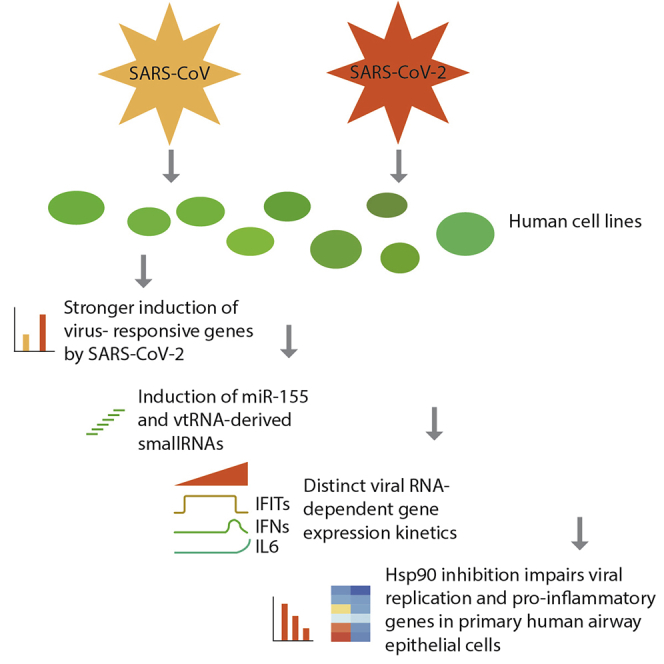
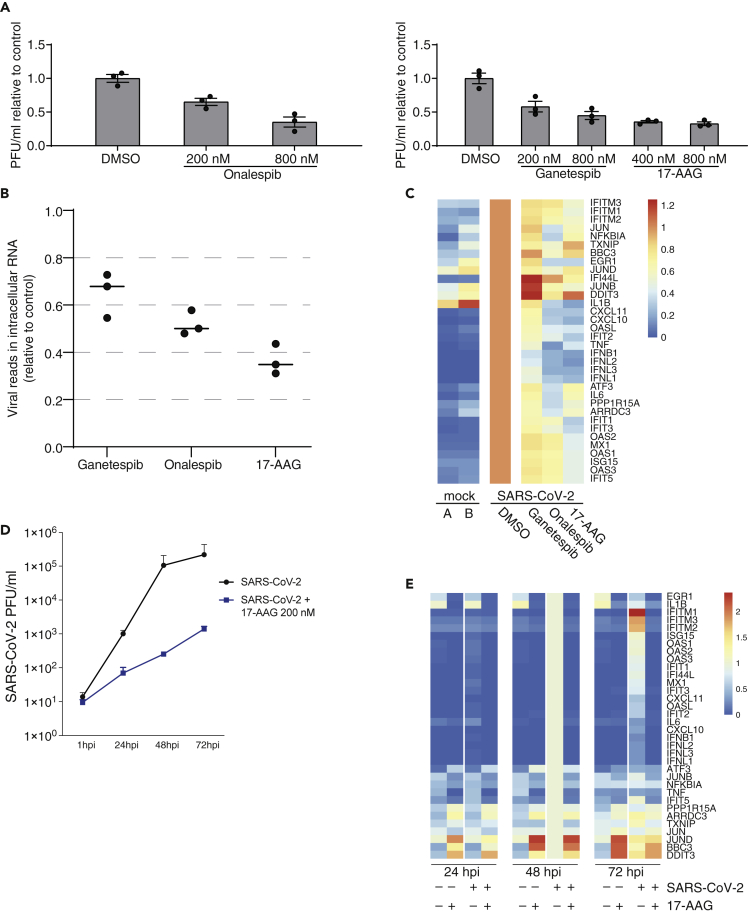
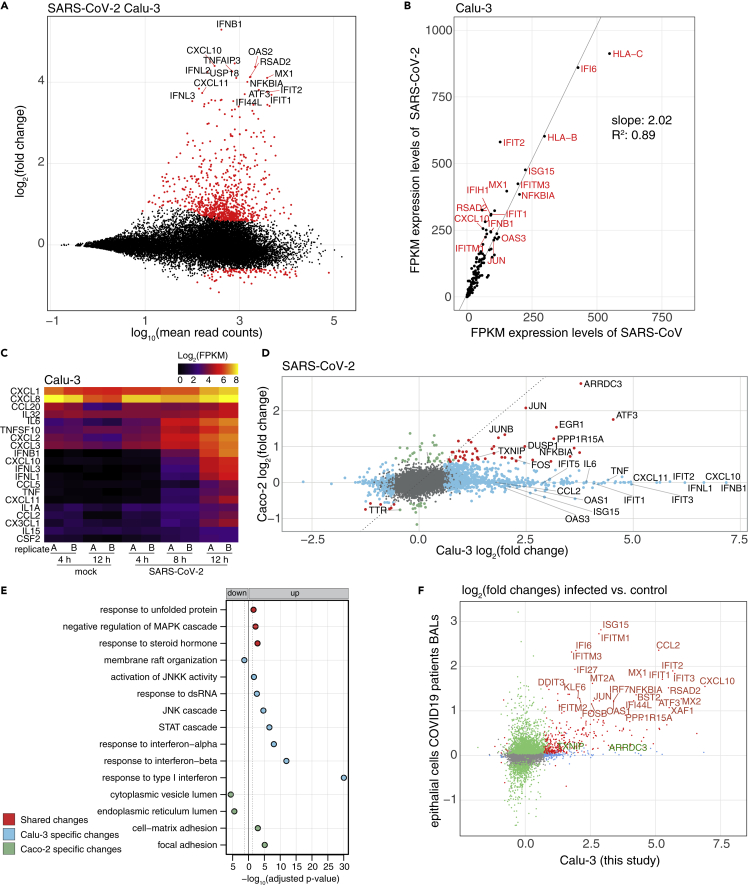
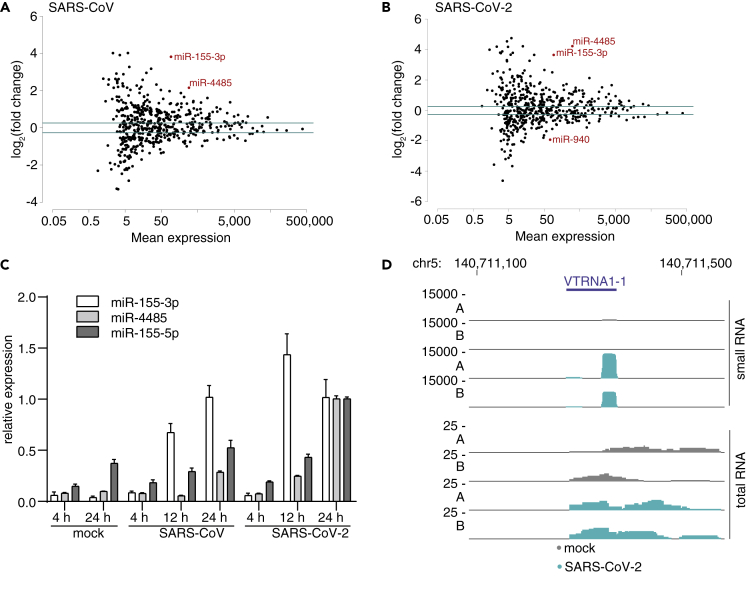
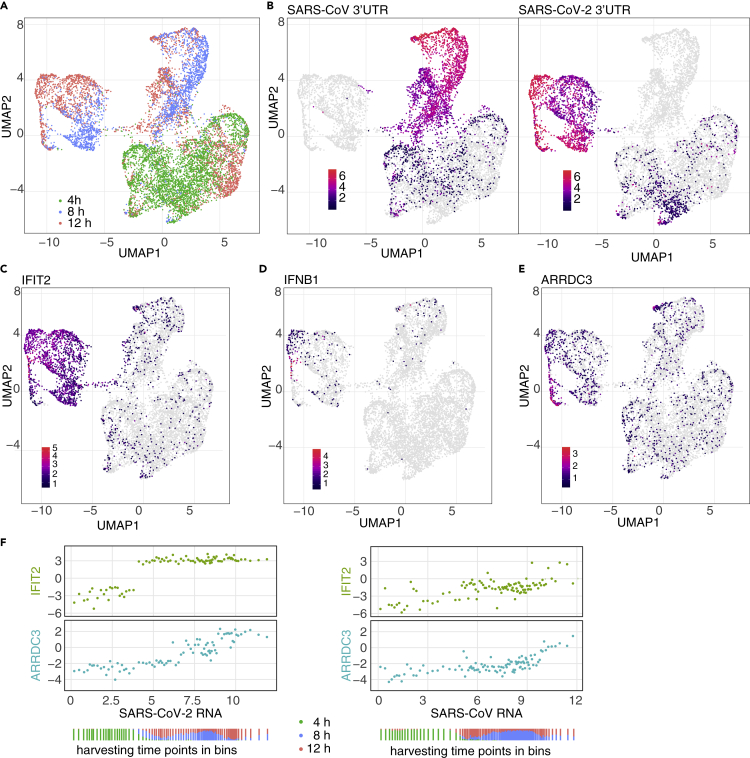
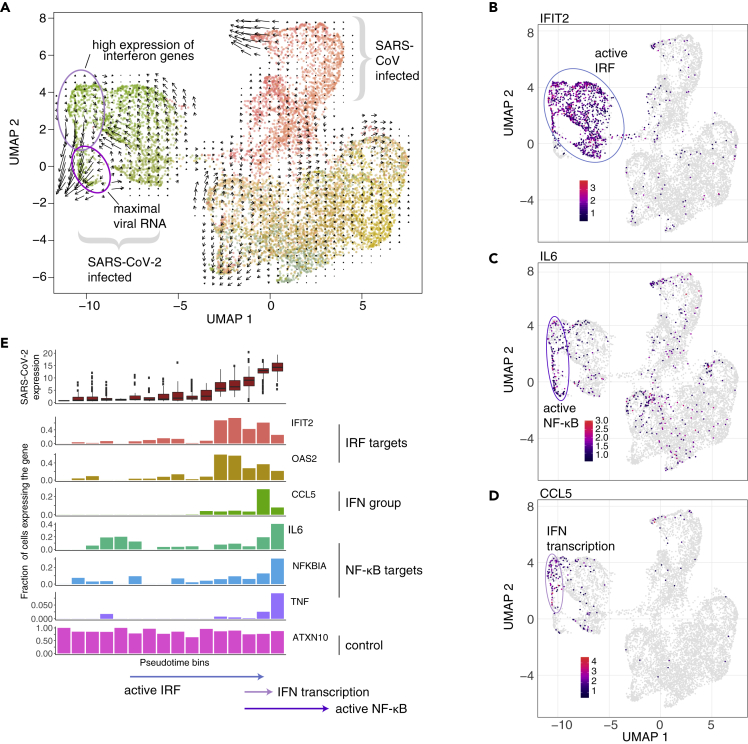
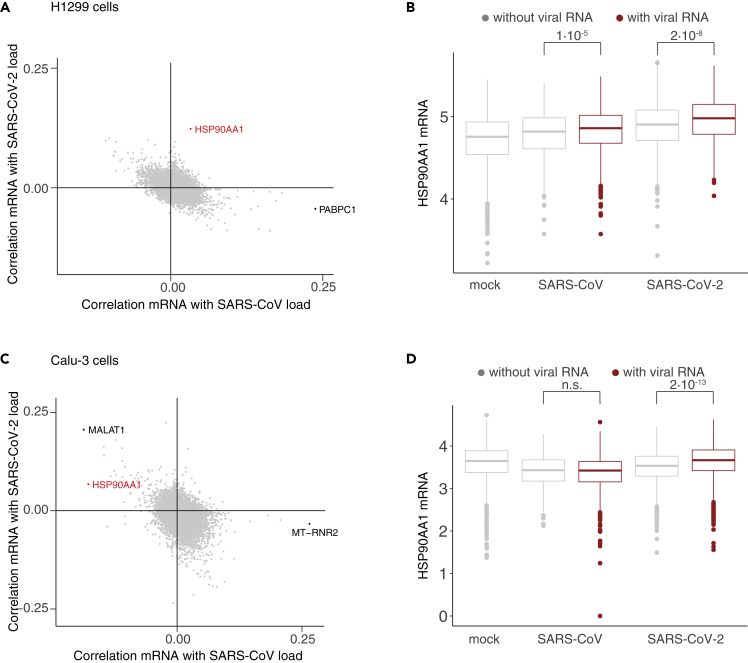
Detailed knowledge of the molecular biology of severe acute respiratory syndrome coronavirus 2 (SARS-CoV-2) infection is crucial for understanding of viral replication, host responses, and disease progression. Here, we report gene expression profiles of three SARS-CoV- and SARS-CoV-2-infected human cell lines. SARS-CoV-2 elicited an approximately two-fold higher stimulation of the innate immune response compared to SARS-CoV in the human epithelial cell line Calu-3, including induction of miRNA-155. Single-cell RNA sequencing of infected cells showed that genes induced by virus infections were broadly upregulated, whereas interferon beta/lambda genes, a pro-inflammatory cytokines such as IL-6, were expressed only in small subsets of infected cells. Temporal analysis suggested that transcriptional activities of interferon regulatory factors precede those of nuclear factor κB. Lastly, we identified heat shock protein 90 (HSP90) as a protein relevant for the infection. Inhibition of the HSP90 activity resulted in a reduction of viral replication and pro-inflammatory cytokine expression in primary human airway epithelial cells.
深入了解严重急性呼吸综合征冠状病毒2(SARS-CoV-2)感染的分子生物学对于理解病毒复制、宿主反应和疾病进展至关重要。在此,我们报告了三种感染SARS-CoV和SARS-CoV-2的人类细胞系的基因表达谱。在人上皮细胞系Calu-3中,与SARS-CoV相比,SARS-CoV-2对先天免疫反应的刺激作用高出约两倍,包括诱导miRNA-155。对感染细胞的单细胞RNA测序表明,病毒感染诱导的基因广泛上调,而干扰素β/λ基因以及白细胞介素-6等促炎细胞因子仅在一小部分感染细胞中表达。时间分析表明,干扰素调节因子的转录活性先于核因子κB。最后,我们确定热休克蛋白90(HSP90)是一种与感染相关的蛋白质。抑制HSP90活性导致原代人气道上皮细胞中病毒复制和促炎细胞因子表达减少。