Department of Psychiatry and Psychotherapy, University of Tübingen, Tübingen, Germany.
Department of Translational Research in Psychiatry, Max Planck Institute of Psychiatry and International Max Planck Research School for Translational Psychiatry (IMPRS-TP), Munich, Germany.
Psychol Med. 2022 Oct;52(14):3029-3039. doi: 10.1017/S0033291720005073. Epub 2021 Feb 15.
Mood plays an important role in our life which is illustrated by the disruptive impact of aberrant mood states in depression. Although vagus nerve stimulation (VNS) has been shown to improve symptoms of depression, the exact mechanism is still elusive, and it is an open question whether non-invasive VNS could be used to swiftly and robustly improve mood.
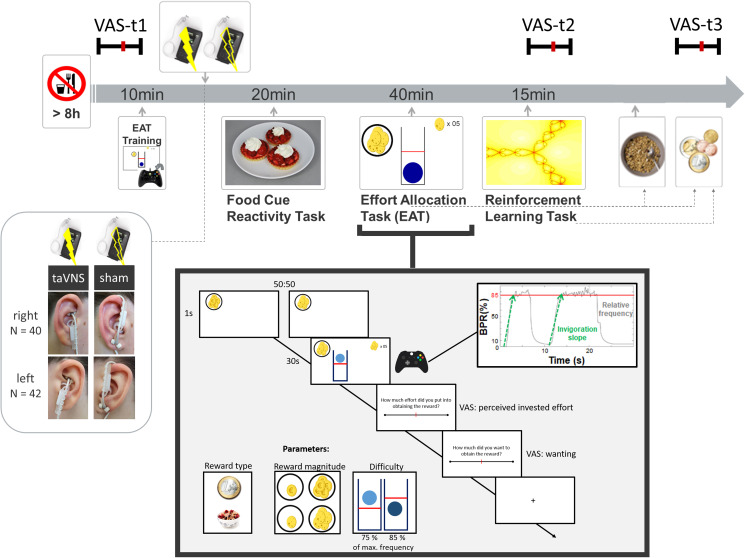
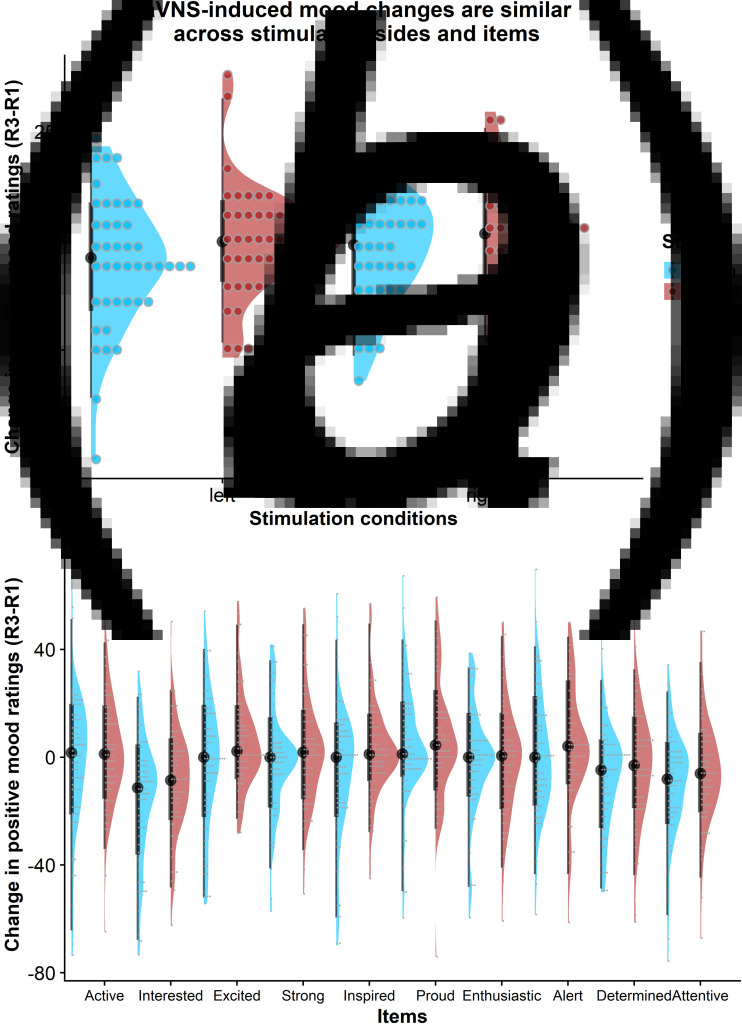
Here, we investigated the effect of left- and right-sided transcutaneous auricular VNS (taVNS) a sham control condition on mood after the exertion of physical and cognitive effort in 82 healthy participants (randomized cross-over design) using linear mixed-effects and hierarchical Bayesian analyses of mood ratings.
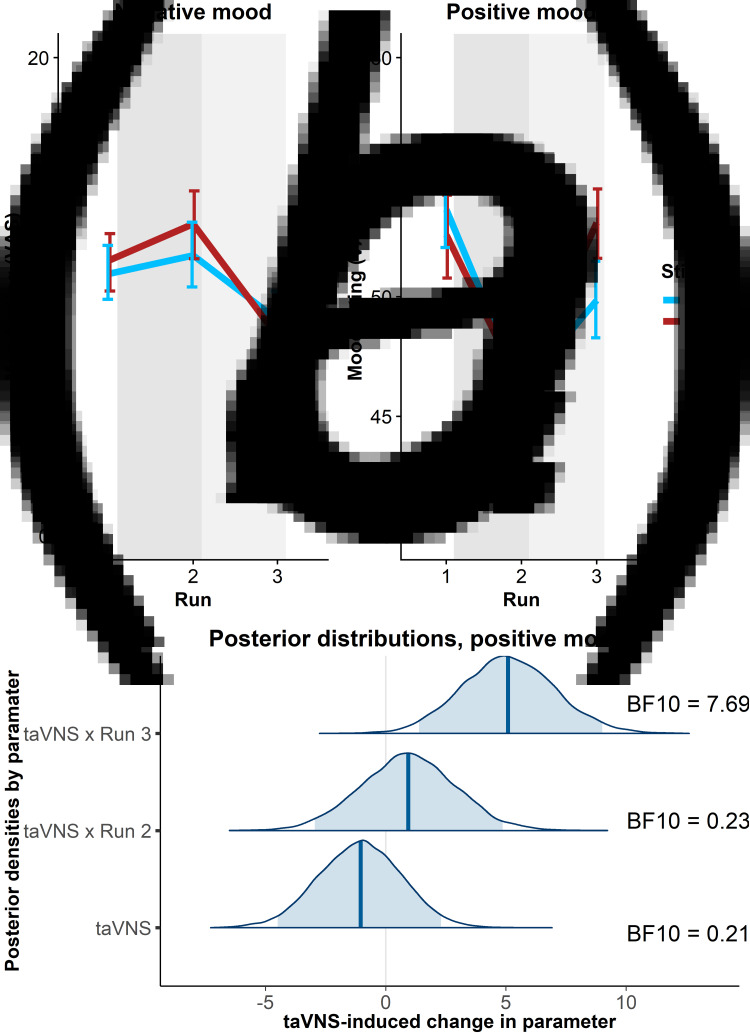
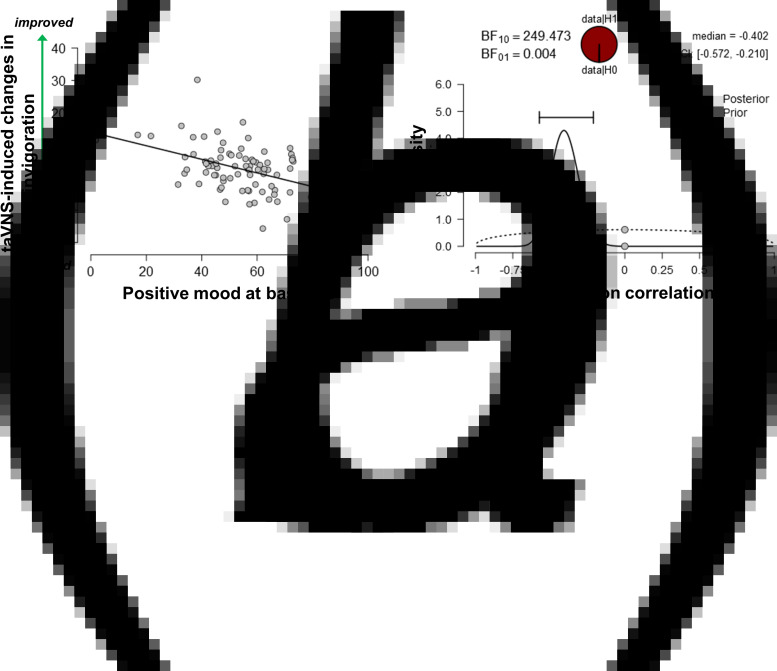
We found that 90 min of either left-sided or right-sided taVNS improved positive mood [ = 5.11, 95% credible interval, CI (1.39-9.01), 9.6% improvement relative to the mood intercept, BF = 7.69, = 0.017], yet only during the post-stimulation phase. Moreover, lower baseline scores of positive mood were associated with greater taVNS-induced improvements in motivation [ = -0.42, 95% CI (-0.58 to -0.21), BF = 249].
We conclude that taVNS boosts mood after a prolonged period of effort exertion with concurrent stimulation and that acute motivational effects of taVNS are partly dependent on initial mood states. Collectively, our results show that taVNS may help quickly improve affect after a mood challenge, potentially by modulating interoceptive signals contributing to the reappraisal of effortful behavior. This suggests that taVNS could be a useful add-on to current behavioral therapies.
情绪在我们的生活中起着重要的作用,这一点可以从情绪状态异常在抑郁症中的破坏性影响中得到说明。尽管迷走神经刺激(VNS)已被证明可以改善抑郁症状,但确切的机制仍不清楚,而且是否可以使用非侵入性的 VNS 来快速而有力地改善情绪还是一个悬而未决的问题。
在这里,我们通过线性混合效应和分层贝叶斯分析情绪评分,在 82 名健康参与者(随机交叉设计)中研究了在进行体力和认知努力后,左、右侧经皮耳迷走神经刺激(taVNS)——假刺激对照条件对情绪的影响。
我们发现,90 分钟的左侧或右侧 taVNS 均可改善积极情绪[ = 5.11,95%置信区间(1.39-9.01),与情绪截距相比提高 9.6%,BF = 7.69, = 0.017],但仅在刺激后阶段。此外,较高的基线积极情绪评分与 taVNS 诱导的动机改善较大有关[ = -0.42,95%置信区间(-0.58 至-0.21),BF = 249]。
我们得出结论,taVNS 在长时间的努力后能增强情绪,并且 taVNS 的急性动机效应部分取决于初始情绪状态。总的来说,我们的研究结果表明,taVNS 可能有助于在情绪挑战后快速改善情绪,这可能是通过调节与努力行为再评价有关的内脏感觉信号。这表明 taVNS 可能是当前行为疗法的有用补充。