Department of Ophthalmology, Leiden University Medical Center, Leiden, the Netherlands.
Department of Pathology, Leiden University Medical Center, Leiden, the Netherlands.
BMC Cancer. 2021 Feb 15;21(1):164. doi: 10.1186/s12885-021-07865-x.
Activating Gα signalling mutations are considered an early event in the development of uveal melanoma. Whereas most tumours harbour a mutation in GNAQ or GNA11, CYSLTR2 (encoding G-protein coupled receptor CysLTR) forms a rare alternative. The role of wild-type CysLTR in uveal melanoma remains unknown.
We performed a digital PCR-based molecular analysis of benign choroidal nevi and primary uveal melanomas. Publicly available bulk and single cell sequencing data were mined to further study mutant and wild-type CYSLTR2 in primary and metastatic uveal melanoma.
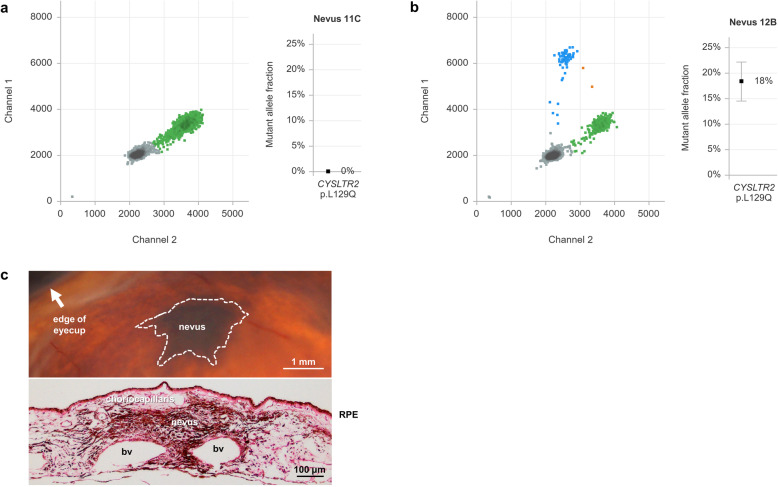
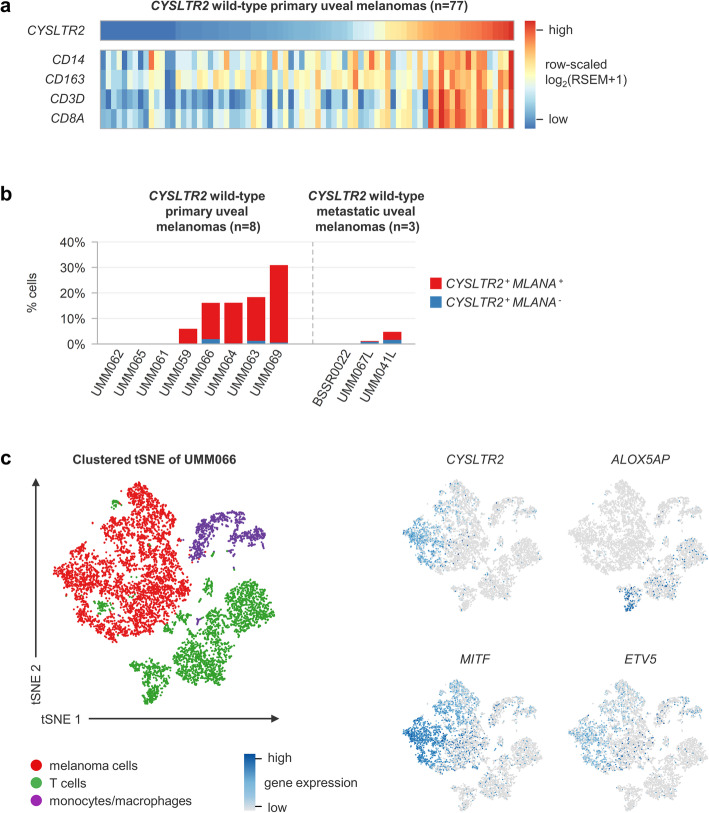
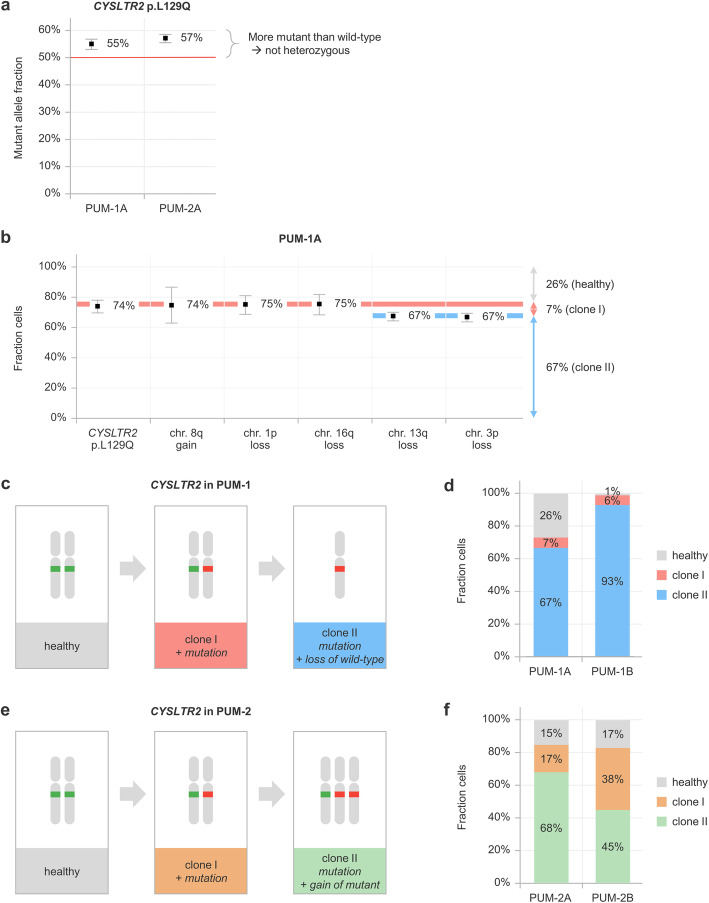
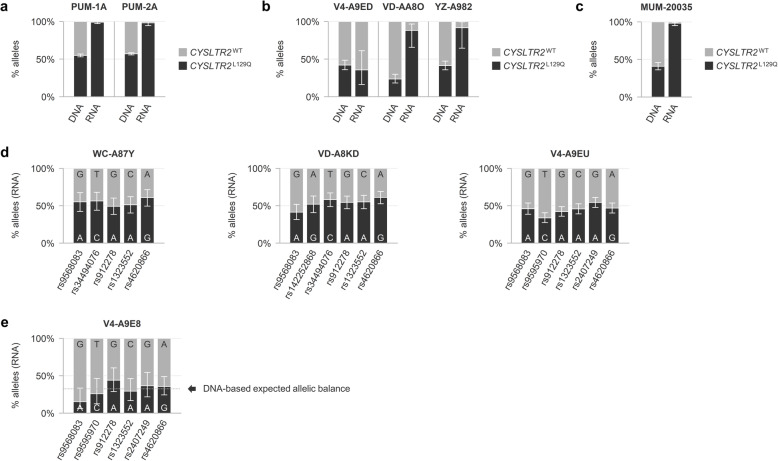
1/16 nevi and 2/120 melanomas carried the CYSLTR2 mutation. The mutation was found in a subpopulation of the nevus, while being clonal in both melanomas. In the melanomas, secondary, subclonal CYSLTR2 alterations shifted the allelic balance towards the mutant. The resulting genetic heterogeneity was confirmed in distinct areas of both tumours. At the RNA level, further silencing of wild-type and preferential expression of mutant CYSLTR2 was identified, which was also observed in two CYSLTR2 mutant primary melanomas and one metastatic lesion from other cohorts. In CYSLTR2 wild-type melanomas, high expression of CYSLTR2 correlated to tumour inflammation, but expression originated from melanoma cells specifically.
Our findings suggest that CYSLTR2 is involved in both early and late development of uveal melanoma. Whereas the CYSLTR2 p.L129Q mutation is likely to be the initiating oncogenic event, various mechanisms further increase the mutant allele abundance during tumour progression. This makes mutant CysLTR an attractive therapeutic target in uveal melanoma.
激活 Gα 信号转导突变被认为是葡萄膜黑色素瘤发展的早期事件。虽然大多数肿瘤携带 GNAQ 或 GNA11 突变,但 CYSLTR2(编码 G 蛋白偶联受体 CysLTR)形成了罕见的替代物。野生型 CysLTR 在葡萄膜黑色素瘤中的作用尚不清楚。
我们对良性脉络膜痣和原发性葡萄膜黑色素瘤进行了基于数字 PCR 的分子分析。挖掘了公开的批量和单细胞测序数据,以进一步研究原发性和转移性葡萄膜黑色素瘤中突变型和野生型 CYSLTR2。
1/16 的痣和 2/120 的黑色素瘤携带 CYSLTR2 突变。该突变存在于痣的亚群中,而在两个黑色素瘤中均为克隆性。在黑色素瘤中,继发的亚克隆 CYSLTR2 改变使等位基因平衡向突变型倾斜。在两个肿瘤的不同区域均证实了这种遗传异质性。在 RNA 水平上,进一步鉴定了野生型的沉默和突变型 CYSLTR2 的优先表达,这在两个 CYSLTR2 突变型原发性黑色素瘤和另一个来自其他队列的转移性病变中也观察到。在 CYSLTR2 野生型黑色素瘤中,CYSLTR2 的高表达与肿瘤炎症相关,但表达源于黑色素瘤细胞。
我们的研究结果表明,CYSLTR2 参与了葡萄膜黑色素瘤的早期和晚期发展。虽然 CYSLTR2 p.L129Q 突变可能是起始致癌事件,但在肿瘤进展过程中,各种机制进一步增加了突变等位基因的丰度。这使得突变型 CysLTR 成为葡萄膜黑色素瘤有吸引力的治疗靶点。