Laboratory of Chemical Biology and Signal Transduction, The Rockefeller University, New York, New York, USA.
Laboratory of Chemical Biology and Signal Transduction, The Rockefeller University, New York, New York, USA; Tri-Institutional PhD Program in Chemical Biology, New York, New York, USA.
J Biol Chem. 2021 Jan-Jun;296:100163. doi: 10.1074/jbc.RA120.015352. Epub 2020 Dec 11.
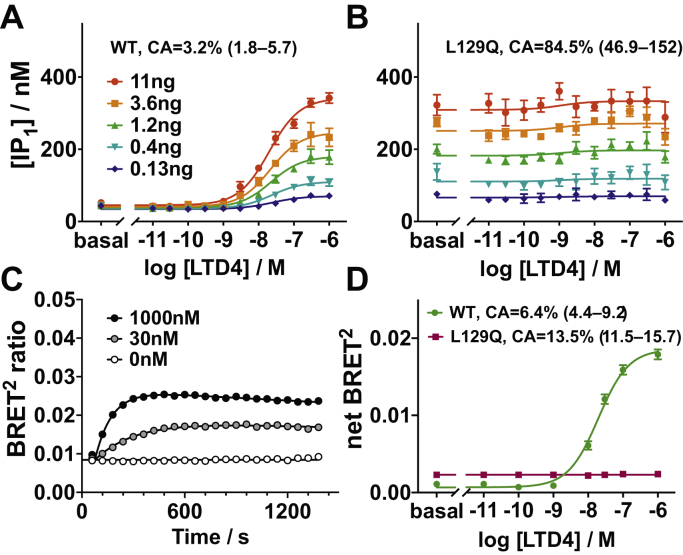
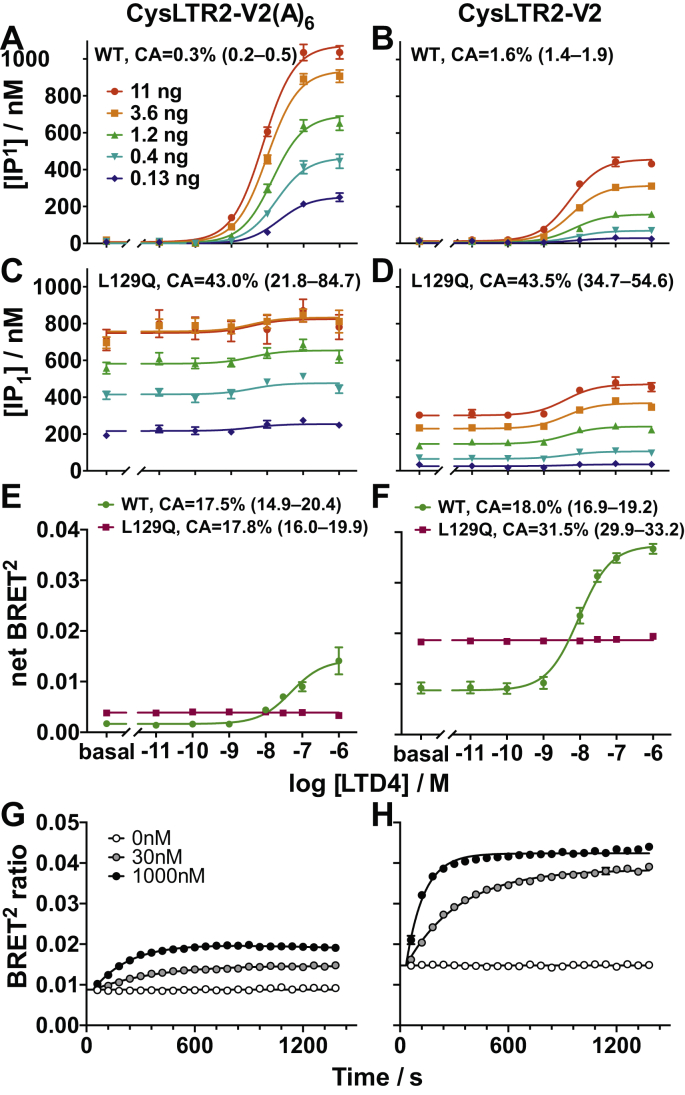
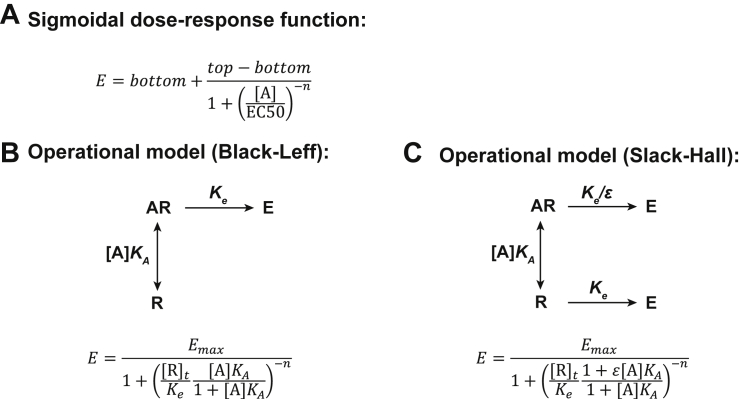
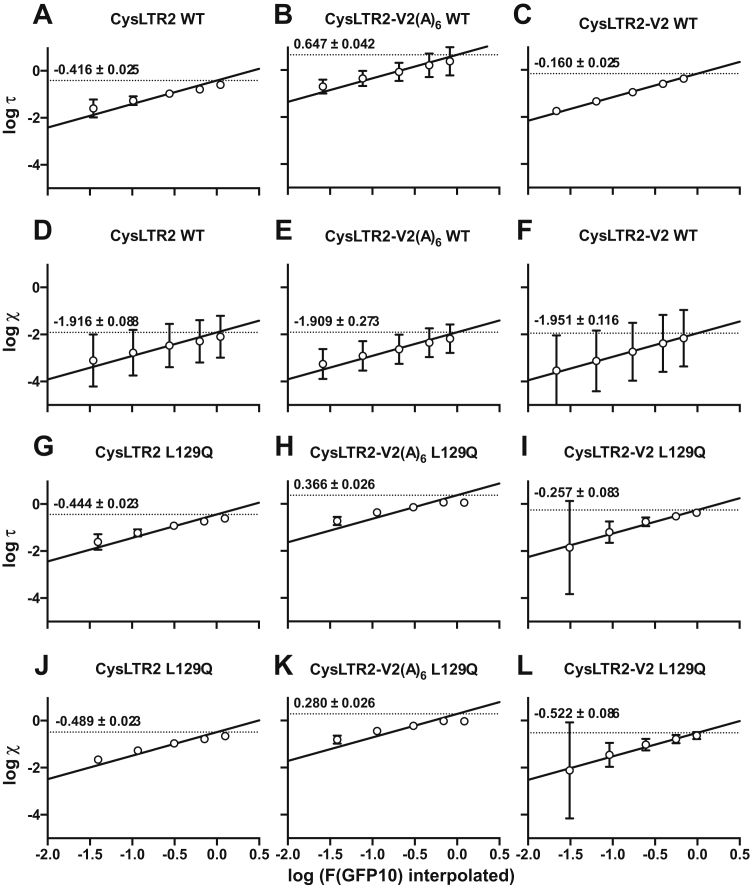
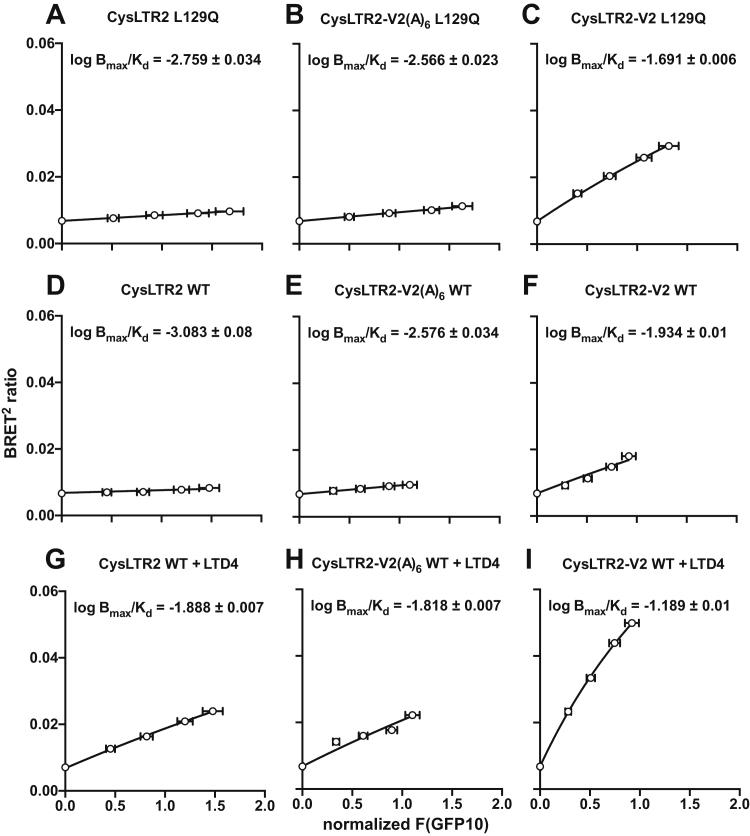
Uveal melanoma is the most common eye cancer in adults and is clinically and genetically distinct from skin cutaneous melanoma. In a subset of cases, the oncogenic driver is an activating mutation in CYSLTR2, the gene encoding the G protein-coupled receptor cysteinyl-leukotriene receptor 2 (CysLTR2). The mutant CYSLTR2 encodes for the CysLTR2-L129Q receptor, with the substitution of Leu to Gln at position 129 (3.43). The ability of CysLTR2-L129Q to cause malignant transformation has been hypothesized to result from constitutive activity, but how the receptor could escape desensitization is unknown. Here, we characterize the functional properties of CysLTR2-L129Q. We show that CysLTR2-L129Q is a constitutively active mutant that strongly drives Gq/11 signaling pathways. However, CysLTR2-L129Q only poorly recruits β-arrestin. Using a modified Slack-Hall operational model, we quantified the constitutive activity for both pathways and conclude that CysLTR2-L129Q displays profound signaling bias for Gq/11 signaling pathways while escaping β-arrestin-mediated downregulation. CYSLTR2 is the first known example of a G protein-coupled receptor driver oncogene that encodes a highly biased constitutively active mutant receptor. These results provide new insights into the mechanism of CysLTR2-L129Q oncoprotein signaling and suggest CYSLTR2 as a promising potential therapeutic target in uveal melanoma.
葡萄膜黑色素瘤是成人中最常见的眼部癌症,在临床上和遗传学上与皮肤黑色素瘤不同。在一些病例中,致癌驱动因素是 CYSLTR2 基因中的激活突变,该基因编码 G 蛋白偶联受体半胱氨酰白三烯受体 2(CysLTR2)。突变的 CYSLTR2 编码为 CysLTR2-L129Q 受体,第 129 位的亮氨酸被谷氨酰胺取代(3.43)。CysLTR2-L129Q 导致恶性转化的能力被假设是由于组成型活性,但受体如何逃避脱敏是未知的。在这里,我们描述了 CysLTR2-L129Q 的功能特性。我们表明 CysLTR2-L129Q 是一种组成型活性突变体,强烈驱动 Gq/11 信号通路。然而,CysLTR2-L129Q 仅很差地募集β-arrestin。使用改良的 Slack-Hall 操作模型,我们量化了两条途径的组成型活性,并得出结论,CysLTR2-L129Q 对 Gq/11 信号通路显示出明显的信号偏置,同时逃避β-arrestin 介导的下调。CYSLTR2 是第一个已知的 G 蛋白偶联受体驱动癌基因的例子,它编码一种高度偏向的组成型活性突变体受体。这些结果为 CysLTR2-L129Q 癌蛋白信号的机制提供了新的见解,并表明 CYSLTR2 是葡萄膜黑色素瘤有前途的潜在治疗靶点。