ISP, INRAE, Université de Tours, Equipe BioVA, Centre Val de Loire, 37380, Nouzilly, France.
Vet Res. 2021 Feb 15;52(1):21. doi: 10.1186/s13567-020-00888-5.
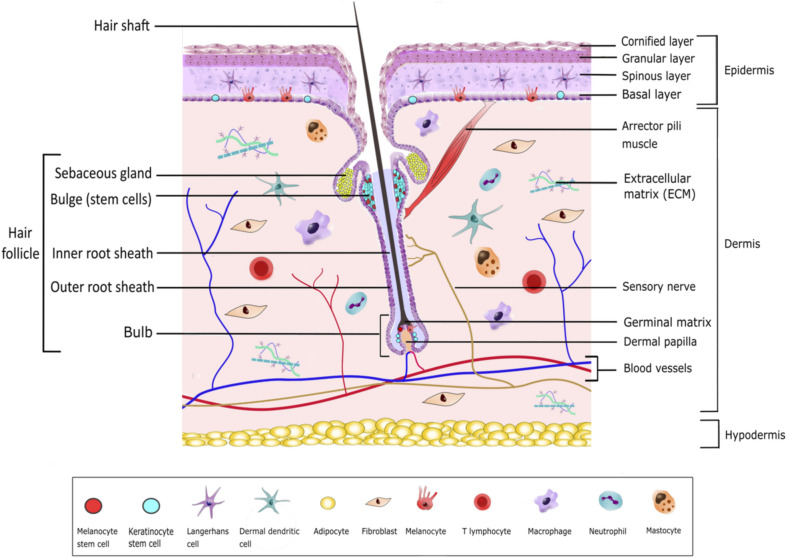
The skin is a passive and active barrier which protects the body from the environment. Its health is essential for the accomplishment of this role. Since several decades, the skin has aroused a strong interest in various fields (for e.g. cell biology, medicine, toxicology, cosmetology, and pharmacology). In contrast to other organs, 3D models were mostly and directly elaborated in humans due to its architectural simplicity and easy accessibility. The development of these models benefited from the societal pressure to reduce animal experiments. In this review, we first describe human and mouse skin structure and the major differences with other mammals and birds. Next, we describe the different 3D human skin models and their main applications. Finally, we review the available models for domestic animals and discuss the current and potential applications.
皮肤是一种被动和主动的屏障,保护身体免受环境侵害。它的健康对于完成这一角色至关重要。几十年来,皮肤在各个领域(例如细胞生物学、医学、毒理学、化妆品学和药理学)引起了强烈的兴趣。与其他器官不同,由于其结构简单和易于接近,3D 模型主要是在人类身上直接进行阐述的。这些模型的发展得益于减少动物实验的社会压力。在这篇综述中,我们首先描述了人类和小鼠的皮肤结构以及与其他哺乳动物和鸟类的主要区别。接下来,我们描述了不同的 3D 人体皮肤模型及其主要应用。最后,我们回顾了用于家畜的现有模型,并讨论了当前和潜在的应用。