Roy-O'Reilly Meaghan, Mulavara Ajitkumar, Williams Thomas
Department of Neurology, University of Texas Health Science Center, Houston, TX, USA.
Department of Medicine, Stanford University Medical Center, Stanford, CA, USA.
NPJ Microgravity. 2021 Feb 16;7(1):5. doi: 10.1038/s41526-021-00133-z.
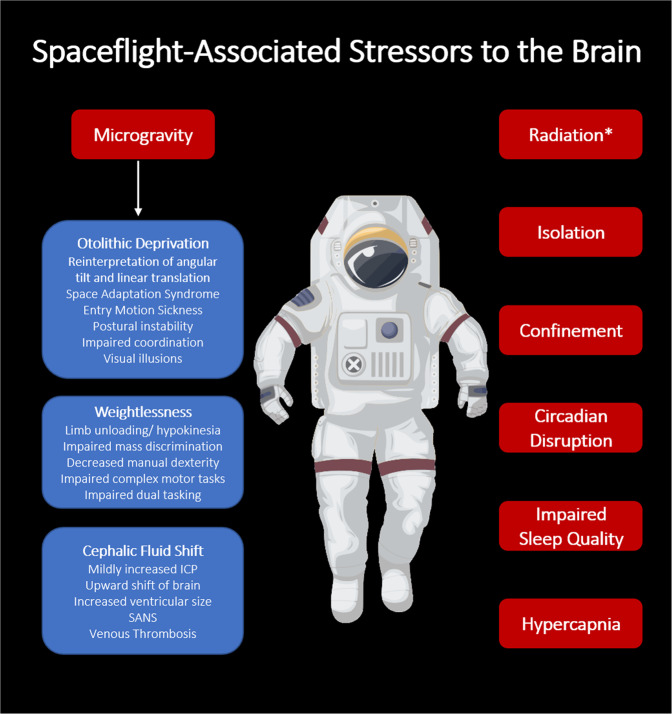
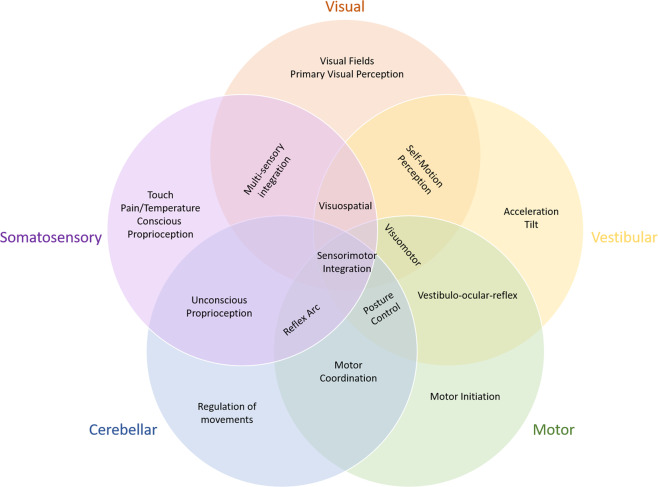
During spaceflight, the central nervous system (CNS) is exposed to a complex array of environmental stressors. However, the effects of long-duration spaceflight on the CNS and the resulting impact to crew health and operational performance remain largely unknown. In this review, we summarize the current knowledge regarding spaceflight-associated changes to the brain as measured by magnetic resonance imaging, particularly as they relate to mission duration. Numerous studies have reported macrostructural changes to the brain after spaceflight, including alterations in brain position, tissue volumes and cerebrospinal fluid distribution and dynamics. Changes in brain tissue microstructure and connectivity were also described, involving regions related to vestibular, cerebellar, visual, motor, somatosensory and cognitive function. Several alterations were also associated with exposure to analogs of spaceflight, providing evidence that brain changes likely result from cumulative exposure to multiple independent environmental stressors. Whereas several studies noted that changes to the brain become more pronounced with increasing mission duration, it remains unclear if these changes represent compensatory phenomena or maladaptive dysregulations. Future work is needed to understand how spaceflight-associated changes to the brain affect crew health and performance, with the goal of developing comprehensive monitoring and countermeasure strategies for future long-duration space exploration.
在太空飞行期间,中枢神经系统(CNS)会受到一系列复杂的环境应激源的影响。然而,长期太空飞行对中枢神经系统的影响以及由此对机组人员健康和操作性能产生的影响在很大程度上仍然未知。在这篇综述中,我们总结了目前通过磁共振成像测量的与太空飞行相关的大脑变化的知识,特别是与任务持续时间相关的变化。许多研究报告了太空飞行后大脑的宏观结构变化,包括脑位置、组织体积以及脑脊液分布和动力学的改变。还描述了脑组织微观结构和连通性的变化,涉及与前庭、小脑、视觉、运动、体感和认知功能相关的区域。一些改变也与太空飞行模拟环境的暴露有关,这为大脑变化可能是由于累积暴露于多个独立的环境应激源提供了证据。虽然有几项研究指出,随着任务持续时间的增加,大脑的变化会变得更加明显,但这些变化是代表代偿现象还是适应不良的失调仍不清楚。未来需要开展工作来了解与太空飞行相关的大脑变化如何影响机组人员的健康和性能,目标是为未来的长期太空探索制定全面的监测和对策策略。