• 文献检索
  • 文档翻译
  • 深度研究
  • 学术资讯
  • Suppr Zotero 插件Zotero 插件
  • 邀请有礼
  • 套餐&价格
  • 历史记录
应用&插件
Suppr Zotero 插件Zotero 插件浏览器插件Mac 客户端Windows 客户端微信小程序
定价
高级版会员购买积分包购买API积分包
服务
文献检索文档翻译深度研究API 文档MCP 服务
关于我们
关于 Suppr公司介绍联系我们用户协议隐私条款
关注我们

Suppr 超能文献

核心技术专利:CN118964589B侵权必究
粤ICP备2023148730 号-1Suppr @ 2026

文献检索

告别复杂PubMed语法,用中文像聊天一样搜索,搜遍4000万医学文献。AI智能推荐,让科研检索更轻松。

立即免费搜索

文件翻译

保留排版,准确专业,支持PDF/Word/PPT等文件格式,支持 12+语言互译。

免费翻译文档

深度研究

AI帮你快速写综述,25分钟生成高质量综述,智能提取关键信息,辅助科研写作。

立即免费体验

印度人与野生动物冲突热点地区的一种独居大型食肉动物的活动行为。

Movement behavior of a solitary large carnivore within a hotspot of human-wildlife conflicts in India.

机构信息

Department Endangered Species Management, Wildlife Institute of India, Chandrabani, Dehradun, Uttarakhand, India.

Savannah Research Ecology Laboratory, University of Georgia, Athens, GA, USA.

出版信息

Sci Rep. 2021 Feb 16;11(1):3862. doi: 10.1038/s41598-021-83262-5.

DOI:10.1038/s41598-021-83262-5
PMID:33594130
原文链接:https://pmc.ncbi.nlm.nih.gov/articles/PMC7887241/
Abstract

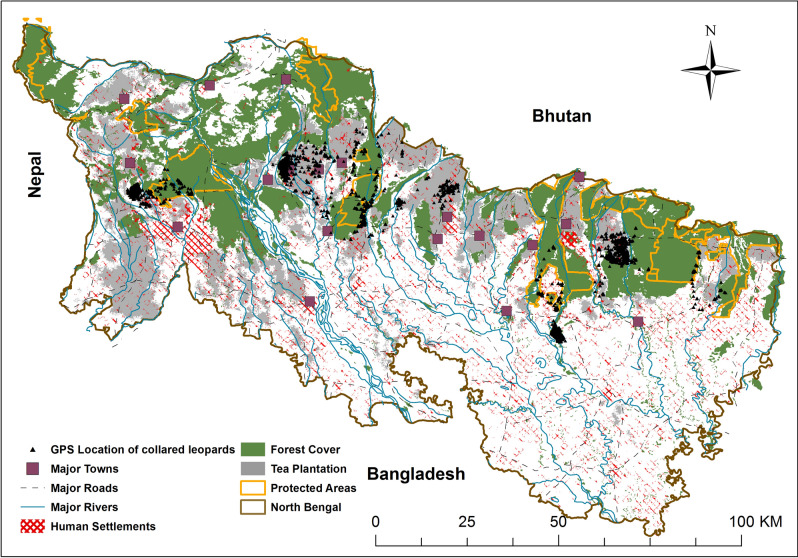
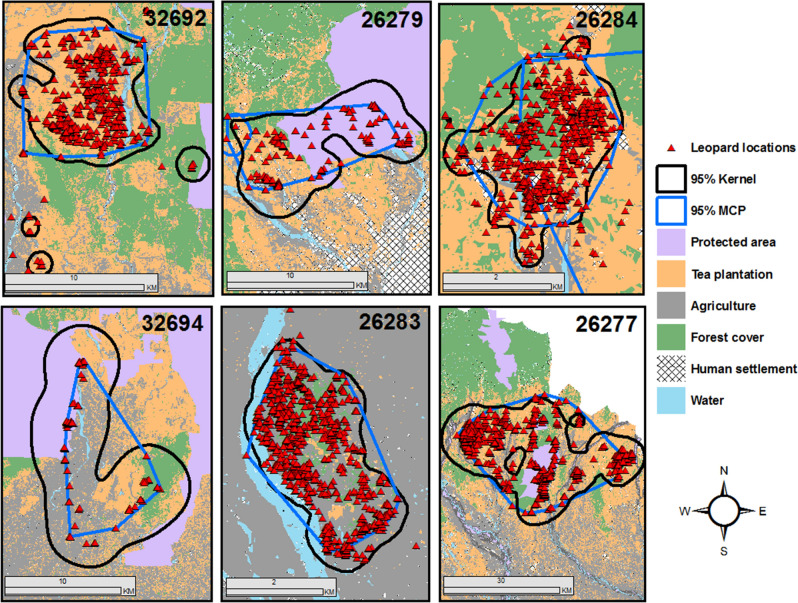
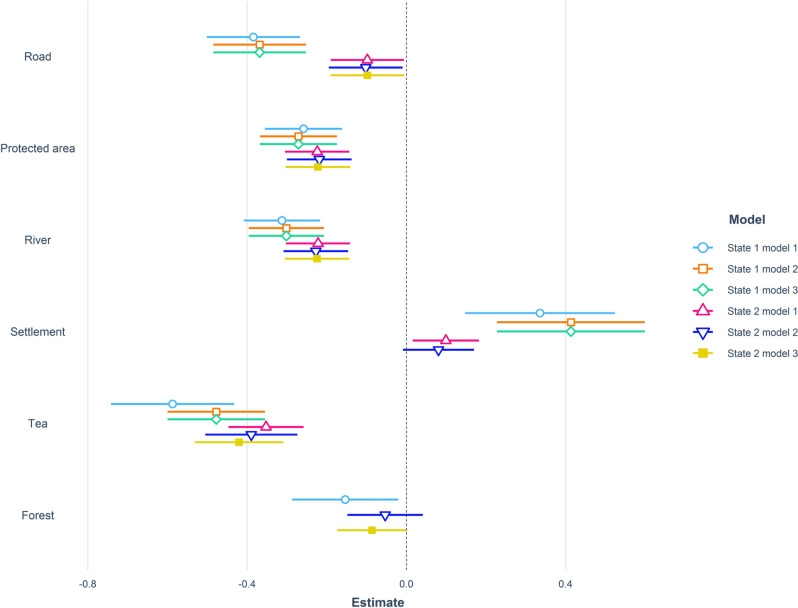
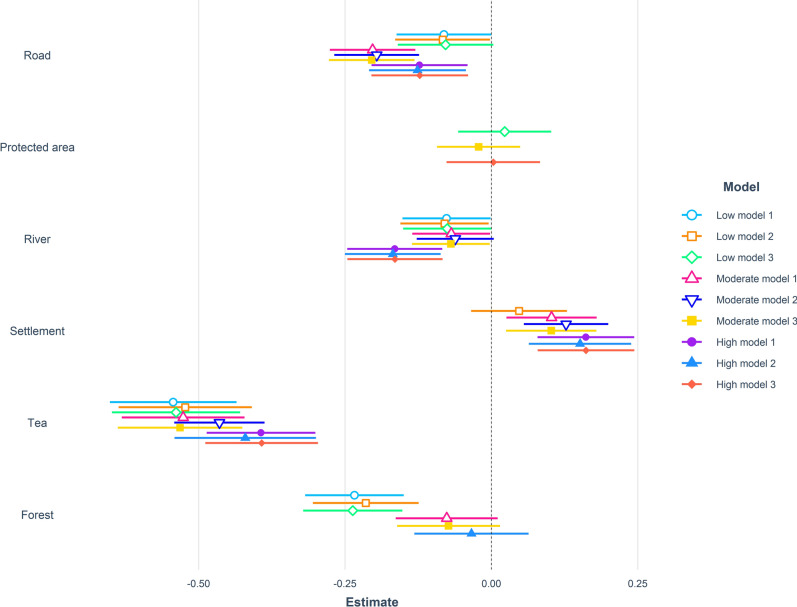
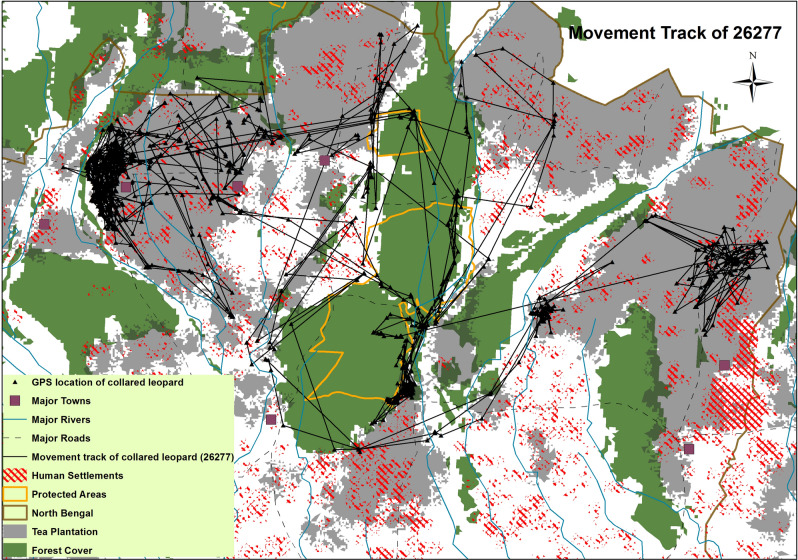
With a rise in human induced changes to natural habitats, large predators are forced to share space and resources with people to coexist within multiple-use landscapes. Within such shared landscapes, co-occurrence of humans and predators often leads to human-carnivore conflicts and pose a substantial challenge for biodiversity conservation. To better elucidate large carnivore space use within a hotspot of human-wildlife conflicts, we used GPS data for leopards (N = 6) to identify behavioral states and document spatial patterns of resource selection in response to season and human activity periods within a fragmented landscape of North Bengal, eastern India. We identified two major behavioral states (i.e. resting and travelling). From the resource selection models, we found leopards selected habitats with dense to moderate vegetation cover and proximity to water while resting and travelling within the landscape. During the dry season, when risk of human-leopard conflicts is highest, leopards selected tea plantations, forest patches but avoided protected areas. These results suggest a potential for increase in human-carnivore conflicts and a strategy to conserve large predators within multiple-use landscapes of South Asia.

摘要

随着人类对自然栖息地的改变日益增多,大型捕食者被迫与人类共享空间和资源,以便在多用途景观中共存。在这种共享的景观中,人类和捕食者的共存常常导致人类-捕食者冲突,对生物多样性保护构成重大挑战。为了更好地阐明热点地区人类-野生动物冲突中的大型食肉动物的空间利用情况,我们使用了 GPS 数据(N=6)来确定行为状态,并记录了在印度东部北孟加拉邦的破碎景观中,对季节和人类活动周期的资源选择的空间模式。我们确定了两种主要的行为状态(即休息和旅行)。从资源选择模型中,我们发现豹子在休息和旅行时会选择植被密度较高或中等、靠近水源的栖息地。在旱季,即人类-豹子冲突风险最高的时候,豹子会选择茶园、森林斑块,但会避开保护区。这些结果表明,南亚多用途景观中,人类-捕食者冲突可能会增加,保护大型捕食者的策略也需要相应调整。
https://cdn.ncbi.nlm.nih.gov/pmc/blobs/e3e0/7887241/9a7b22f9c76b/41598_2021_83262_Fig5_HTML.jpg
https://cdn.ncbi.nlm.nih.gov/pmc/blobs/e3e0/7887241/ad77a74f2626/41598_2021_83262_Fig1_HTML.jpg
https://cdn.ncbi.nlm.nih.gov/pmc/blobs/e3e0/7887241/de15cebe43f7/41598_2021_83262_Fig2_HTML.jpg
https://cdn.ncbi.nlm.nih.gov/pmc/blobs/e3e0/7887241/94b119900d60/41598_2021_83262_Fig3a_HTML.jpg
https://cdn.ncbi.nlm.nih.gov/pmc/blobs/e3e0/7887241/30b5977c189e/41598_2021_83262_Fig4_HTML.jpg
https://cdn.ncbi.nlm.nih.gov/pmc/blobs/e3e0/7887241/9a7b22f9c76b/41598_2021_83262_Fig5_HTML.jpg
https://cdn.ncbi.nlm.nih.gov/pmc/blobs/e3e0/7887241/ad77a74f2626/41598_2021_83262_Fig1_HTML.jpg
https://cdn.ncbi.nlm.nih.gov/pmc/blobs/e3e0/7887241/de15cebe43f7/41598_2021_83262_Fig2_HTML.jpg
https://cdn.ncbi.nlm.nih.gov/pmc/blobs/e3e0/7887241/94b119900d60/41598_2021_83262_Fig3a_HTML.jpg
https://cdn.ncbi.nlm.nih.gov/pmc/blobs/e3e0/7887241/30b5977c189e/41598_2021_83262_Fig4_HTML.jpg
https://cdn.ncbi.nlm.nih.gov/pmc/blobs/e3e0/7887241/9a7b22f9c76b/41598_2021_83262_Fig5_HTML.jpg

相似文献

1
Movement behavior of a solitary large carnivore within a hotspot of human-wildlife conflicts in India.印度人与野生动物冲突热点地区的一种独居大型食肉动物的活动行为。
Sci Rep. 2021 Feb 16;11(1):3862. doi: 10.1038/s41598-021-83262-5.
2
Leopard in a tea-cup: A study of leopard habitat-use and human-leopard interactions in north-eastern India.茶杯里的豹:印度东北部豹栖息地利用及人豹互动研究
PLoS One. 2017 May 11;12(5):e0177013. doi: 10.1371/journal.pone.0177013. eCollection 2017.
3
Spatial variation in leopard (Panthera pardus) site use across a gradient of anthropogenic pressure in Tanzania's Ruaha landscape.坦桑尼亚鲁阿哈景观中豹(Panthera pardus)栖息地利用的空间变化与人为压力梯度的关系。
PLoS One. 2018 Oct 10;13(10):e0204370. doi: 10.1371/journal.pone.0204370. eCollection 2018.
4
Every hill has its leopard: patterns of space use by leopards () in a mixed use landscape in India.每座山都有其豹踪:印度混合利用景观中豹()的空间利用模式
PeerJ. 2020 Oct 8;8:e10072. doi: 10.7717/peerj.10072. eCollection 2020.
5
Landscape predictors of human-leopard conflicts within multi-use areas of the Himalayan region.喜马拉雅地区多用途区人与豹冲突的景观预测因子。
Sci Rep. 2020 Jul 7;10(1):11129. doi: 10.1038/s41598-020-67980-w.
6
Understanding drivers of human-leopard conflicts in the Indian Himalayan region: Spatio-temporal patterns of conflicts and perception of local communities towards conserving large carnivores.了解印度喜马拉雅地区人与豹冲突的驱动因素:冲突的时空模式及当地社区对保护大型食肉动物的看法。
PLoS One. 2018 Oct 5;13(10):e0204528. doi: 10.1371/journal.pone.0204528. eCollection 2018.
7
Facilitation of a free-roaming apex predator in working lands: evaluating factors that influence leopard spatial dynamics and prey availability in a South African biodiversity hotspot.在工作用地上促进顶级掠食者的自由活动:评估影响南非生物多样性热点地区豹空间动态和猎物可获得性的因素。
PeerJ. 2023 Jan 25;11:e14575. doi: 10.7717/peerj.14575. eCollection 2023.
8
Translocation as a tool for mitigating conflict with leopards in human-dominated landscapes of India.通过转移(栖息地)来减少印度人类主导景观中与豹的冲突。
Conserv Biol. 2011 Feb;25(1):133-41. doi: 10.1111/j.1523-1739.2010.01599.x. Epub 2010 Nov 5.
9
Elephants in the neighborhood: patterns of crop-raiding by Asian elephants within a fragmented landscape of Eastern India.附近的大象:印度东部破碎化景观中亚洲象的作物掠夺模式。
PeerJ. 2020 Jul 2;8:e9399. doi: 10.7717/peerj.9399. eCollection 2020.
10
Prevalence and determinants of stereotypic behaviours and physiological stress among tigers and leopards in Indian zoos.印度动物园中老虎和豹的刻板行为及生理应激的患病率和决定因素
PLoS One. 2017 Apr 17;12(4):e0174711. doi: 10.1371/journal.pone.0174711. eCollection 2017.

引用本文的文献

1
Rest to roam: behavioural adaptations of tigers in anthropogenically altered landscapes.从休憩到漫步:人为改变的景观中老虎的行为适应
Mov Ecol. 2025 Aug 28;13(1):61. doi: 10.1186/s40462-025-00594-x.
2
Assessing the implications of habitat transformations on human-large carnivore interactions outside protected areas.评估栖息地转变对保护区外人类与大型食肉动物互动的影响。
Sci Rep. 2025 Aug 6;15(1):28784. doi: 10.1038/s41598-025-13808-4.
3
Long-Ranging Movements of Asiatic Lions: Implications for Conservation and Management in Gujarat, India.

本文引用的文献

1
Landscape predictors of human-leopard conflicts within multi-use areas of the Himalayan region.喜马拉雅地区多用途区人与豹冲突的景观预测因子。
Sci Rep. 2020 Jul 7;10(1):11129. doi: 10.1038/s41598-020-67980-w.
2
Behavior-specific habitat selection by African lions may promote their persistence in a human-dominated landscape.非洲狮的特定行为栖息地选择可能有助于它们在以人类为主导的景观中生存。
Ecology. 2019 Apr;100(4):e02644. doi: 10.1002/ecy.2644. Epub 2019 Feb 28.
3
Assessment and prediction of spatial patterns of human-elephant conflicts in changing land cover scenarios of a human-dominated landscape in North Bengal.
亚洲狮的远距离移动:对印度古吉拉特邦保护与管理的启示
Ecol Evol. 2025 Jul 16;15(7):e71811. doi: 10.1002/ece3.71811. eCollection 2025 Jul.
4
Human disturbance alters the foraging and spatiotemporal activity of a large carnivore.人类干扰会改变大型食肉动物的觅食行为和时空活动规律。
Oecologia. 2025 Jun 26;207(7):112. doi: 10.1007/s00442-025-05752-x.
5
Home range, habitat use and capture-release of translocated leopards in Gir landscape, Gujarat, India.印度古吉拉特邦吉尔景观中被转移的豹子的家域、栖息地利用和捕获-释放。
PLoS One. 2024 Jun 10;19(6):e0305278. doi: 10.1371/journal.pone.0305278. eCollection 2024.
6
Social-ecological predictors of spotted hyena navigation through a shared landscape.斑鬣狗在共享领地中导航的社会生态预测因素。
Ecol Evol. 2024 Apr 25;14(4):e11293. doi: 10.1002/ece3.11293. eCollection 2024 Apr.
7
Current wildlife crime (Indian scenario): major challenges and prevention approaches.当前的野生动物犯罪(印度情况):主要挑战与预防方法。
Biodivers Conserv. 2023;32(5):1473-1491. doi: 10.1007/s10531-023-02577-z. Epub 2023 Mar 20.
8
Animal movement ecology in India: insights from 2011-2021 and prospective for the future.印度的动物运动生态学:2011-2021 年的见解与未来展望。
PeerJ. 2022 Dec 13;10:e14401. doi: 10.7717/peerj.14401. eCollection 2022.
9
Brown bear and Persian leopard attacks on humans in Iran.伊朗境内的棕熊和波斯豹袭人事件。
PLoS One. 2021 Jul 22;16(7):e0255042. doi: 10.1371/journal.pone.0255042. eCollection 2021.
评估和预测北孟加拉以人类为主导的景观中不断变化的土地覆盖情景下,人象冲突的空间模式。
PLoS One. 2019 Feb 1;14(2):e0210580. doi: 10.1371/journal.pone.0210580. eCollection 2019.
4
Understanding drivers of human-leopard conflicts in the Indian Himalayan region: Spatio-temporal patterns of conflicts and perception of local communities towards conserving large carnivores.了解印度喜马拉雅地区人与豹冲突的驱动因素:冲突的时空模式及当地社区对保护大型食肉动物的看法。
PLoS One. 2018 Oct 5;13(10):e0204528. doi: 10.1371/journal.pone.0204528. eCollection 2018.
5
Living on the edge: Multiscale habitat selection by cheetahs in a human-wildlife landscape.边缘生存:人类与野生动物共存景观中猎豹的多尺度栖息地选择
Ecol Evol. 2018 Jul 9;8(15):7611-7623. doi: 10.1002/ece3.4269. eCollection 2018 Aug.
6
The influence of human disturbance on wildlife nocturnality.人类干扰对野生动物夜间活动的影响。
Science. 2018 Jun 15;360(6394):1232-1235. doi: 10.1126/science.aar7121.
7
Anchoring and adjusting amidst humans: Ranging behavior of Persian leopards along the Iran-Turkmenistan borderland.在人类中扎根和适应:伊朗-土库曼斯坦边境地区波斯豹的活动范围行为。
PLoS One. 2018 May 2;13(5):e0196602. doi: 10.1371/journal.pone.0196602. eCollection 2018.
8
Moving in the Anthropocene: Global reductions in terrestrial mammalian movements.人类世中的迁徙:全球陆地哺乳动物迁徙减少。
Science. 2018 Jan 26;359(6374):466-469. doi: 10.1126/science.aam9712.
9
Habitat selection by Eurasian lynx () is primarily driven by avoidance of human activity during day and prey availability during night.欧亚猞猁()的栖息地选择主要受白天对人类活动的回避以及夜晚猎物可获得性的驱动。
Ecol Evol. 2017 Jul 6;7(16):6367-6381. doi: 10.1002/ece3.3204. eCollection 2017 Aug.
10
Paws without claws? Ecological effects of large carnivores in anthropogenic landscapes.没有爪子的爪子?大型食肉动物在人为景观中的生态影响。
Proc Biol Sci. 2016 Oct 26;283(1841). doi: 10.1098/rspb.2016.1625.