Department of Experimental and Clinical Medicine, Magna Graecia University, Catanzaro, Italy.
Annunziata Hospital, Cosenza, Italy.
J Transl Med. 2021 Feb 17;19(1):79. doi: 10.1186/s12967-021-02744-2.
The Sars-CoV-2 can cause severe pneumonia with multiorgan disease; thus, the identification of clinical and laboratory predictors of the progression towards severe and fatal forms of this illness is needed. Here, we retrospectively evaluated and integrated laboratory parameters of 45 elderly subjects from a long-term care facility with Sars-CoV-2 outbreak and spread, to identify potential common patterns of systemic response able to better stratify patients' clinical course and outcome.
Baseline white blood cells, granulocytes', lymphocytes', and platelets' counts, hemoglobin, total iron, ferritin, D-dimer, and interleukin-6 concentration were used to generate a principal component analysis. Statistical analysis was performed by using R statistical package version 4.0.
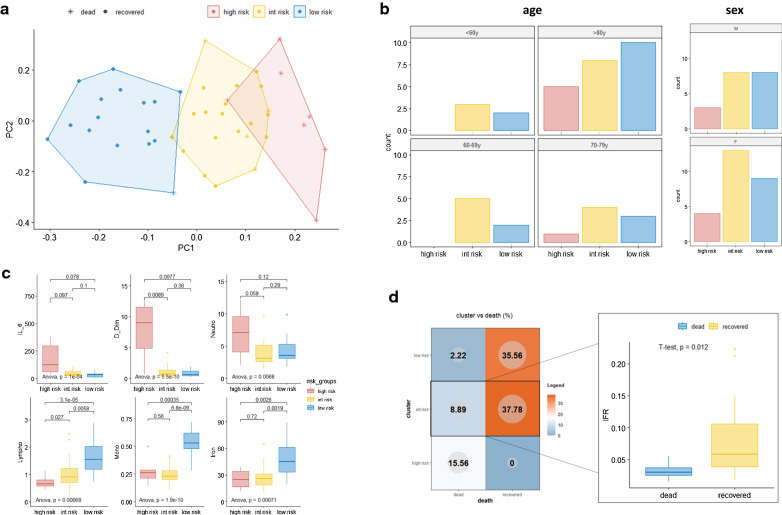
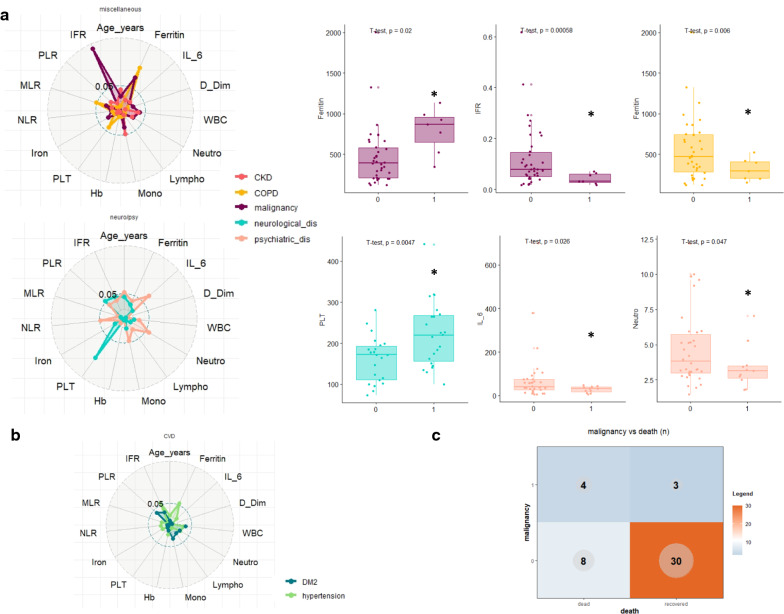
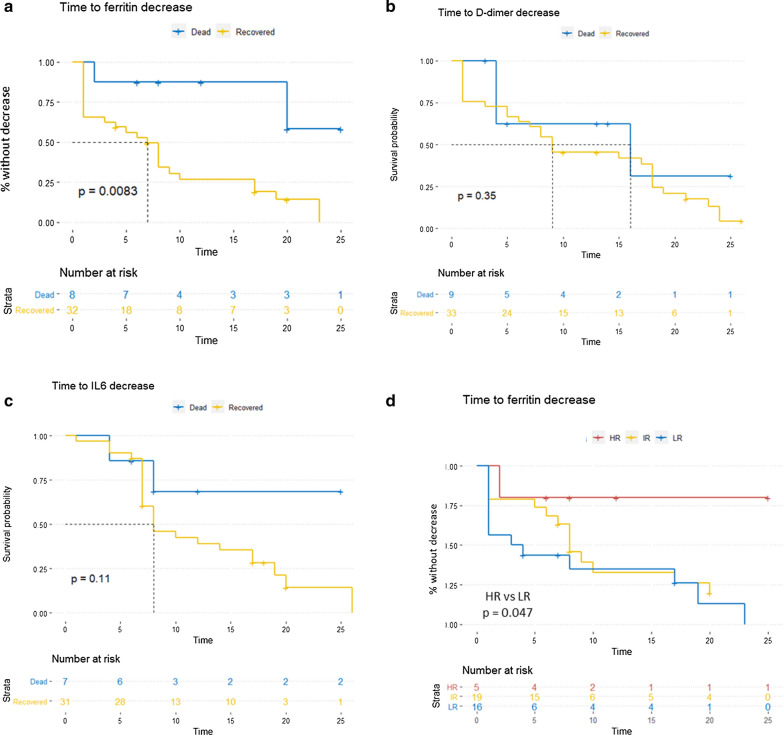
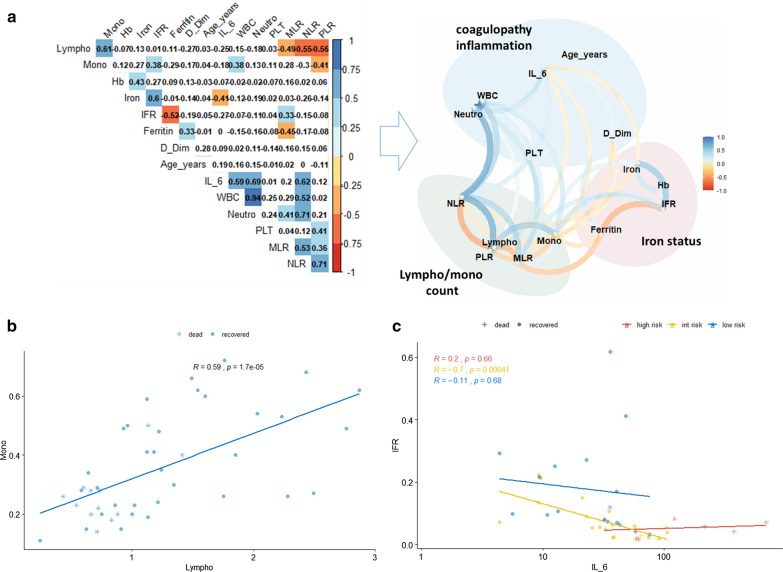
We identified 3 laboratory patterns of response, renamed as low-risk, intermediate-risk, and high-risk, strongly associated with patients' survival (p < 0.01). D-dimer, iron status, lymphocyte/monocyte count represented the main markers discriminating high- and low-risk groups. Patients belonging to the high-risk group presented a significantly longer time to ferritin decrease (p: 0.047). Iron-to-ferritin-ratio (IFR) significantly segregated recovered and dead patients in the intermediate-risk group (p: 0.012).
Our data suggest that a combination of few laboratory parameters, i.e. iron status, D-dimer and lymphocyte/monocyte count at admission and during the hospital stay, can predict clinical progression in COVID-19.
Sars-CoV-2 可引起多器官疾病的重症肺炎;因此,需要确定这种疾病向严重和致命形式进展的临床和实验室预测因素。在这里,我们回顾性评估了来自长期护理机构爆发和传播的 45 名老年 Sars-CoV-2 患者的实验室参数,以确定潜在的全身性反应共同模式,从而更好地分层患者的临床病程和结局。
使用白细胞、粒细胞、淋巴细胞和血小板计数、血红蛋白、总铁、铁蛋白、D-二聚体和白细胞介素-6 浓度的基线值生成主成分分析。使用 R 统计软件包版本 4.0 进行统计分析。
我们确定了 3 种实验室反应模式,分别重新命名为低风险、中风险和高风险,与患者的生存率密切相关(p<0.01)。D-二聚体、铁状态、淋巴细胞/单核细胞计数是区分高风险和低风险组的主要标志物。高风险组患者铁蛋白下降的时间明显延长(p:0.047)。中间风险组的铁蛋白比值(IFR)显著区分了恢复和死亡患者(p:0.012)。
我们的数据表明,少数实验室参数的组合,即入院和住院期间的铁状态、D-二聚体和淋巴细胞/单核细胞计数,可预测 COVID-19 的临床进展。