Duncan J S, Angell J W, Richards P, Lenzi L, Staton G J, Grove-White D, Clegg S, Oikonomou G, Carter S D, Evans N J
Department of Livestock and One Health, Institute of Infection, Veterinary and Ecological Science, University of Liverpool, Leahurst Campus, Neston, Wirral, CH64 7TE, UK.
Wern Veterinary Surgeons, Department of Research and Innovation, Unit 11, Lon Parcwr Industrial Estate, Ruthin, LL15 1NJ, UK.
Anim Microbiome. 2021 Feb 17;3(1):19. doi: 10.1186/s42523-021-00078-4.
Contagious Ovine Digital Dermatitis (CODD) is an emerging and common infectious foot disease of sheep which causes severe welfare and economic problems for the sheep industry. The aetiology of the disease is not fully understood and control of the disease is problematic. The aim of this study was to investigate the polybacterial aetiopathogenesis of CODD and the effects of antibiotic treatment, in a longitudinal study of an experimentally induced disease outbreak using a 16S rRNA gene amplicon sequencing approach.
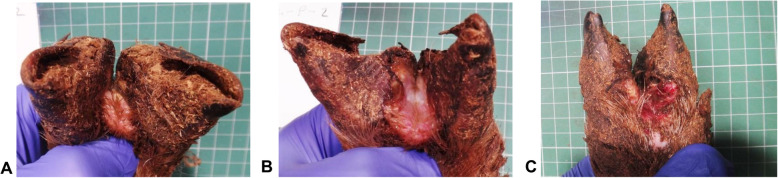
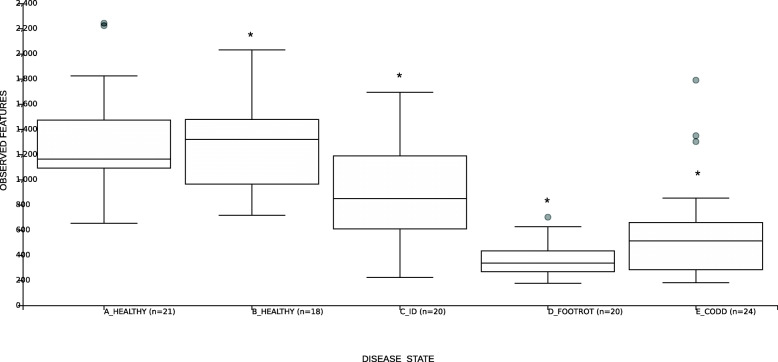
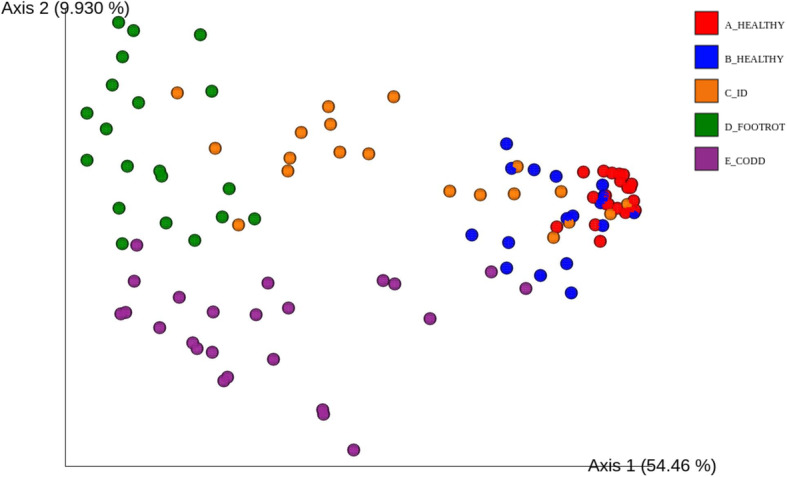
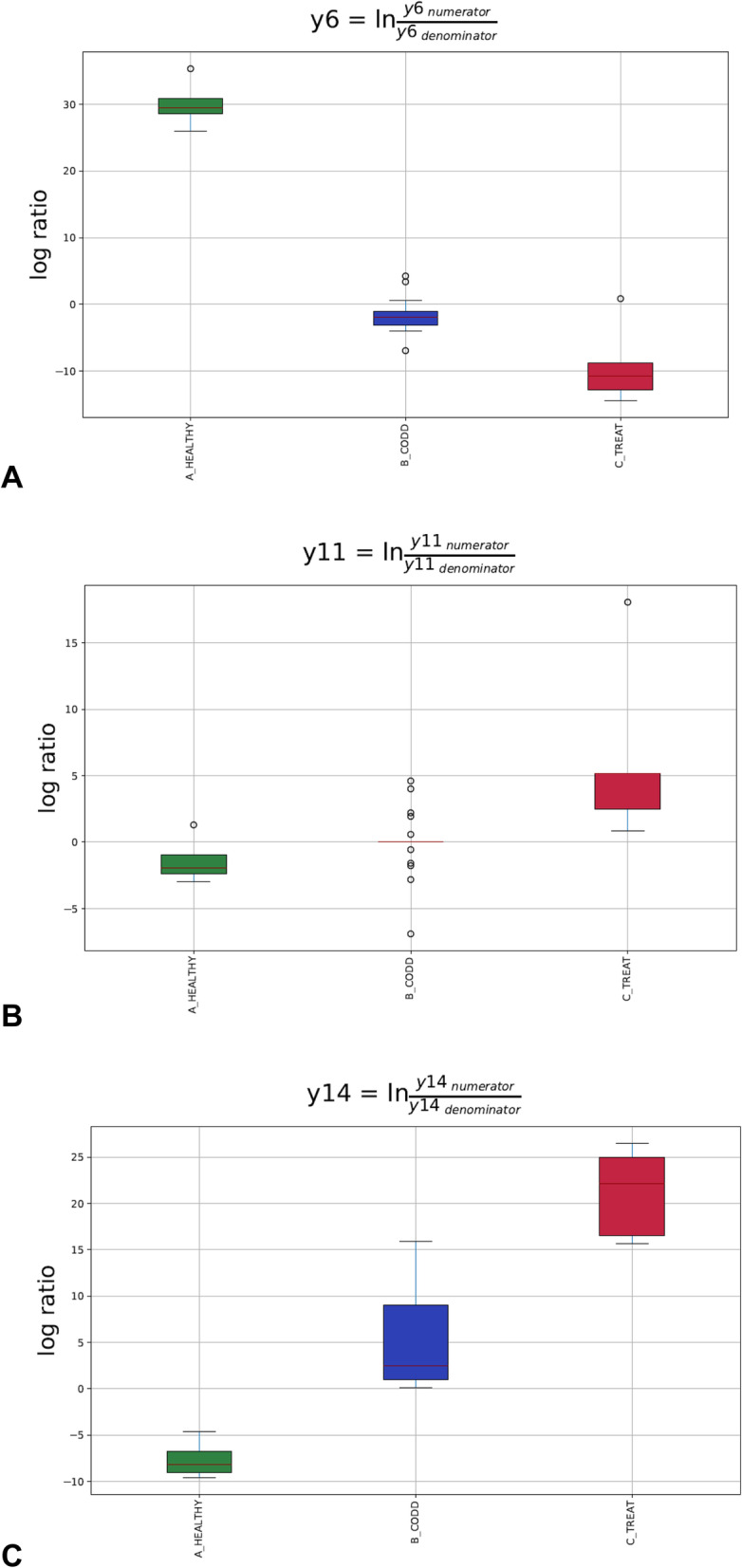
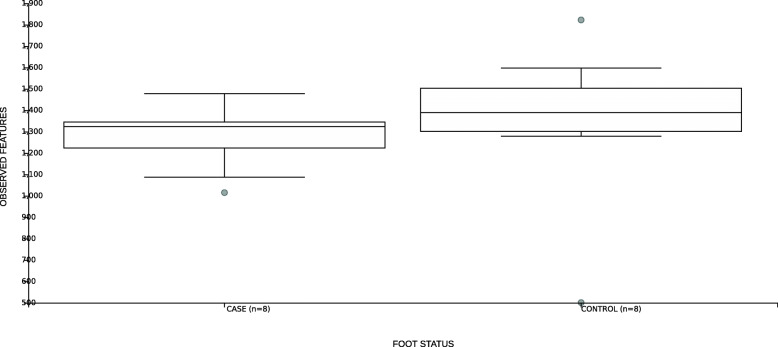
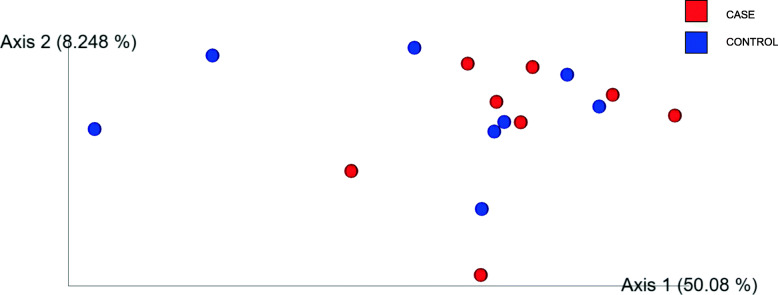
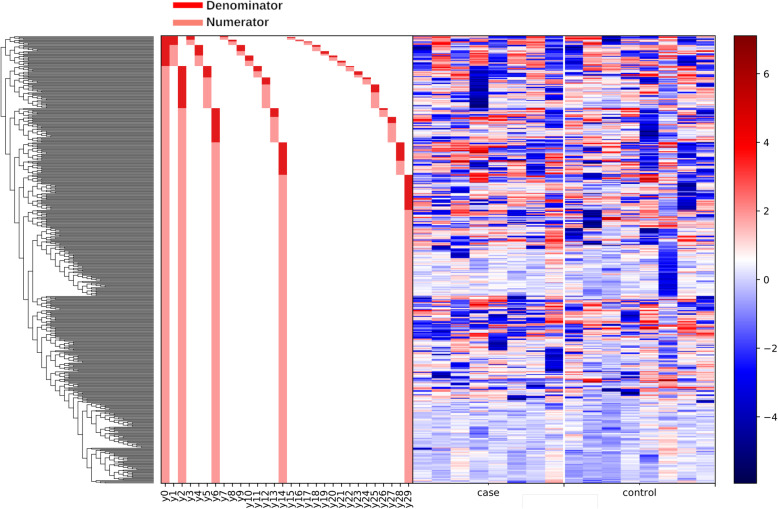
CODD was induced in 15/30 experimental sheep. During the development of CODD three distinct phenotypic lesion stages were observed. These were an initial interdigital dermatitis (ID) lesion, followed by a footrot (FR) lesion, then finally a CODD lesion. Distinct microbiota were observed for each lesion in terms of microbial diversity, clustering and composition. Porphyromonadaceae, Family XI, Veillonellaceae and Fusobacteriaceae were significantly associated with the diseased feet. Veillonellaceae and Fusobacteriaceae were most associated with the earlier stages of ID and footrot rather than CODD. Following antibiotic treatment of the sheep, the foot microbiota showed a strong tendency to return to the composition of the healthy state. The microbiota composition of CODD lesions collected by swab and biopsy methods were different. In particular, the Spirochaetaceae family were more abundant in samples collected by the biopsy method, suggesting that these bacteria are present in deeper tissues of the diseased foot.
In this study, CODD presented as part of a spectrum of poly-bacterial foot disease strongly associated with bacterial families Porphyromonadaceae, Family XI (a family in Clostridiales also known as Clostridium cluster XI), Veillonellaceae and Fusobacteriaceae which are predominately Gram-negative anaerobes. Following antibiotic treatment, the microbiome showed a strong tendency to return to the composition of the healthy state. The composition of the healthy foot microbiome does not influence susceptibility to CODD. Based on the data presented here and that CODD appears to be the severest end stage of sheep infectious foot disease lesions, better control of the initial ID and FR lesions would enable better control of CODD and enable better animal welfare.
传染性绵羊趾间皮炎(CODD)是一种新出现的常见绵羊足部传染病,给养羊业带来了严重的福利和经济问题。该病的病因尚未完全明确,疾病控制存在问题。本研究旨在通过16S rRNA基因扩增子测序方法,对实验性诱导的疾病暴发进行纵向研究,以探究CODD的多菌病因发病机制及抗生素治疗的效果。
30只实验绵羊中有15只诱发了CODD。在CODD的发展过程中,观察到三个不同的表型病变阶段。最初是趾间皮炎(ID)病变,随后是腐蹄病(FR)病变,最后是CODD病变。就微生物多样性、聚类和组成而言,每个病变都观察到了不同的微生物群。卟啉单胞菌科、XI科、韦荣球菌科和梭杆菌科与患病足部显著相关。韦荣球菌科和梭杆菌科与ID和腐蹄病的早期阶段关系最为密切,而非CODD。对绵羊进行抗生素治疗后,足部微生物群显示出强烈的恢复到健康状态组成的趋势。通过拭子和活检方法收集的CODD病变的微生物群组成不同。特别是,螺旋体科在活检方法收集的样本中更为丰富,这表明这些细菌存在于患病足部的更深组织中。
在本研究中,CODD表现为多菌性足部疾病谱的一部分,与卟啉单胞菌科、XI科(梭菌目中的一个科,也称为梭菌属XI簇)、韦荣球菌科和梭杆菌科密切相关,这些菌主要是革兰氏阴性厌氧菌。抗生素治疗后,微生物群显示出强烈的恢复到健康状态组成的趋势。健康足部微生物群的组成不影响对CODD的易感性。基于此处提供的数据以及CODD似乎是绵羊传染性足部疾病病变最严重的终末期,更好地控制初始ID和FR病变将能够更好地控制CODD并实现更好的动物福利。