Centro Interdisciplinario de Neurociencia de Valparaíso, Universidad de Valparaíso, Valparaíso, Chile.
Programa de Doctorado en Ciencias, mención Biofísica y Biología Computacional, Universidad de Valparaíso, Valparaíso, Chile.
PLoS Comput Biol. 2021 Feb 18;17(2):e1008737. doi: 10.1371/journal.pcbi.1008737. eCollection 2021 Feb.
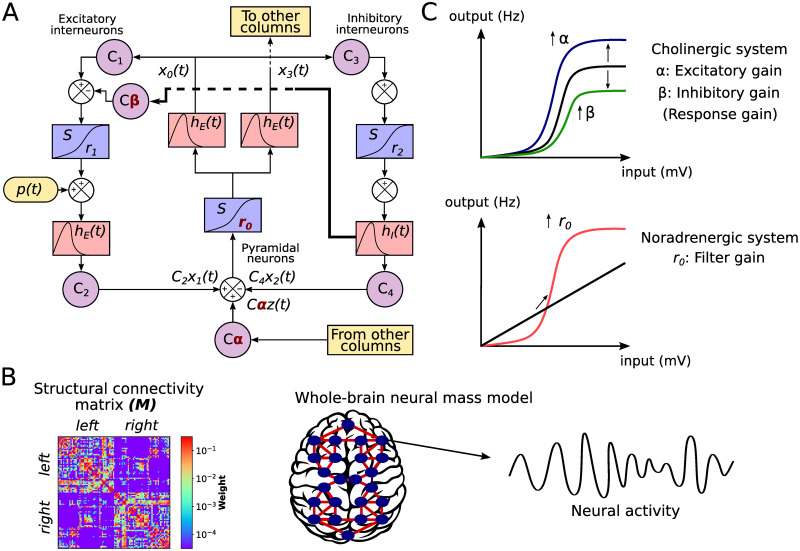
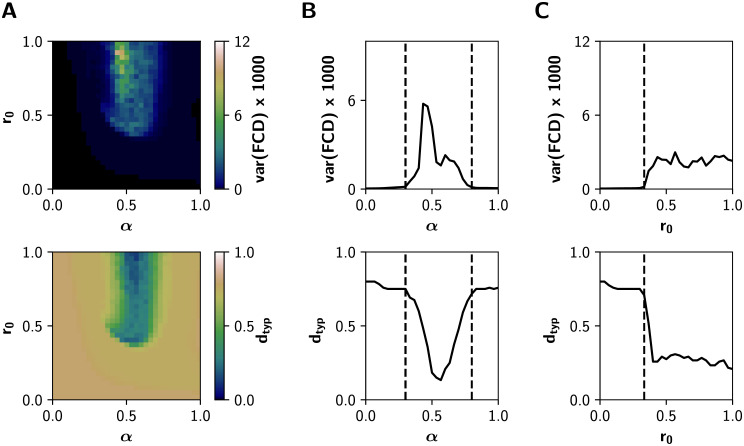
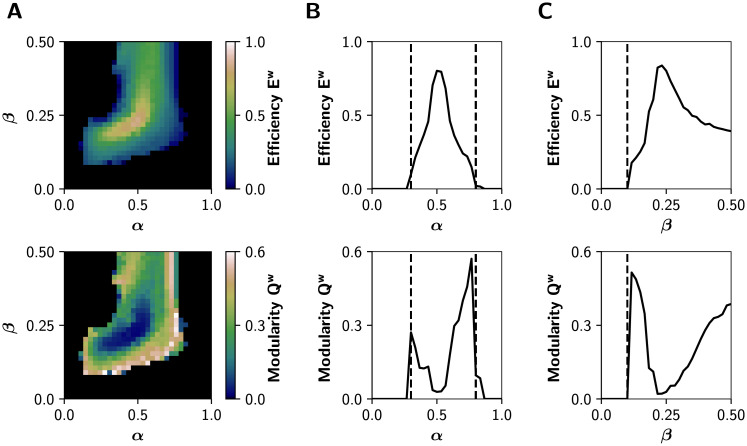
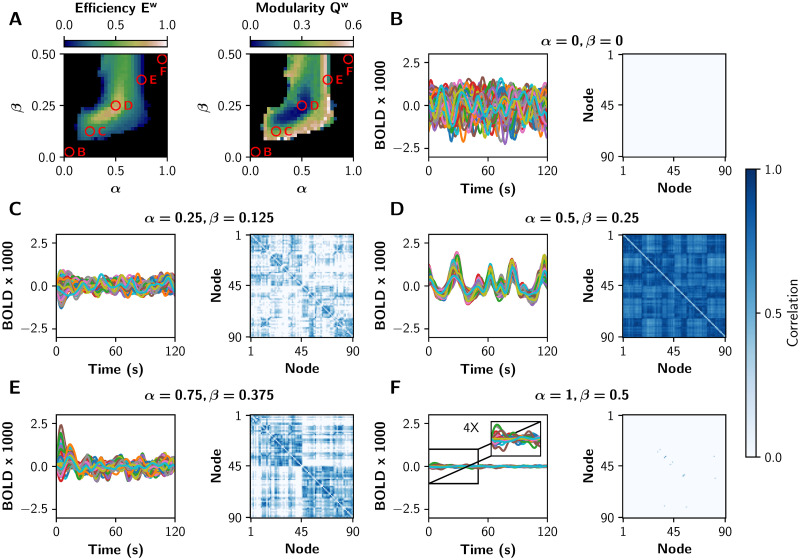
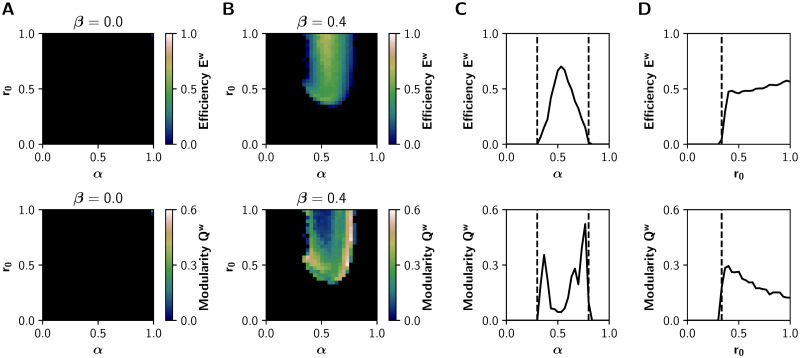
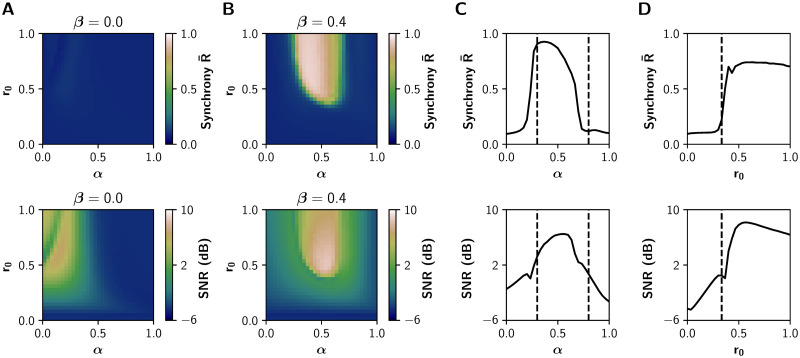
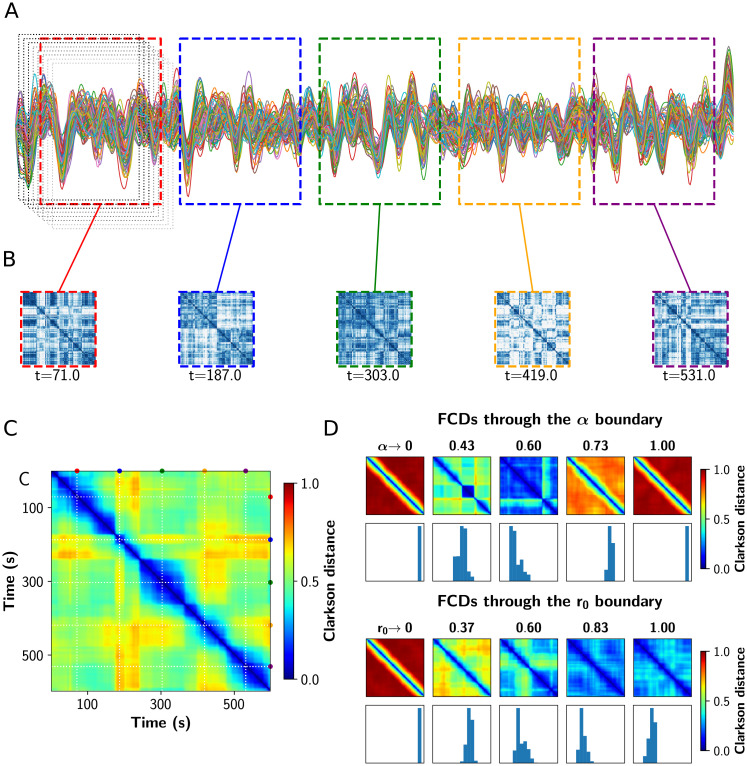
Segregation and integration are two fundamental principles of brain structural and functional organization. Neuroimaging studies have shown that the brain transits between different functionally segregated and integrated states, and neuromodulatory systems have been proposed as key to facilitate these transitions. Although whole-brain computational models have reproduced this neuromodulatory effect, the role of local inhibitory circuits and their cholinergic modulation has not been studied. In this article, we consider a Jansen & Rit whole-brain model in a network interconnected using a human connectome, and study the influence of the cholinergic and noradrenergic neuromodulatory systems on the segregation/integration balance. In our model, we introduce a local inhibitory feedback as a plausible biophysical mechanism that enables the integration of whole-brain activity, and that interacts with the other neuromodulatory influences to facilitate the transition between different functional segregation/integration regimes in the brain.
分群和整合是大脑结构和功能组织的两个基本原理。神经影像学研究表明,大脑在不同的功能分群和整合状态之间转换,而神经调质系统被认为是促进这些转换的关键。尽管全脑计算模型已经复制了这种神经调质效应,但局部抑制回路及其胆碱能调制的作用尚未得到研究。在本文中,我们考虑了一个使用人类连接组进行网络互连的 Jansen & Rit 全脑模型,并研究了胆碱能和去甲肾上腺素能神经调质系统对分群/整合平衡的影响。在我们的模型中,我们引入了局部抑制反馈作为一种可能的生物物理机制,使全脑活动能够整合,并与其他神经调质影响相互作用,促进大脑中不同功能分群/整合状态之间的转换。