Centro Interdisciplinario de Neurociencia de Valparaíso, Universidad de Valparaíso, Valparaíso, Chile.
Biomedical Research Doctorate Program, University of the Basque Country (UPV/EHU), Leioa, Spain.
PLoS Comput Biol. 2022 Sep 2;18(9):e1010431. doi: 10.1371/journal.pcbi.1010431. eCollection 2022 Sep.
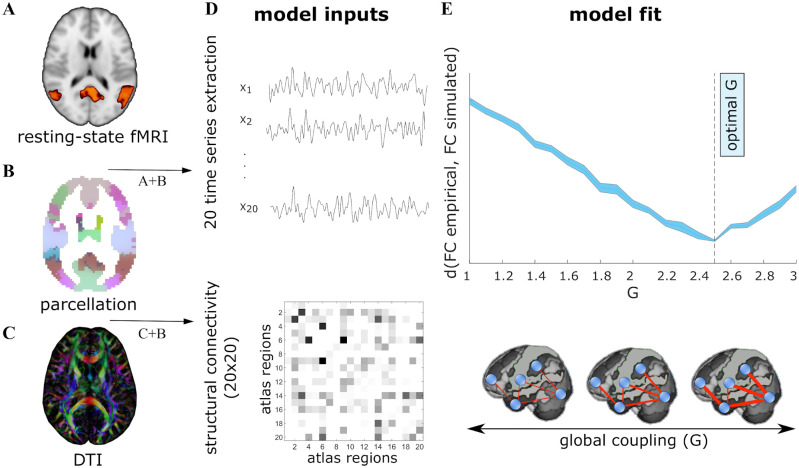
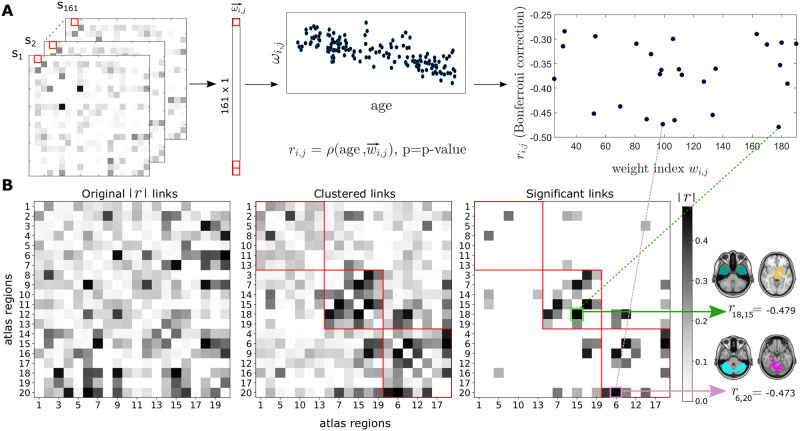
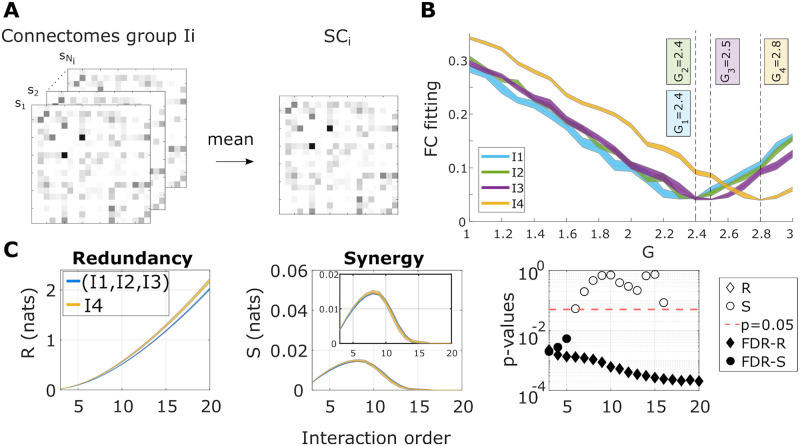
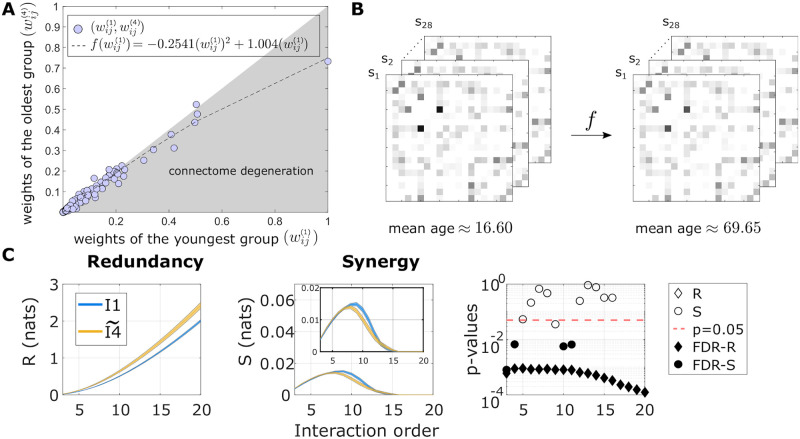
The human brain generates a rich repertoire of spatio-temporal activity patterns, which support a wide variety of motor and cognitive functions. These patterns of activity change with age in a multi-factorial manner. One of these factors is the variations in the brain's connectomics that occurs along the lifespan. However, the precise relationship between high-order functional interactions and connnectomics, as well as their variations with age are largely unknown, in part due to the absence of mechanistic models that can efficiently map brain connnectomics to functional connectivity in aging. To investigate this issue, we have built a neurobiologically-realistic whole-brain computational model using both anatomical and functional MRI data from 161 participants ranging from 10 to 80 years old. We show that the differences in high-order functional interactions between age groups can be largely explained by variations in the connectome. Based on this finding, we propose a simple neurodegeneration model that is representative of normal physiological aging. As such, when applied to connectomes of young participant it reproduces the age-variations that occur in the high-order structure of the functional data. Overall, these results begin to disentangle the mechanisms by which structural changes in the connectome lead to functional differences in the ageing brain. Our model can also serve as a starting point for modeling more complex forms of pathological ageing or cognitive deficits.
人类大脑产生了丰富的时空活动模式,这些模式支持着各种各样的运动和认知功能。这些活动模式以多因素的方式随着年龄的增长而变化。其中一个因素是大脑连接组学的变化,这种变化发生在整个生命周期中。然而,高级功能相互作用与连接组学之间的精确关系,以及它们随年龄的变化在很大程度上是未知的,部分原因是缺乏能够有效地将大脑连接组学映射到衰老过程中的功能连接的机制模型。为了解决这个问题,我们使用来自 161 名年龄在 10 岁至 80 岁之间的参与者的解剖学和功能磁共振成像数据构建了一个神经生物学上逼真的全脑计算模型。我们表明,不同年龄组之间的高级功能相互作用的差异可以很大程度上用连接组学的变化来解释。基于这一发现,我们提出了一个简单的神经退行性变模型,该模型代表了正常的生理衰老。因此,当应用于年轻参与者的连接组时,它再现了在功能数据的高阶结构中发生的年龄变化。总的来说,这些结果开始阐明连接组学的结构变化如何导致衰老大脑中的功能差异的机制。我们的模型还可以作为建模更复杂形式的病理性衰老或认知缺陷的起点。