Nofima AS, Norwegian Institute of Food, Fisheries and Aquaculture Research, Osloveien 1, 1430, Ås, Norway.
Rothamsted Research, Harpenden, Hertfordshire, AL5 2JQ, UK.
Sci Rep. 2021 Feb 18;11(1):4087. doi: 10.1038/s41598-021-82388-w.
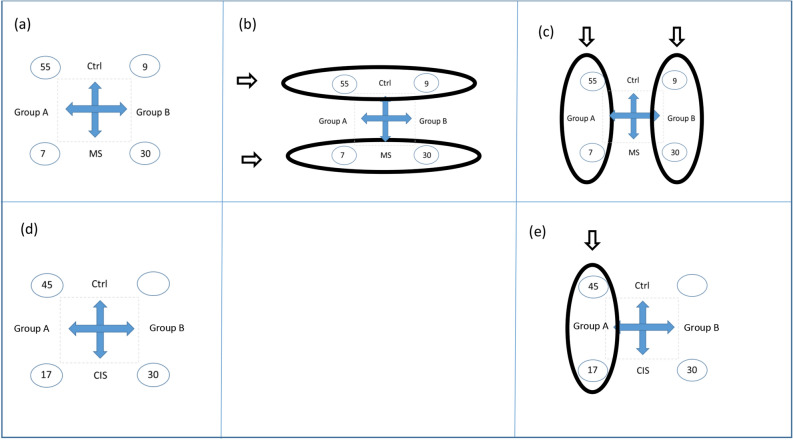
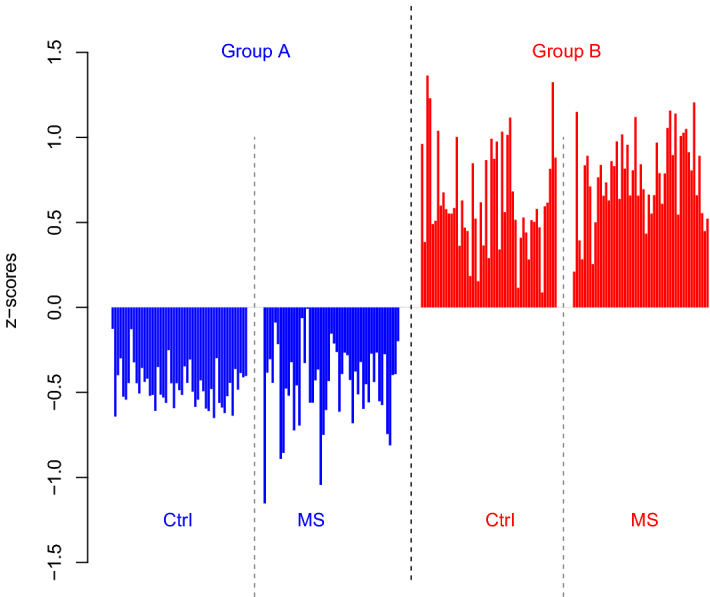
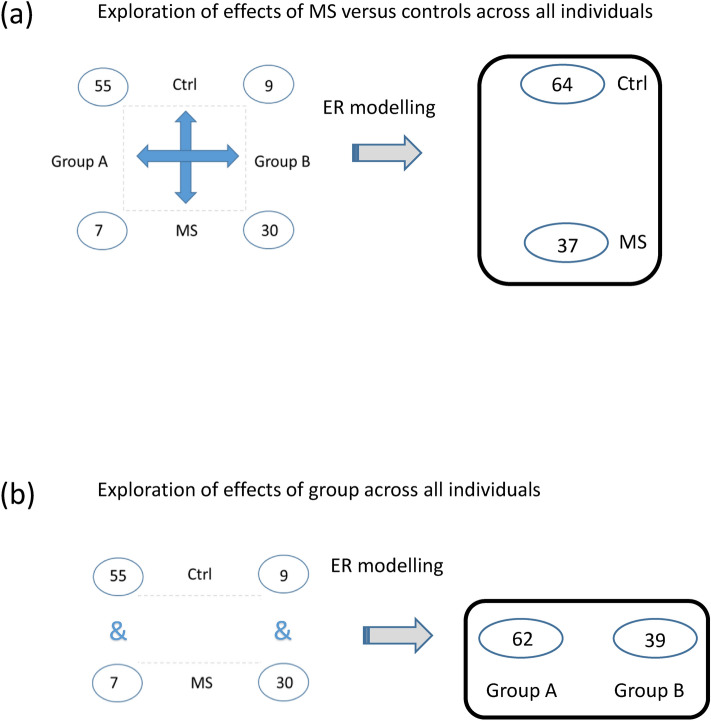
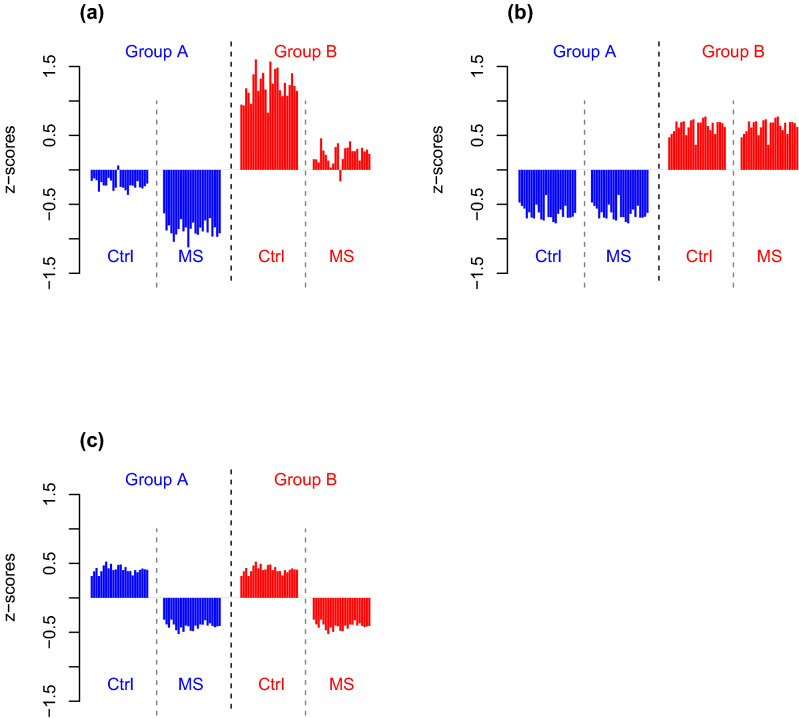
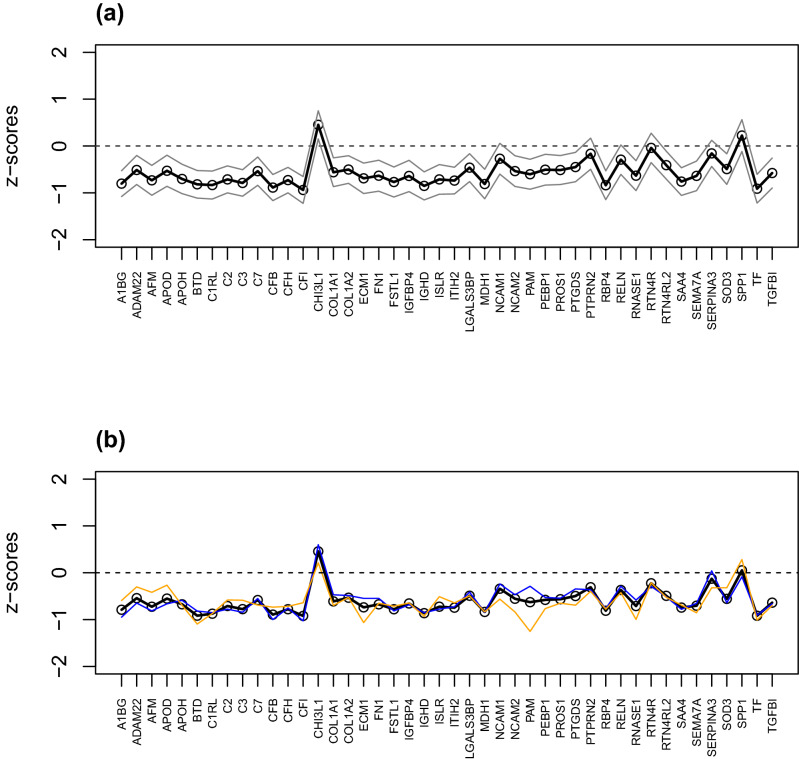
Despite intensive research, the aetiology of multiple sclerosis (MS) remains unknown. Cerebrospinal fluid proteomics has the potential to reveal mechanisms of MS pathogenesis, but analyses must account for disease heterogeneity. We previously reported explorative multivariate analysis by hierarchical clustering of proteomics data of MS patients and controls, which resulted in two groups of individuals. Grouping reflected increased levels of intrathecal inflammatory response proteins and decreased levels of proteins involved in neural development in one group relative to the other group. MS patients and controls were present in both groups. Here we reanalysed these data and we also reanalysed data from an independent cohort of patients diagnosed with clinically isolated syndrome (CIS), who have symptoms of MS without evidence of dissemination in space and/or time. Some, but not all, CIS patients had intrathecal inflammation. The analyses reported here identified a common protein signature of MS/CIS that was not linked to elevated intrathecal inflammation. The signature included low levels of complement proteins, semaphorin-7A, reelin, neural cell adhesion molecules, inter-alpha-trypsin inhibitor heavy chain H2, transforming growth factor beta 1, follistatin-related protein 1, malate dehydrogenase 1 cytoplasmic, plasma retinol-binding protein, biotinidase, and transferrin, all known to play roles in neural development. Low levels of these proteins suggest that MS/CIS patients suffer from abnormally low oxidative capacity that results in disrupted neural development from an early stage of the disease.
尽管进行了深入的研究,但多发性硬化症 (MS) 的病因仍然未知。脑脊液蛋白质组学有可能揭示 MS 发病机制的机制,但分析必须考虑到疾病的异质性。我们之前曾报告过对 MS 患者和对照组的蛋白质组学数据进行分层聚类的探索性多变量分析,结果导致两组个体。与另一组相比,一组个体的鞘内炎症反应蛋白水平升高,参与神经发育的蛋白质水平降低。MS 患者和对照组均存在于两组中。在这里,我们重新分析了这些数据,还重新分析了来自一组独立的临床孤立综合征 (CIS) 患者的数据,这些患者有 MS 症状,但没有空间和/或时间传播的证据。一些,但不是所有,CIS 患者都有鞘内炎症。这里报告的分析确定了 MS/CIS 的常见蛋白质特征,与鞘内炎症升高无关。该特征包括补体蛋白、神经丝蛋白-7A、reelin、神经细胞黏附分子、α-胰蛋白酶抑制剂重链 H2、转化生长因子β 1、卵泡抑素相关蛋白 1、苹果酸脱氢酶 1 细胞质、血浆视黄醇结合蛋白、生物素酶和转铁蛋白水平降低,这些蛋白均已知在神经发育中发挥作用。这些蛋白质水平较低表明,MS/CIS 患者患有异常低的氧化能力,导致疾病早期神经发育中断。