Sensyne Health Plc, Schrodinger Building, Heatley Road, Oxford Science Park, Oxford, OX4 4GE, UK.
Chelsea and Westminster Hospital NHS Foundation Trust, 369 Fulham Road, London, SW10 9NH, UK.
Sci Rep. 2021 Feb 18;11(1):4200. doi: 10.1038/s41598-021-83784-y.
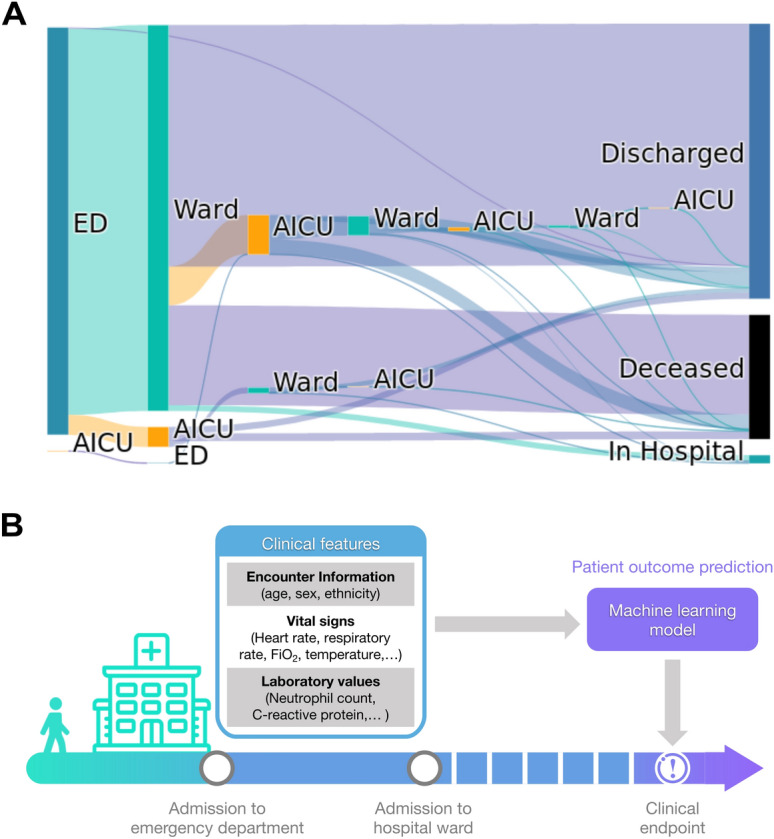
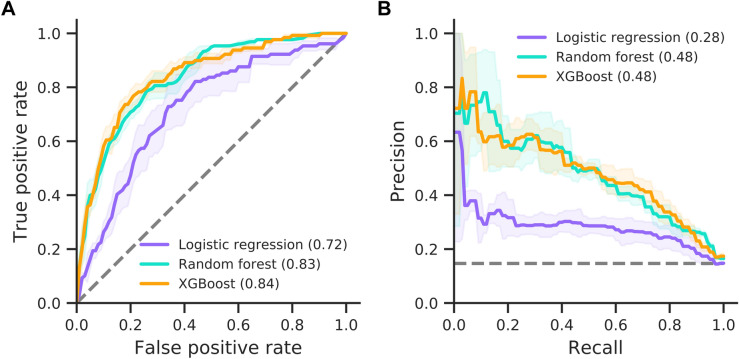
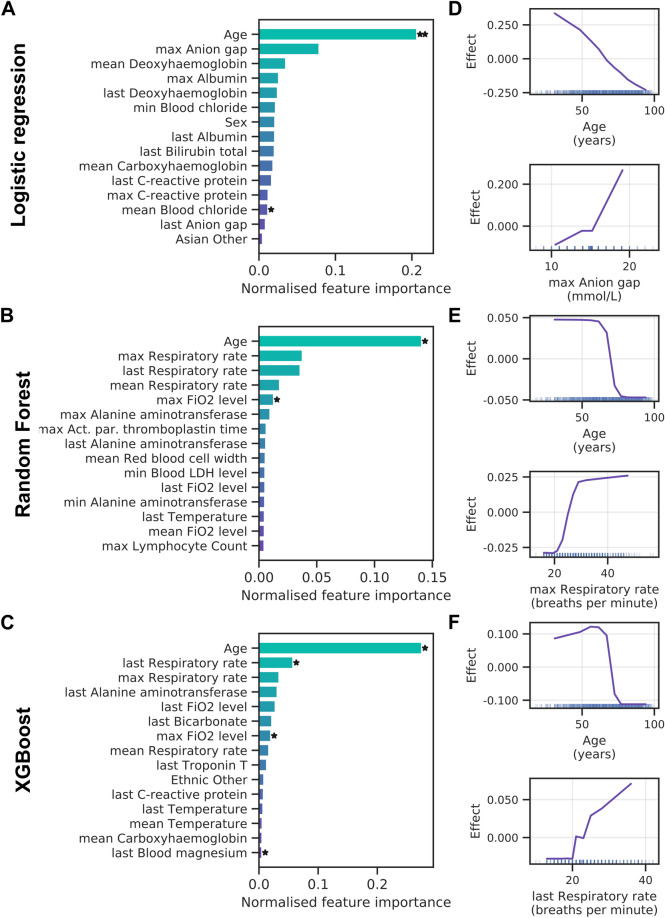
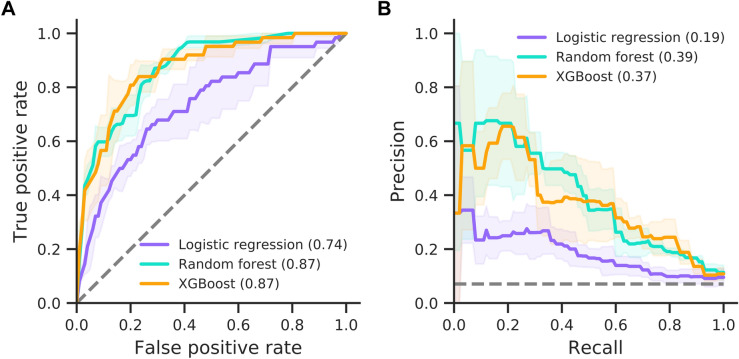
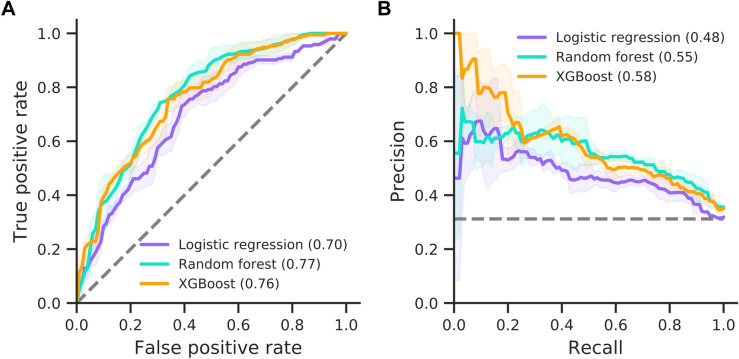
Since its emergence in late 2019, the severe acute respiratory syndrome coronavirus 2 (SARS-CoV-2) has caused a pandemic with more than 55 million reported cases and 1.3 million estimated deaths worldwide. While epidemiological and clinical characteristics of COVID-19 have been reported, risk factors underlying the transition from mild to severe disease among patients remain poorly understood. In this retrospective study, we analysed data of 879 confirmed SARS-CoV-2 positive patients admitted to a two-site NHS Trust hospital in London, England, between January 1st and May 26th, 2020, with a majority of cases occurring in March and April. We extracted anonymised demographic data, physiological clinical variables and laboratory results from electronic healthcare records (EHR) and applied multivariate logistic regression, random forest and extreme gradient boosted trees. To evaluate the potential for early risk assessment, we used data available during patients' initial presentation at the emergency department (ED) to predict deterioration to one of three clinical endpoints in the remainder of the hospital stay: admission to intensive care, need for invasive mechanical ventilation and in-hospital mortality. Based on the trained models, we extracted the most informative clinical features in determining these patient trajectories. Considering our inclusion criteria, we have identified 129 of 879 (15%) patients that required intensive care, 62 of 878 (7%) patients needing mechanical ventilation, and 193 of 619 (31%) cases of in-hospital mortality. Our models learned successfully from early clinical data and predicted clinical endpoints with high accuracy, the best model achieving area under the receiver operating characteristic (AUC-ROC) scores of 0.76 to 0.87 (F1 scores of 0.42-0.60). Younger patient age was associated with an increased risk of receiving intensive care and ventilation, but lower risk of mortality. Clinical indicators of a patient's oxygen supply and selected laboratory results, such as blood lactate and creatinine levels, were most predictive of COVID-19 patient trajectories. Among COVID-19 patients machine learning can aid in the early identification of those with a poor prognosis, using EHR data collected during a patient's first presentation at ED. Patient age and measures of oxygenation status during ED stay are primary indicators of poor patient outcomes.
自 2019 年底出现以来,严重急性呼吸综合征冠状病毒 2(SARS-CoV-2)已在全球范围内造成超过 5500 万例报告病例和 130 万人死亡。虽然已经报道了 COVID-19 的流行病学和临床特征,但对于患者从轻症向重症转变的潜在风险因素仍知之甚少。在这项回顾性研究中,我们分析了 2020 年 1 月 1 日至 5 月 26 日期间在英国伦敦的两家 NHS 信托医院收治的 879 例确诊 SARS-CoV-2 阳性患者的数据,大多数病例发生在 3 月和 4 月。我们从电子医疗记录(EHR)中提取了匿名的人口统计学数据、生理临床变量和实验室结果,并应用了多元逻辑回归、随机森林和极端梯度增强树。为了评估早期风险评估的潜力,我们使用患者在急诊科就诊时的可用数据来预测他们在医院剩余时间内恶化的三种临床终点之一:入住重症监护病房、需要有创机械通气和院内死亡。基于训练好的模型,我们提取了最能确定这些患者轨迹的信息性临床特征。根据我们的纳入标准,我们确定了 879 例患者中有 129 例(15%)需要重症监护,878 例患者中有 62 例(7%)需要机械通气,619 例患者中有 193 例(31%)院内死亡。我们的模型成功地从早期临床数据中学习,并以高精度预测临床终点,最佳模型的接收者操作特征曲线下面积(AUC-ROC)评分为 0.76 至 0.87(F1 评分为 0.42-0.60)。患者年龄较小与接受重症监护和通气的风险增加有关,但死亡风险较低。患者的氧气供应和一些实验室结果(如血乳酸和肌酐水平)的临床指标是 COVID-19 患者轨迹的最具预测性指标。在 COVID-19 患者中,机器学习可以通过使用患者在急诊科就诊时收集的电子病历数据,帮助早期识别预后不良的患者。患者年龄和急诊科期间的氧合状态测量是患者预后不良的主要指标。