Yuan Ziming, Zhao Zhixun, Hu Hanqing, Zhu Yihao, Zhang Weiyuan, Tang Qingchao, Huang Rui, Gao Feng, Zou Chaoxia, Wang Guiyu, Wang Xishan
Department of Colorectal Surgery, The Second Affiliated Hospital of Harbin Medical University, Harbin, People's Republic of China.
Department of Colorectal Surgery, National Cancer Center/National Clinical Research Center for Cancer/Cancer Hospital, Chinese Academy of Medical Sciences and Peking Union Medical College, Beijing, People's Republic of China.
Onco Targets Ther. 2021 Feb 11;14:967-977. doi: 10.2147/OTT.S285171. eCollection 2021.
The liver is the most frequent site for metastatic spread in colorectal cancer (CRC) patients, and these patients have much poorer prognosis than those without metastasis. Previous studies have shown that IgG Fc binding protein (FCGBP) plays important roles in tumorigenesis, progression, and prognosis, but its role in CRC metastasis remains unclear.
In this study, we are aimed to explore the significance of FCGBP in liver metastatic CRC (LMCRC) patients.
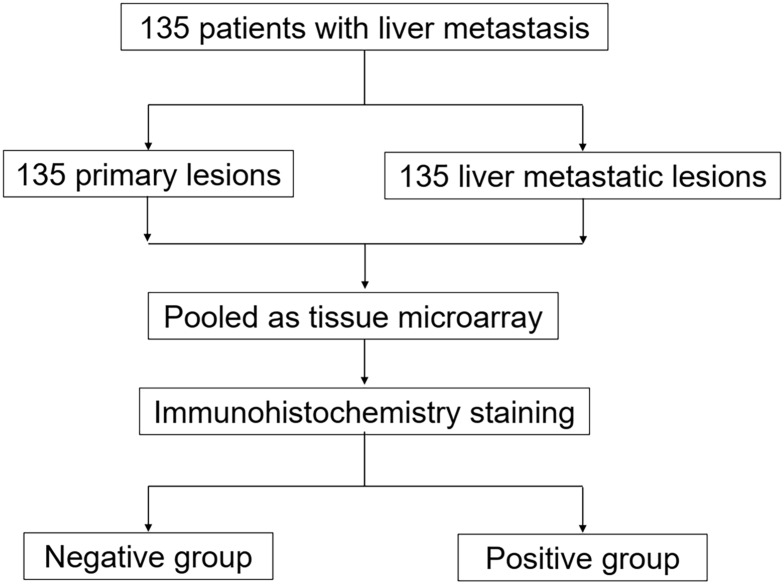
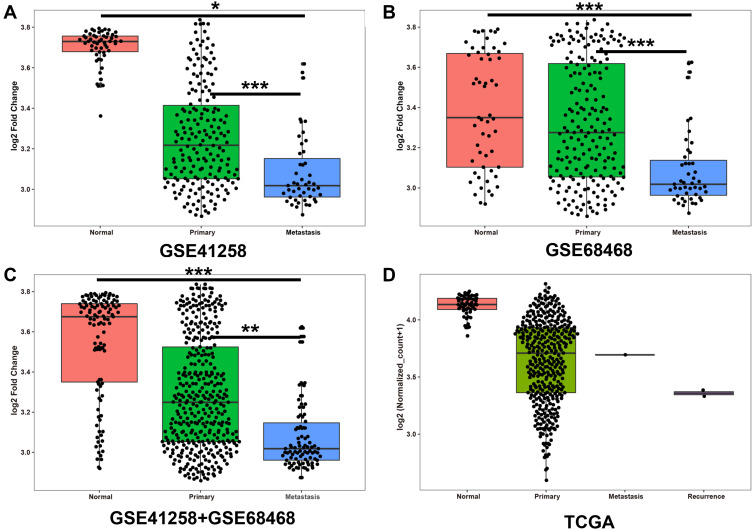
We analyzed the expression of FCGBP RNA between CRC primary samples and liver metastatic samples in the Gene Expression Omnibus (GEO) database and The Cancer Genome Atlas (TCGA). Next, we assessed the expression of FCGBP protein in 135 paired primary CRC (PC) samples and LMCRC samples. Finally, we explored the relationship between the expression features and clinicopathological characteristics.
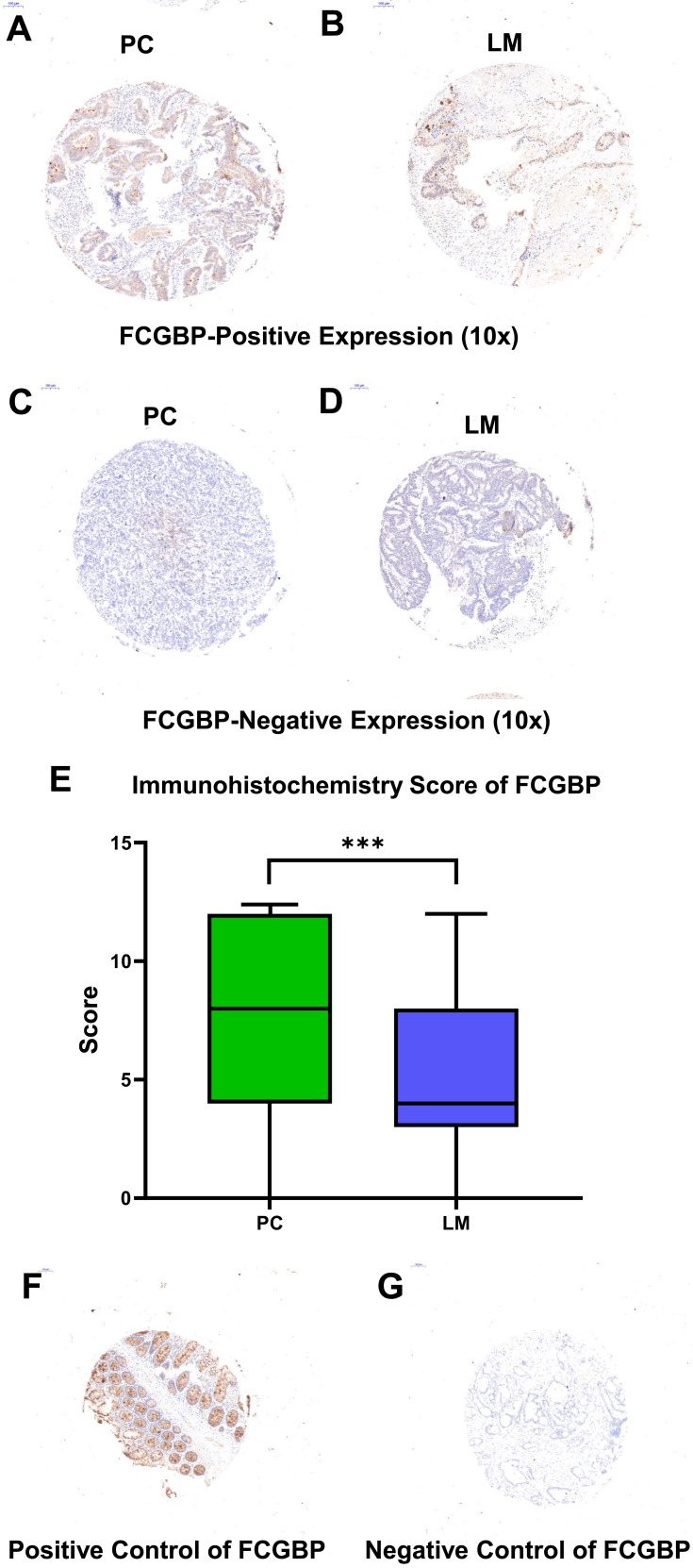
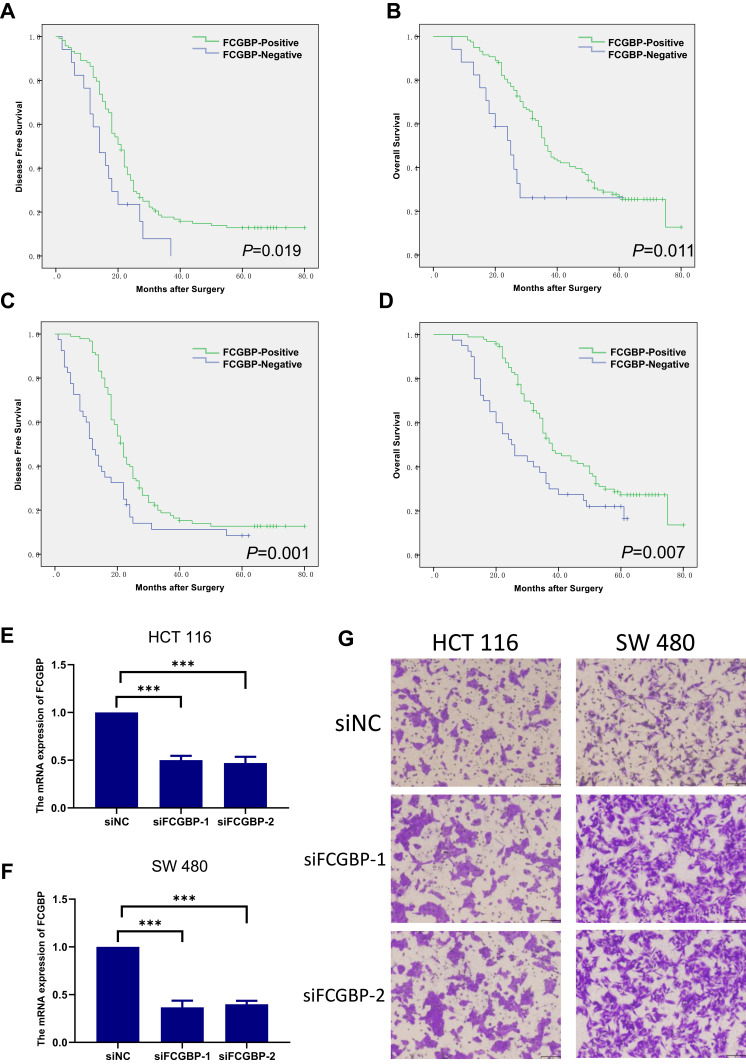
The expression data of FCGBP were obtained from the GEO and TCGA databases. RNA expression was evaluated between primary lesions (PC) and liver metastatic lesions (LM). RNA was down-regulated in PC and LM, and especially lower in LM (<0.001). Next, the expression of FCGBP protein was evaluated by an immunohistochemistry array in 135 paired primary tumor tissues and metastatic tissues. We found that FCGBP protein was down-regulated in primary lesions and metastatic lesions, especially in metastatic lesions. According to the immunohistochemistry score (SI), each cohort was divided into FCGBP-positive (SI=4-12) and FCGBP-negative (SI=0-3) groups. In both groups, the levels of CEA (PC group, 3.880 vs 77.049, <0.001; LM group, 3.890 vs 14.239, =0.008) and CA19-9 (PC group, 8.610 vs 111.700, <0.001; LM group, 7.660 vs 19.380, =0.037) were lower than those in the FCGBP-negative group. FCGBP positivity in the LM cohort was an independent risk factor in both overall survival (HR 1.573, 95% Cl [1.017-2.433], =0.042) and disease-free survival (HR 1.869, 95% Cl [1.256-2.781], =0.002).
This study found a relationship between expression and clinical information of LMCRC patients, and found that expression decreased with disease development. The expression of in liver metastasis is associated with both the overall and progression-free survival. Our results show that FCGBP could be a promising prognostic factor for LMCRC.
肝脏是结直肠癌(CRC)患者转移扩散最常见的部位,这些患者的预后比无转移患者差得多。既往研究表明,IgG Fc结合蛋白(FCGBP)在肿瘤发生、进展和预后中发挥重要作用,但其在CRC转移中的作用仍不清楚。
本研究旨在探讨FCGBP在肝转移结直肠癌(LMCRC)患者中的意义。
我们在基因表达综合数据库(GEO)和癌症基因组图谱(TCGA)中分析了CRC原发样本和肝转移样本之间FCGBP RNA的表达。接下来,我们评估了135对原发性CRC(PC)样本和LMCRC样本中FCGBP蛋白的表达。最后,我们探讨了表达特征与临床病理特征之间的关系。
从GEO和TCGA数据库获得了FCGBP的表达数据。评估了原发性病变(PC)和肝转移病变(LM)之间的RNA表达。RNA在PC和LM中均下调,在LM中尤其低(<0.001)。接下来,通过免疫组织化学阵列评估了135对原发性肿瘤组织和转移组织中FCGBP蛋白的表达。我们发现FCGBP蛋白在原发性病变和转移病变中均下调,尤其是在转移病变中。根据免疫组织化学评分(SI),每个队列分为FCGBP阳性(SI = 4 - 12)和FCGBP阴性(SI = 0 - 3)组。在两组中,癌胚抗原(CEA)水平(PC组,3.880对77.049,<0.001;LM组,3.890对14.239,= 0.008)和糖类抗原19 - 9(CA19 - 9)水平(PC组,8.610对111.700,<0.001;LM组,7.660对19.380,= 0.037)均低于FCGBP阴性组。LM队列中的FCGBP阳性在总生存期(HR 1.573,95% CI [1.017 - 2.433],= 0.042)和无病生存期(HR 1.869,95% CI [1.256 - 2.781],= 0.002)中均为独立危险因素。
本研究发现了LMCRC患者的表达与临床信息之间的关系,发现表达随疾病发展而降低。肝转移中的表达与总生存期和无进展生存期均相关。我们的结果表明,FCGBP可能是LMCRC一个有前景的预后因素。