College of Veterinary Medicine and Research Institute for Veterinary Science, Seoul National University, Seoul, South Korea.
Department of Medical Genetics, College of Medicine, Hallym University, Chuncheon, South Korea.
Front Cell Infect Microbiol. 2021 Feb 2;10:596149. doi: 10.3389/fcimb.2020.596149. eCollection 2020.
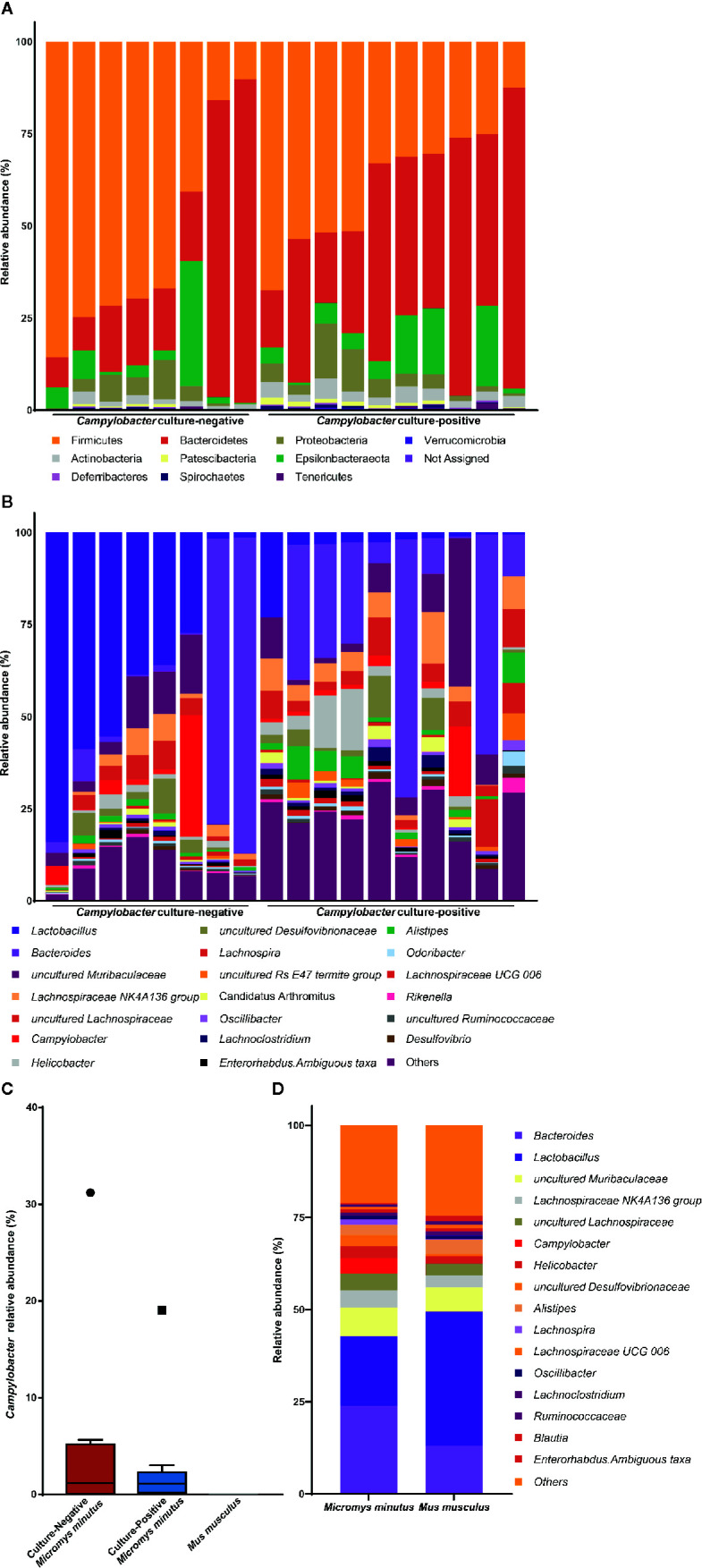
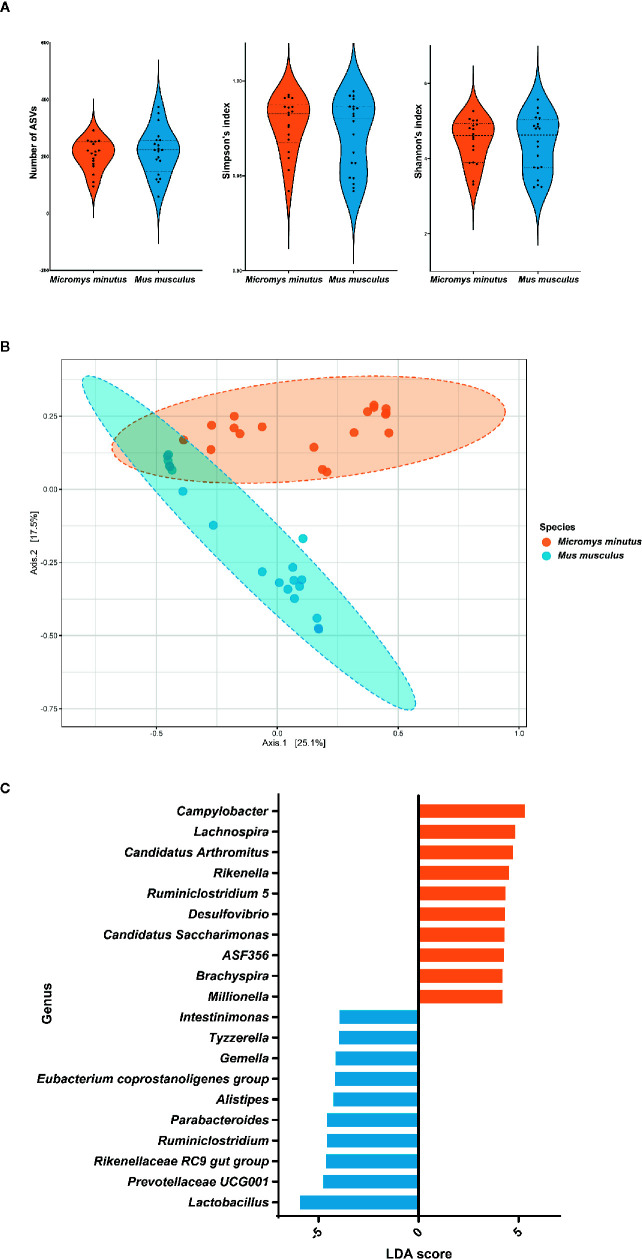
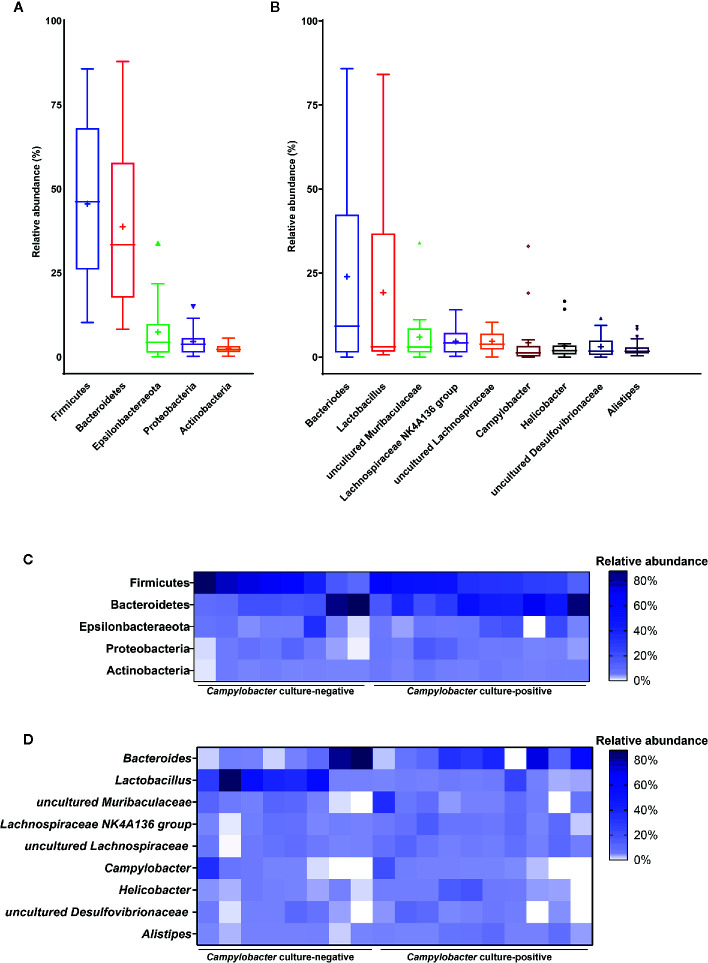
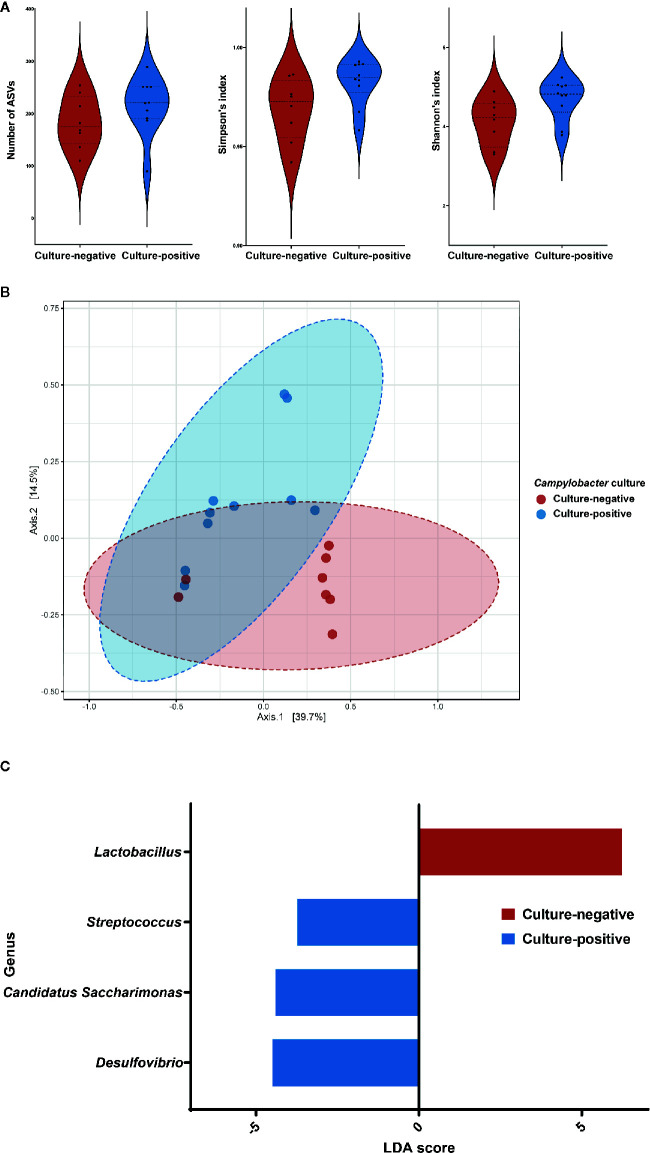
, the most common etiologic agent of zoonotic gastroenteritis in humans, is present in many reservoirs including livestock animals, wildlife, soil, and water. Previously, we reported a novel strain SCJK02 (MLST ST-8388) from the gut of wild mice () using culture-dependent methods. However, due to fastidious growth conditions and the presence of viable but non-culturable spp., it is unclear whether is a reservoir. This study aimed to: 1) determine the distribution and proportion of spp. in the gut microbiota of wild mice using culture-independent methods and 2) investigate the gut microbiota of wild mice and the relationship of spp. with other gut microbes. The gut microbiota of 38 wild mice captured from perilla fields in Korea and without any clinical symptoms (18 and 20 ) were analyzed. Metagenomic analysis showed that 77.8% (14 of 18) of the captured harbored spp. (0.24-32.92%) in the gut metagenome, whereas none of the captured carried spp. in their guts. Notably, 75% (6 of 8) of determined to be -negative using culture-dependent methods showed a high proportion of through metagenome analysis. The results of metagenome analysis and the absence of clinical symptoms suggest that may be a component of the normal gut flora of wild . Furthermore, linear discriminant analysis (LDA) showed that was the most enriched genus in the gut microbiota of (LDA score, 5.37), whereas was the most enriched genus in (LDA score, -5.96). The differences in the presence of between the two species of wild mice may be attributed to the differential abundance of and in their respective gut microbiota. In conclusion, the results indicate that wild may serve as a potential reservoir. This study presents the first metagenomics analysis of the gut microbiota to explore its possible role as an environmental reservoir and provides a basis for future studies using culture-independent methods to determine the role of environmental reservoirs in transmission.
,人类动物源传染性胃肠炎的最常见病原体,存在于许多宿主中,包括牲畜、野生动物、土壤和水。此前,我们通过培养依赖的方法,从野生老鼠的肠道中分离到一种新型菌株 SCJK02(MLST ST-8388)。然而,由于生长条件苛刻以及存在活但非可培养的 spp.,目前尚不清楚 是否是一个储存库。本研究旨在:1)使用非培养依赖的方法来确定野生小鼠肠道中 spp.的分布和比例,2)调查野生小鼠的肠道微生物群以及 spp.与其他肠道微生物的关系。从韩国紫苏田捕获的 38 只无临床症状的野生小鼠(18 只 和 20 只)的肠道微生物群进行了分析。宏基因组分析显示,在肠道宏基因组中,捕获的 77.8%(18 只中的 14 只)携带 spp.(0.24-32.92%),而捕获的 中没有任何一只携带 spp.。值得注意的是,在使用培养依赖的方法确定为 -阴性的 75%(6 只中的 6 只)通过宏基因组分析显示出较高的 spp.比例。宏基因组分析的结果和无临床症状表明, 可能是野生 的正常肠道菌群的一部分。此外,线性判别分析(LDA)显示, 在野生 的肠道微生物群中最丰富的菌属(LDA 评分,5.37),而 在 中最丰富的菌属(LDA 评分,-5.96)。两种野生小鼠之间 的存在差异可能归因于其肠道微生物群中 和 的丰度差异。总之,结果表明野生 可能是一个潜在的 储存库。本研究首次进行了 的肠道微生物群的宏基因组分析,以探索其作为环境 储存库的可能作用,并为未来使用非培养依赖的方法确定环境储存库在 传播中的作用提供了基础。