Institute of Neurogenetics, University of Lübeck, Ratzeburger Allee 160, 23538, Lübeck, Germany.
J Neural Transm (Vienna). 2021 Apr;128(4):395-404. doi: 10.1007/s00702-021-02314-2. Epub 2021 Feb 19.
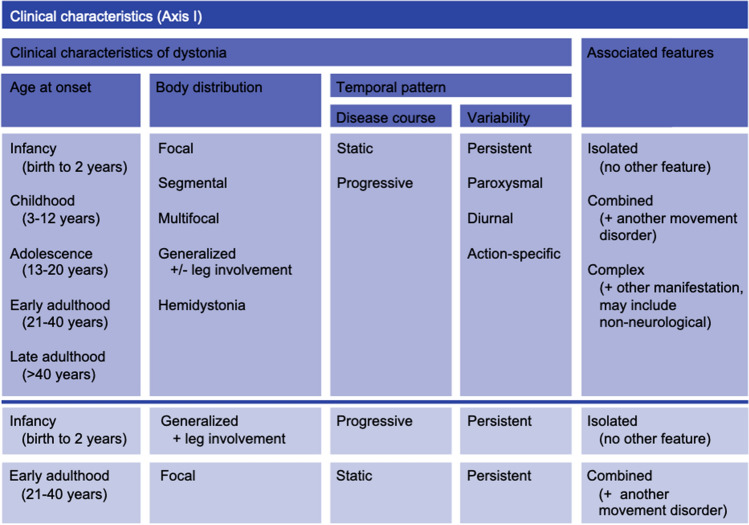
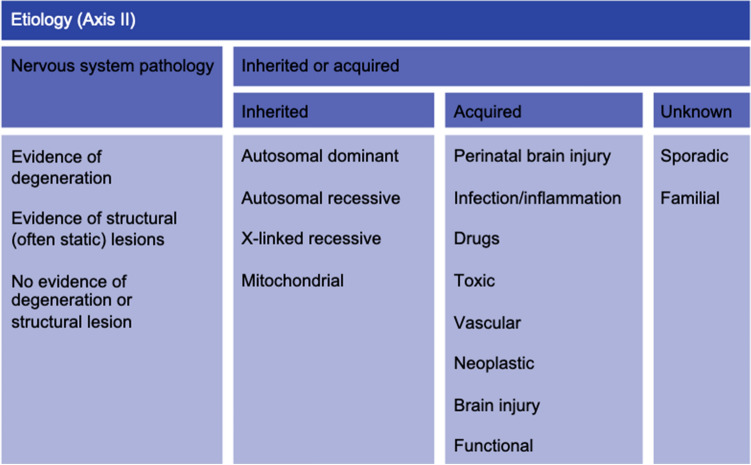
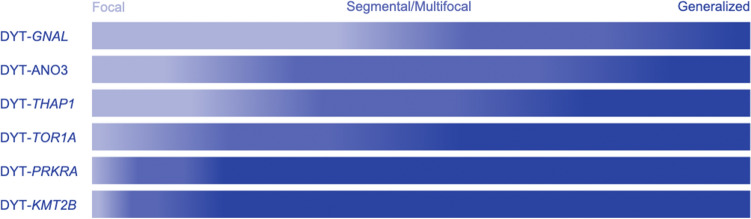
A plethora of heterogeneous movement disorders is grouped under the umbrella term dystonia. The clinical presentation ranges from isolated dystonia to multi-systemic disorders where dystonia is only a co-occurring sign. In the past, definitions, nomenclature, and classifications have been repeatedly refined, adapted, and extended to reflect novel findings and increasing knowledge about the clinical, etiologic, and scientific background of dystonia. Currently, dystonia is suggested to be classified according to two axes. The first axis offers precise categories for the clinical presentation grouped into age at onset, body distribution, temporal pattern and associated features. The second, etiologic, axis discriminates pathological findings, as well as inheritance patterns, mode of acquisition, or unknown causality. Furthermore, the recent recommendations regarding terminology and nomenclature of inherited forms of dystonia and related syndromes are illustrated in this article. Harmonized, specific, and internationally widely used classifications provide the basis for future systematic dystonia research, as well as for more personalized patient counseling and treatment approaches.
多种多样的运动障碍被归类为肌张力障碍。临床表现从孤立性肌张力障碍到多系统疾病,其中肌张力障碍仅是同时发生的体征。过去,定义、命名和分类一再得到改进、适应和扩展,以反映新的发现和对肌张力障碍的临床、病因和科学背景的不断增加的认识。目前,肌张力障碍建议根据两个轴进行分类。第一个轴为临床表现提供精确的分类,分为发病年龄、身体分布、时间模式和相关特征。第二个轴为病因,区分病理性发现以及遗传模式、获得方式或未知病因。此外,本文还介绍了关于遗传性肌张力障碍和相关综合征的术语和命名的最新建议。协调一致、具体和国际广泛使用的分类为未来的系统肌张力障碍研究以及更个性化的患者咨询和治疗方法提供了基础。