Takagi Kosei, Umeda Yuzo, Yoshida Ryuichi, Yagi Takahito, Fujiwara Toshiyoshi, Zureikat Amer H, Hogg Melissa E, Koerkamp Bas Groot
Department of Gastroenterological Surgery, Okayama University Graduate School of Medicine, Dentistry, and Pharmaceutical Sciences, 2-5-1 Shikata-cho, Kita-ku, Okayama, 700-8558, Japan.
Department of Surgery, Erasmus MC, University Medical Center Rotterdam, Rotterdam, The Netherlands.
World J Surg Oncol. 2021 Feb 19;19(1):55. doi: 10.1186/s12957-021-02167-9.
Growing evidence for the advantages of robotic pancreatoduodenectomy (RPD) has been demonstrated internationally. However, there has been no structured training program for RPD in Japan. Herein, we present the surgical training model of RPD and a standardized protocol for surgical technique.
The surgical training model and surgical technique were standardized in order to implement RPD safely, based on the Dutch training system collaborated with the University of Pittsburgh Medical Center.
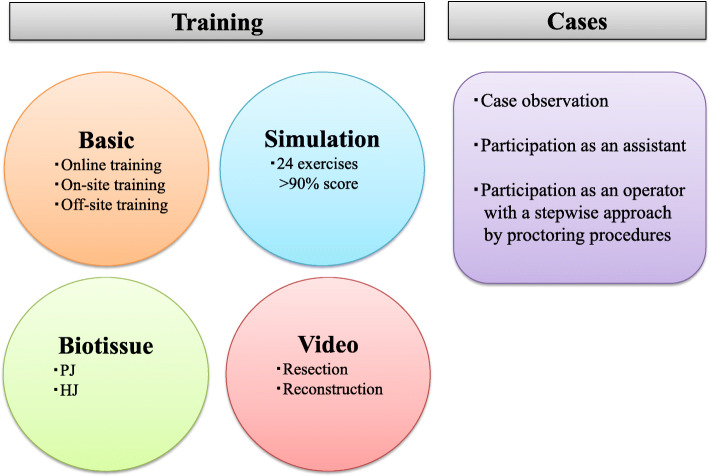
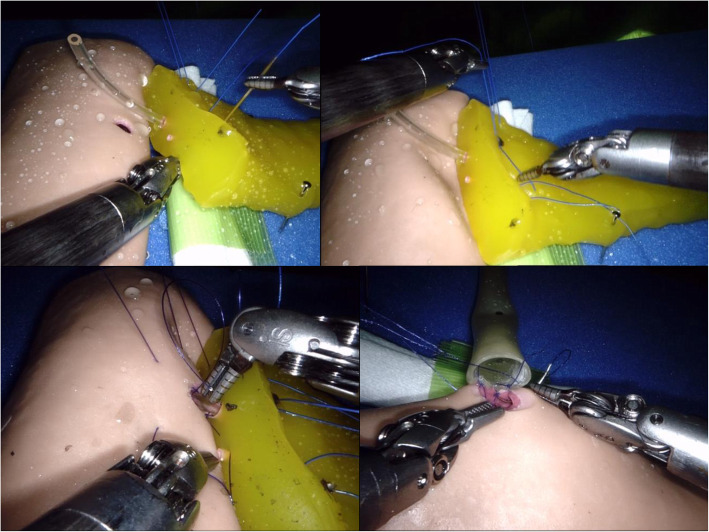
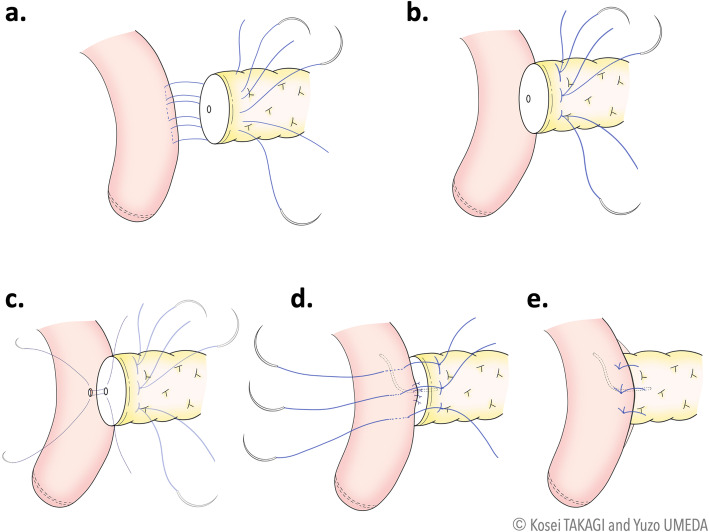
The surgical training model included various trainings such as basic robotic training, simulation training, biotissue training, and a surgical video review. Furthermore, a standardized protocol on the surgical technique was established to understand the tips, tricks, and pitfalls of RPD.
Safe implementation of RPD can be achieved through the completion of a structured training program and learning surgical technique. A nationwide structured training system should be developed to implement the program safely in Japan.
国际上越来越多的证据表明机器人胰十二指肠切除术(RPD)具有优势。然而,日本尚无针对RPD的结构化培训项目。在此,我们介绍RPD的手术培训模型及手术技术的标准化方案。
基于与匹兹堡大学医学中心合作的荷兰培训系统,对手术培训模型和手术技术进行标准化,以安全实施RPD。
手术培训模型包括各种培训,如基础机器人培训、模拟培训、生物组织培训和手术视频回顾。此外,还制定了手术技术的标准化方案,以了解RPD的技巧、窍门和陷阱。
通过完成结构化培训项目并学习手术技术,可安全实施RPD。应在日本建立全国性结构化培训系统,以安全实施该项目。