Kaźmierczak-Siedlecka Karolina, Daca Agnieszka, Folwarski Marcin, Makarewicz Wojciech, Lebiedzińska Anna
Department of Surgical Oncology, Medical University of Gdansk, Gdansk, Poland.
Department of Pathology and Experimental Rheumatology, Medical University of Gdansk, Gdansk, Poland.
Cent Eur J Immunol. 2020;45(4):454-460. doi: 10.5114/ceji.2020.103339. Epub 2021 Feb 4.
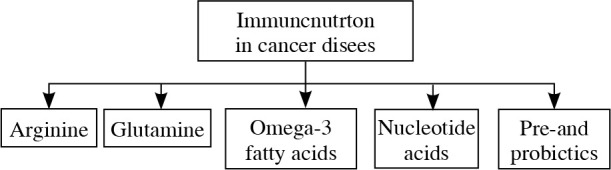
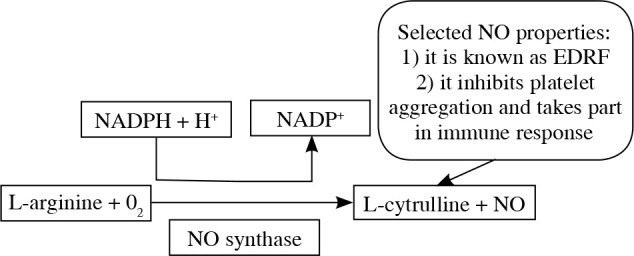
Immunonutrition is one of the most important parts of nutritional treatment in patients with cancer. There are studies which confirm positive effects of using immunonutrition (arginine, glutamine, omega-3 fatty acids, nucleotides, pre- and probiotics) among others on the reduction of the pro-inflammatory cytokines concentrations, shortening of the hospital stay and improvement of the nutritional status. Arginine takes part not only in wound healing process, but also it improves body's immunity and reduces the incidence of infections. Glutamine reduces the incidence of acute grade 2 and 3 esophagitis and improves quality of life of gastric cancer patients. Omega 3-fatty acids have the ability to inhibit the activity of NF-κB. They also reduce the symptoms of graft-versus-host disease in patients undergoing hematopoietic cell transplantation. Nucleotides support the regeneration of intestinal villi. Probiotics play many roles, mainly inhibit the process of carcinogenesis, reduce the incidence of diarrhea and modify intestinal microbiome. However, there are studies indicating the lack of advantages of using immunonutrition compared to standard nutrition. Currently, there is no clear evidence for the use of formulae enriched with immunonutrients versus standard oral nutritional supplements exclusively in the preoperative period. This review summarizes the current knowledge about the role of immunonutrition in supporting treatment of cancer diseases.
免疫营养是癌症患者营养治疗最重要的组成部分之一。有研究证实,使用免疫营养物质(精氨酸、谷氨酰胺、ω-3脂肪酸、核苷酸、益生元和益生菌等)对降低促炎细胞因子浓度、缩短住院时间和改善营养状况有积极作用。精氨酸不仅参与伤口愈合过程,还能提高机体免疫力并降低感染发生率。谷氨酰胺可降低2级和3级急性食管炎的发生率,并改善胃癌患者的生活质量。ω-3脂肪酸能够抑制核因子κB的活性。它们还能减轻接受造血细胞移植患者的移植物抗宿主病症状。核苷酸有助于肠绒毛的再生。益生菌发挥多种作用,主要是抑制致癌过程、降低腹泻发生率并改变肠道微生物群。然而,有研究表明,与标准营养相比,使用免疫营养并无优势。目前,尚无明确证据表明在术前单独使用富含免疫营养成分的配方奶粉与标准口服营养补充剂相比有何优势。本综述总结了目前关于免疫营养在支持癌症疾病治疗中作用的知识。