Torra Joel, Montull José María, Taberner Andreu, Onkokesung Nawaporn, Boonham Neil, Edwards Robert
Department d'Hortofructicultura, Botànica i Jardineria, Agrotecnio, Universitat de Lleida, Lleida, Spain.
Agriculture, School of Natural and Environmental Sciences, Newcastle University, Newcastle upon Tyne, United Kingdom.
Front Plant Sci. 2021 Feb 4;12:625138. doi: 10.3389/fpls.2021.625138. eCollection 2021.
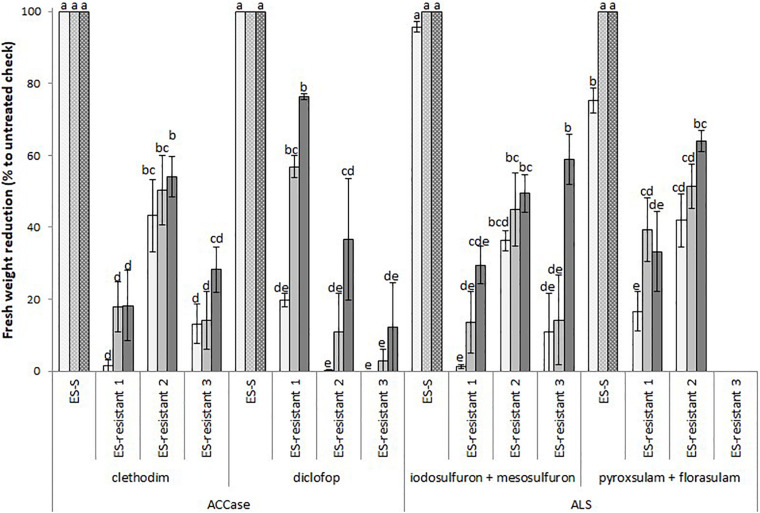
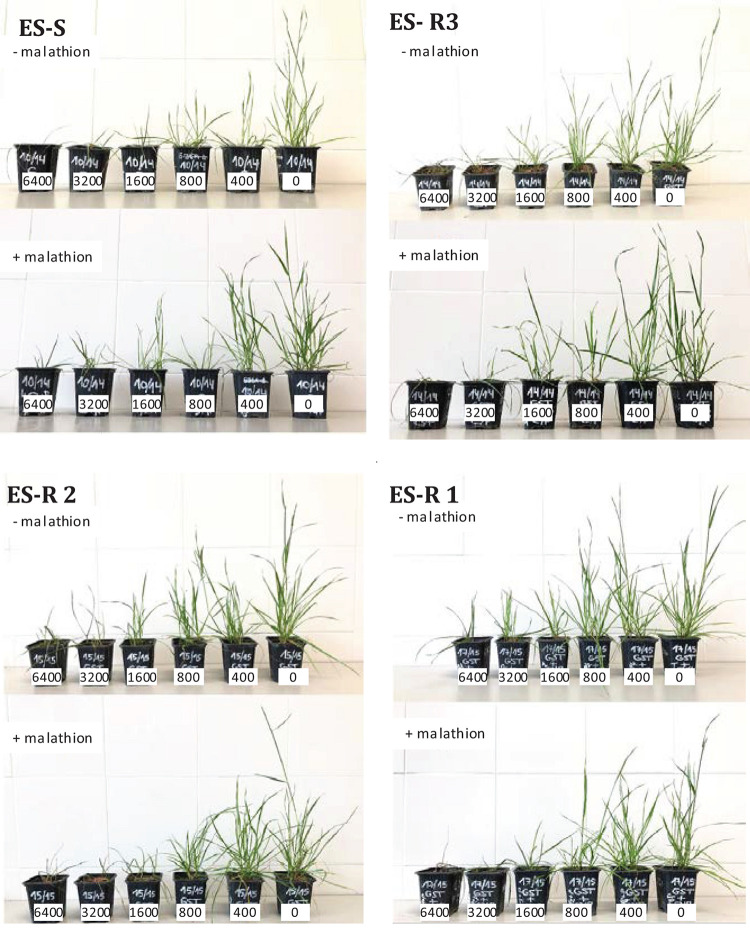
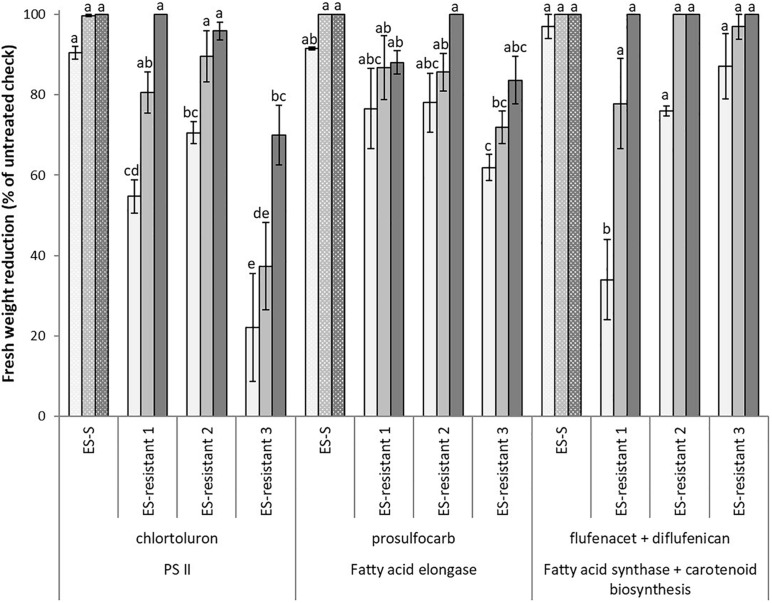
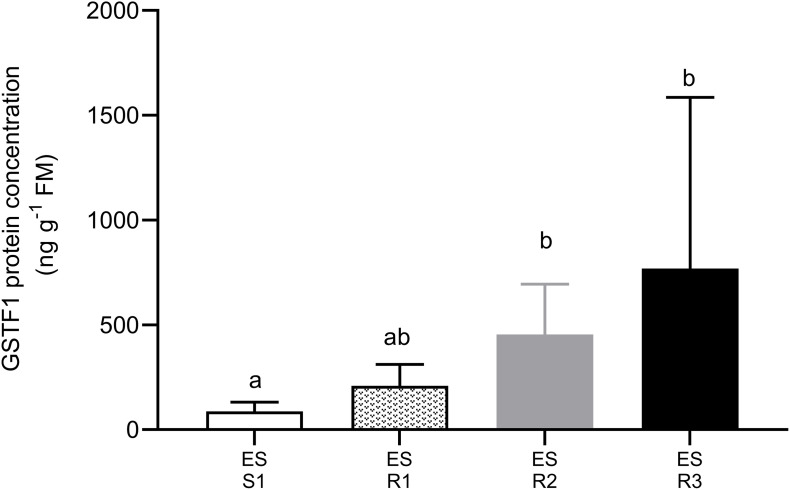
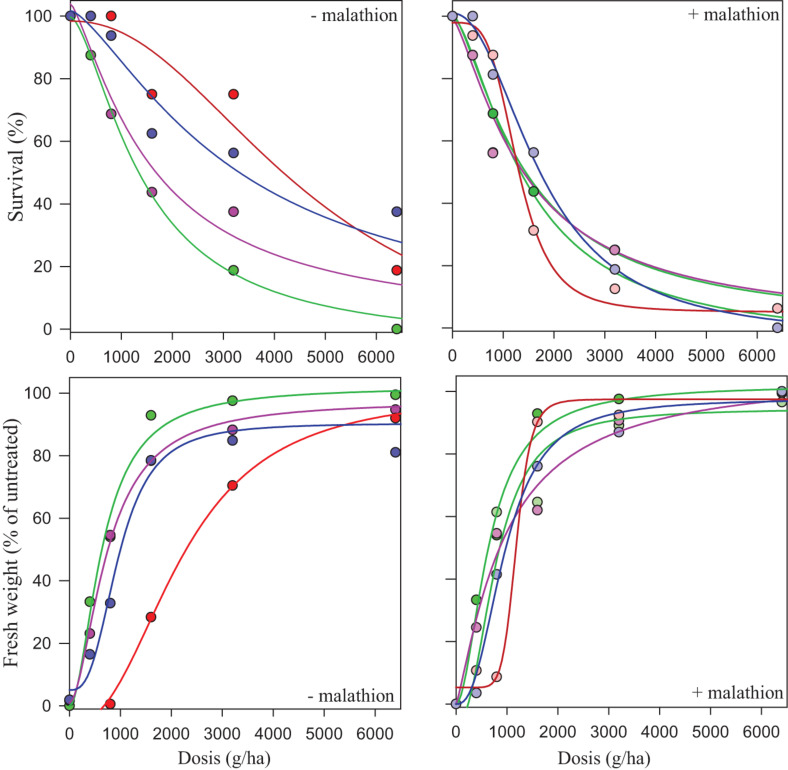
is one the worst herbicide resistant (HR) weeds worldwide due to its proneness to evolve multiple and cross resistance to several sites of action (SoA). In winter cereals crops in Spain, resistance to acetolactate synthase (ALS)- and acetyl-CoA carboxylase (ACCase)-inhibiting herbicides has become widespread, with farmers having to rely on pre-emergence herbicides over the last two decades to maintain weed control. Recently, lack of control with very long-chain fatty acid synthesis (VLCFAS)-inhibiting herbicides has been reported in HR populations that are difficult to manage by chemical means. In this study, three Spanish populations of from winter cereals were confirmed as being resistant to ALS- and ACCase-inhibiting herbicides, with broad-ranging resistance toward the different chemistries tested. In addition, reduced sensitivity to photosystem II-, VLCFAS-, and phytoene desaturase-inhibiting herbicides were confirmed across the three populations. Resistance to ACCase-inhibiting herbicides was associated with point mutations in positions Trp-2027 and Asp-2078 of the enzyme conferring target site resistance (TSR), while none were detected in the ALS enzyme. Additionally, HR populations contained enhanced amounts of an ortholog of the glutathione transferase phi (F) class 1 (GSTF1) protein, a functional biomarker of non-target-site resistance (NTSR), as confirmed by enzyme-linked immunosorbent assays. Further evidence of NTSR was obtained in dose-response experiments with prosulfocarb applied post-emergence, following pre-treatment with the cytochrome P450 monooxygenase inhibitor malathion, which partially reversed resistance. This study confirms the evolution of multiple and cross resistance to ALS- and ACCase inhibiting herbicides in from Spain by mechanisms consistent with the presence of both TSR and NTSR. Moreover, the results suggest that NTSR, probably by means of enhanced metabolism involving more than one detoxifying enzyme family, confers cross resistance to other SoA. The study further demonstrates the urgent need to monitor and prevent the further evolution of herbicide resistance in in Mediterranean areas.
由于其易于对多种作用位点(SoA)产生多重和交叉抗性,它是全球最具抗性的杂草之一。在西班牙的冬季谷类作物中,对乙酰乳酸合成酶(ALS)和乙酰辅酶A羧化酶(ACCase)抑制型除草剂的抗性已广泛存在,在过去二十年里,农民不得不依赖苗前除草剂来控制杂草。最近,有报道称,在难以通过化学方法管理的抗除草剂种群中,对极长链脂肪酸合成(VLCFAS)抑制型除草剂的防除效果不佳。在本研究中,来自西班牙冬季谷类作物的三个种群被证实对ALS和ACCase抑制型除草剂具有抗性,对所测试的不同化学药剂具有广泛的抗性。此外,在这三个种群中均证实对光合系统II、VLCFAS和八氢番茄红素去饱和酶抑制型除草剂的敏感性降低。对ACCase抑制型除草剂的抗性与赋予靶标位点抗性(TSR)的酶的第2027位色氨酸和第2078位天冬氨酸的点突变有关,而在ALS酶中未检测到此类突变。此外,通过酶联免疫吸附测定证实,抗除草剂种群中谷胱甘肽转移酶phi(F)1类(GSTF1)蛋白的直系同源物含量增加,这是一种非靶标位点抗性(NTSR)的功能性生物标志物。在用细胞色素P450单加氧酶抑制剂马拉硫磷进行预处理后,在苗后施用丙酯草醚的剂量反应实验中获得了NTSR的进一步证据,该预处理部分逆转了抗性。本研究证实,西班牙的该杂草通过与TSR和NTSR均存在一致的机制,对ALS和ACCase抑制型除草剂产生了多重和交叉抗性。此外,结果表明,NTSR可能通过涉及多个解毒酶家族的增强代谢作用,赋予对其他作用位点的交叉抗性。该研究进一步证明了在地中海地区监测和防止该杂草除草剂抗性进一步演变的迫切需求。