Jian Huan, Zhang Chi, Qi ZhangYang, Li Xueying, Lou Yongfu, Kang Yi, Deng Weimin, Lv Yigang, Wang Chaoyu, Wang Wei, Shang Shenghui, Hou Mengfan, Zhou Hengxing, Feng Shiqing
Department of Orthopaedics, Tianjin Medical University General Hospital, Tianjin, China.
International Science and Technology Cooperation Base of Spinal Cord Injury, Tianjin Key Laboratory of Spine and Spinal Cord, Tianjin Medical University General Hospital, Tianjin, China.
Front Genet. 2021 Feb 3;12:633681. doi: 10.3389/fgene.2021.633681. eCollection 2021.
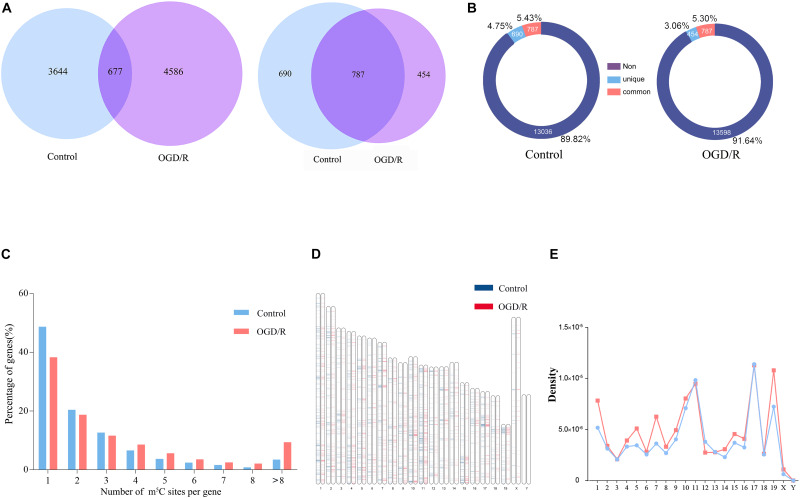
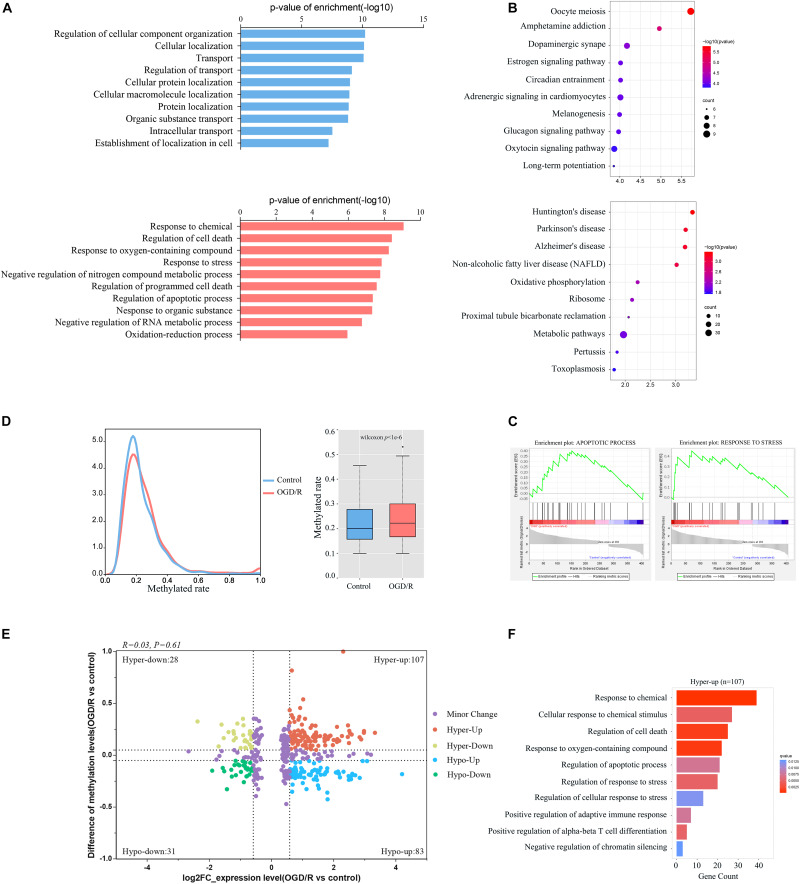
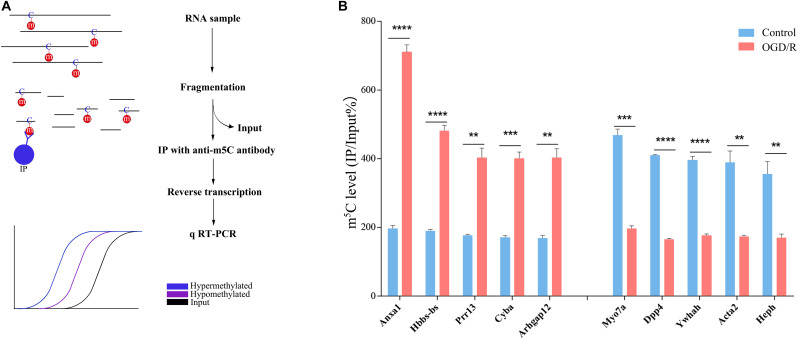
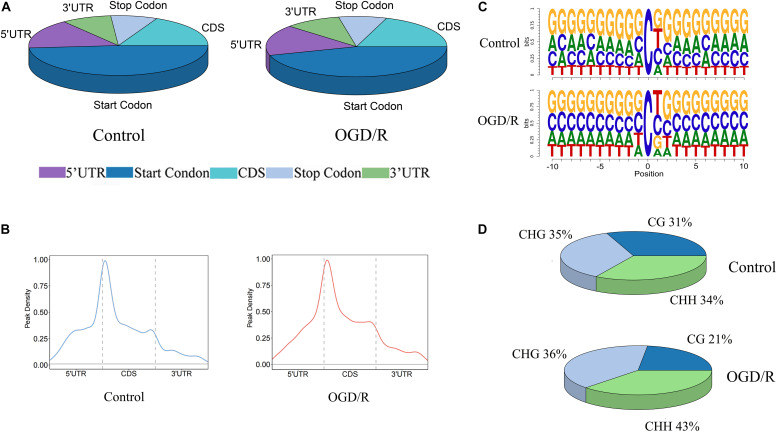
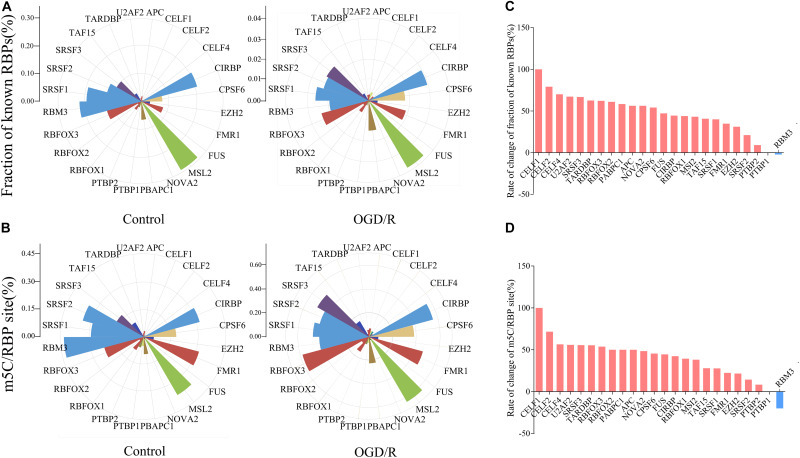
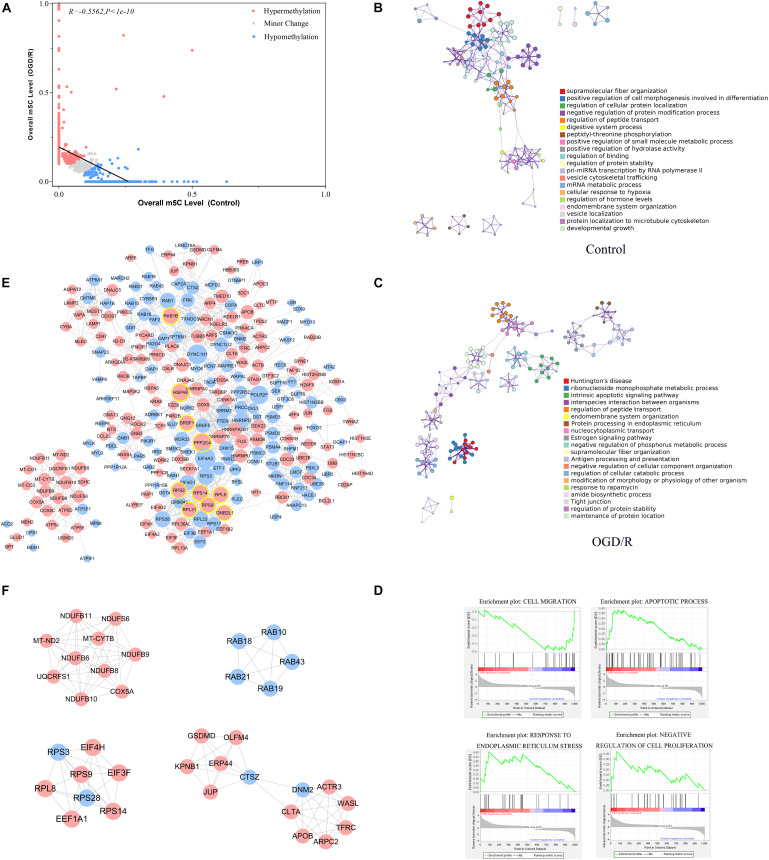
Epigenetic modifications play an important role in central nervous system disorders. As a widespread posttranscriptional RNA modification, the role of the mC modification in cerebral ischemia-reperfusion injury (IRI) remains poorly defined. Here, we successfully constructed a neuronal oxygen-glucose deprivation/reoxygenation (OGD/R) model and obtained an overview of the transcriptome-wide mC profiles using RNA-BS-seq. We discovered that the distribution of neuronal mC modifications was highly conserved, significantly enriched in CG-rich regions and concentrated in the mRNA translation initiation regions. After OGD/R, modification level of mC increased, whereas the number of methylated mRNA genes decreased. The amount of overlap of mC sites with the binding sites of most RNA-binding proteins increased significantly, except for that of the RBM3-binding protein. Moreover, hypermethylated genes in neurons were significantly enriched in pathological processes, and the hub hypermethylated genes RPL8 and RPS9 identified by the protein-protein interaction network were significantly related to cerebral injury. Furthermore, the upregulated transcripts with hypermethylated modification were enriched in the processes involved in response to stress and regulation of apoptosis, and these processes were not identified in hypomethylated transcripts. In final, we verified that OGD/R induced neuronal apoptosis using TUNEL and western blot assays. Our study identified novel mC mRNAs associated with ischemia-reperfusion in neurons, providing valuable perspectives for future studies on the role of the RNA methylation in cerebral IRI.
表观遗传修饰在中枢神经系统疾病中起重要作用。作为一种广泛存在的转录后RNA修饰,mC修饰在脑缺血再灌注损伤(IRI)中的作用仍不清楚。在此,我们成功构建了神经元氧糖剥夺/复氧(OGD/R)模型,并使用RNA-BS-seq获得了全转录组范围的mC图谱概述。我们发现神经元mC修饰的分布高度保守,在富含CG的区域显著富集,并集中在mRNA翻译起始区域。OGD/R后,mC的修饰水平增加,而甲基化mRNA基因的数量减少。除了RBM3结合蛋白外,mC位点与大多数RNA结合蛋白结合位点的重叠量显著增加。此外,神经元中的高甲基化基因在病理过程中显著富集,通过蛋白质-蛋白质相互作用网络鉴定的枢纽高甲基化基因RPL8和RPS9与脑损伤显著相关。此外,具有高甲基化修饰的上调转录本在应激反应和细胞凋亡调控过程中富集,而这些过程在低甲基化转录本中未被发现。最后,我们使用TUNEL和蛋白质印迹分析验证了OGD/R诱导神经元凋亡。我们的研究鉴定了与神经元缺血再灌注相关的新型mC mRNA,为未来研究RNA甲基化在脑IRI中的作用提供了有价值的观点。