Ye Man-Hong, Fan Shu-Hang, Li Xiao-Yuan, Tarequl Islam Mohd, Yan Chun-Xiang, Wei Wan-Hong, Yang Sheng-Mei, Zhou Bin
College of Bioscience and Biotechnology, Yangzhou University, Yangzhou 225009, Jiangsu Province, People's Republic of China.
Chunxiang Professional Beekeeping Cooperatives, Yangzhou 225009, Jiangsu Province, People's Republic of China.
R Soc Open Sci. 2021 Jan 13;8(1):201805. doi: 10.1098/rsos.201805. eCollection 2021 Jan.
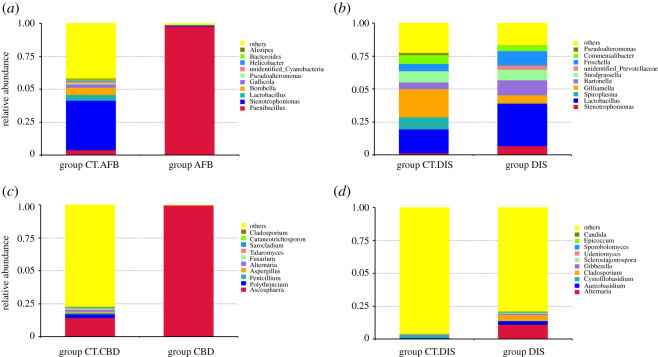
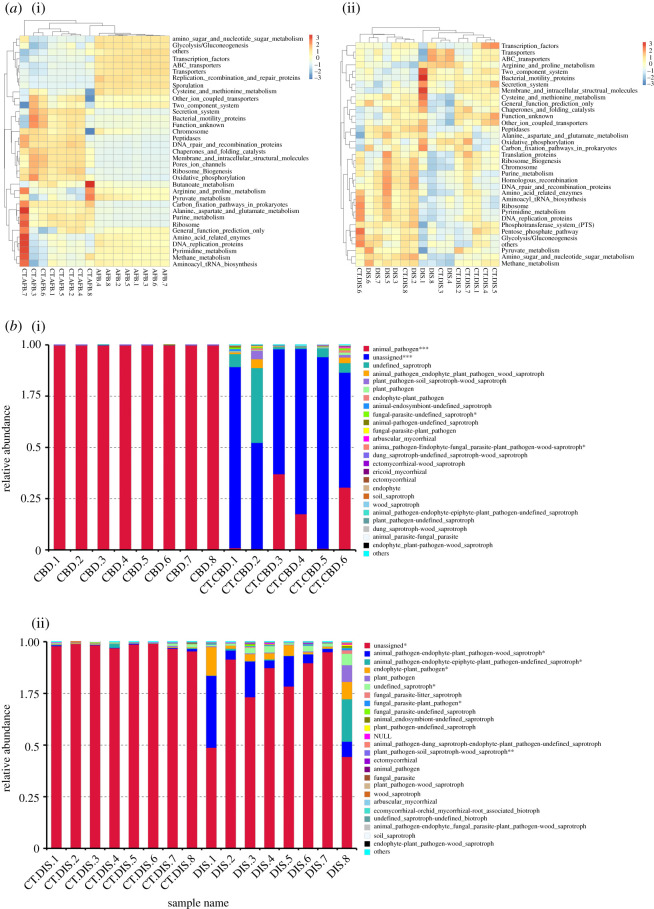
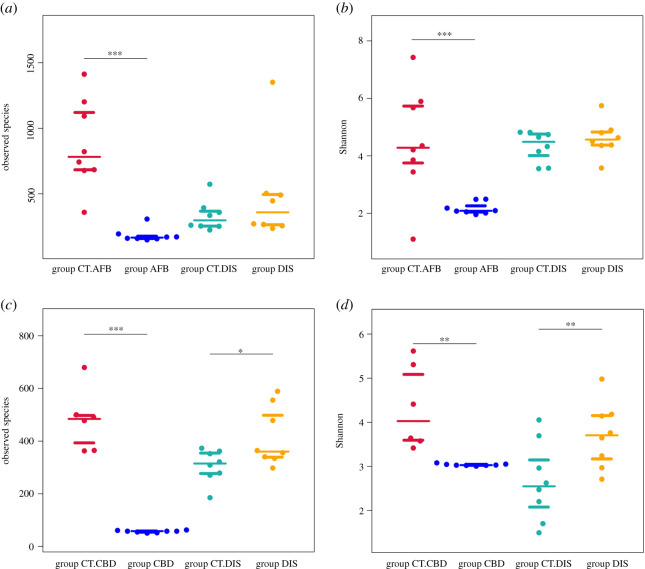
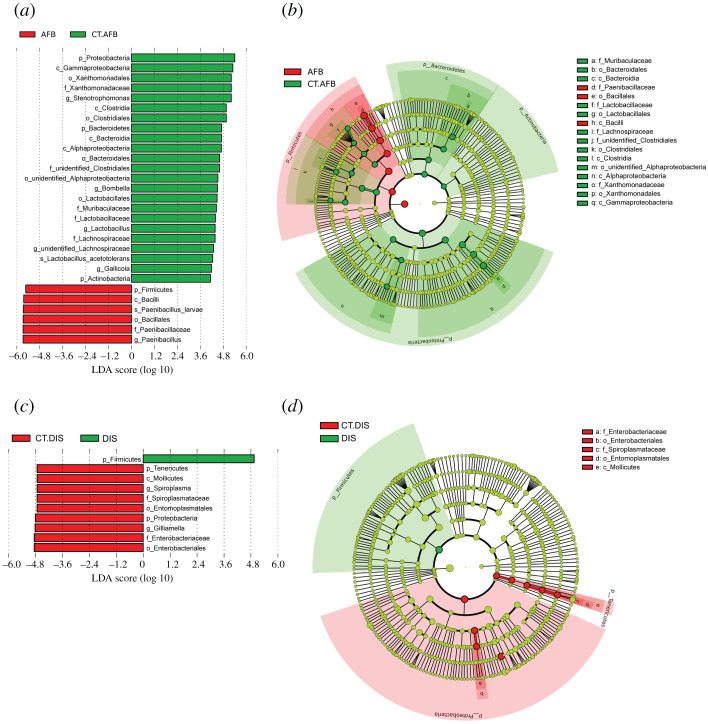
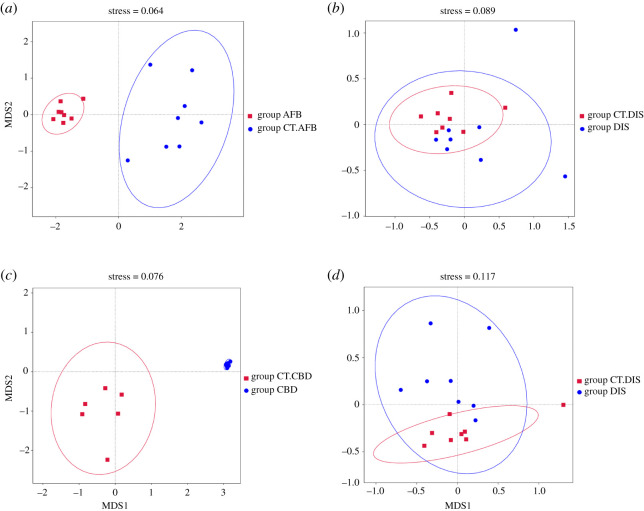
American foulbrood (AFB) disease and chalkbrood disease (CBD) are important bacterial and fungal diseases, respectively, that affect honeybee broods. Exposure to agrochemicals is an abiotic stressor that potentially weakens honeybee colonies. Gut microflora alterations in adult honeybees associated with these biotic and abiotic factors have been investigated. However, microbial compositions in AFB- and CBD-infected larvae and the profile of whole-body microbiota in foraging bees exposed to agrochemicals have not been fully studied. In this study, bacterial and fungal communities in healthy and diseased (AFB/CBD) honeybee larvae were characterized by amplicon sequencing of bacterial 16S rRNA gene and fungal internal transcribed spacer1 region, respectively. The bacterial and fungal communities in disordered foraging bees poisoned by agrochemicals were analysed. Our results revealed that healthy larvae were significantly enriched in bacterial genera and and the fungal genera and . The enrichment of these microorganisms, which had antagonistic activities against the etiologic agents for AFB and CBD, respectively, may protect larvae from potential infection. In disordered foraging bees, the relative abundance of bacterial genus and fungal species were significantly reduced, which may compromise hosts' capacities in nutrient absorption and immune defence against pathogens. Significantly higher frequency of environmentally derived fungi was observed in disordered foraging bees, which reflected the perturbed microbiota communities of hosts. Results from PICRUSt and FUNGuild analyses revealed significant differences in gene clusters of bacterial communities and fungal function profiles. Overall, results of this study provide references for the composition and function of microbial communities in AFB- and CBD-infected honeybee larvae and foraging bees exposed to agrochemicals.
美洲幼虫腐臭病(AFB)和白垩病(CBD)分别是影响蜜蜂幼虫的重要细菌性和真菌性疾病。接触农用化学品是一种非生物应激源,可能会削弱蜂群。与这些生物和非生物因素相关的成年蜜蜂肠道微生物群变化已得到研究。然而,AFB和CBD感染幼虫中的微生物组成以及接触农用化学品的觅食蜜蜂的全身微生物群概况尚未得到充分研究。在本研究中,分别通过对细菌16S rRNA基因和真菌内部转录间隔区1区域进行扩增子测序,对健康和患病(AFB/CBD)蜜蜂幼虫中的细菌和真菌群落进行了表征。分析了被农用化学品毒害的无序觅食蜜蜂中的细菌和真菌群落。我们的结果表明,健康幼虫中细菌属 和 以及真菌属 和 显著富集。这些微生物分别对AFB和CBD的病原体具有拮抗活性,它们的富集可能保护幼虫免受潜在感染。在无序觅食蜜蜂中,细菌属 和真菌物种 的相对丰度显著降低,这可能会损害宿主吸收营养和抵抗病原体免疫防御的能力。在无序觅食蜜蜂中观察到环境来源真菌的频率显著更高,这反映了宿主微生物群落受到干扰。PICRUSt和FUNGuild分析结果显示细菌群落的基因簇和真菌功能谱存在显著差异。总体而言,本研究结果为AFB和CBD感染的蜜蜂幼虫以及接触农用化学品的觅食蜜蜂中微生物群落的组成和功能提供了参考。