Faculty of Health, University of Canberra, Canberra, Australia.
NSW Department of Primary Industries, Goulburn, NSW, Australia.
PLoS One. 2020 Aug 28;15(8):e0238252. doi: 10.1371/journal.pone.0238252. eCollection 2020.
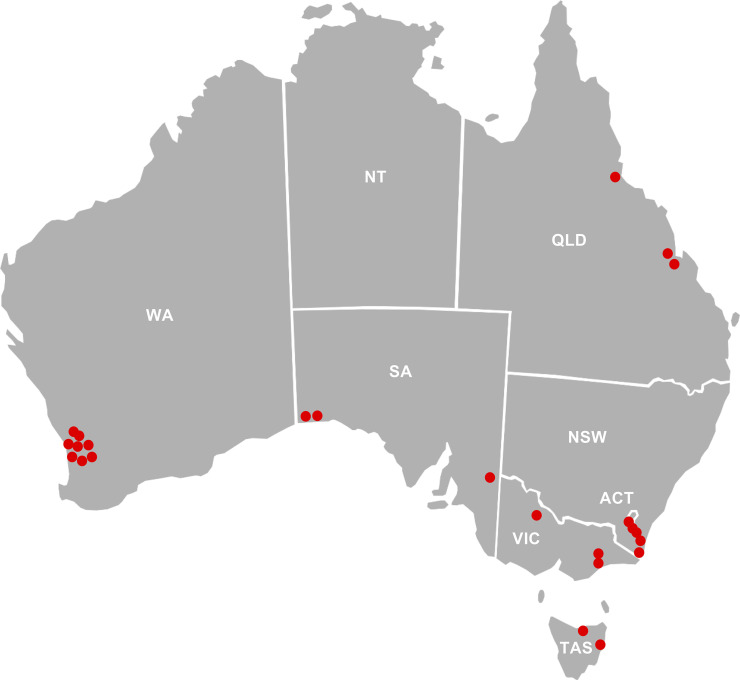
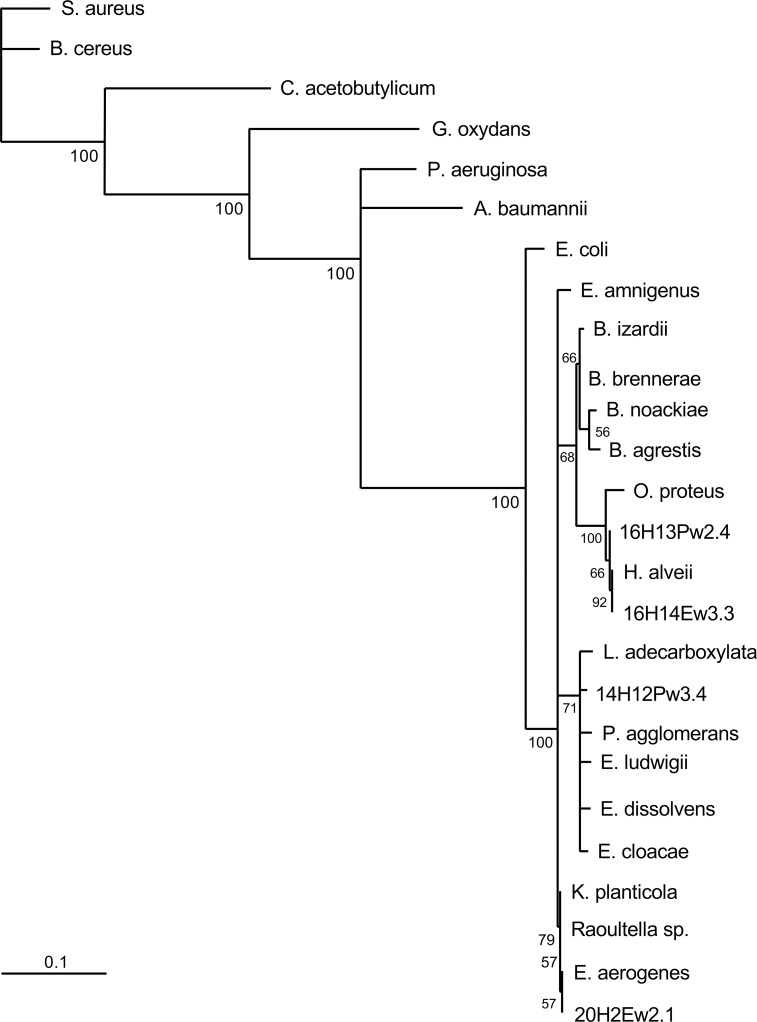
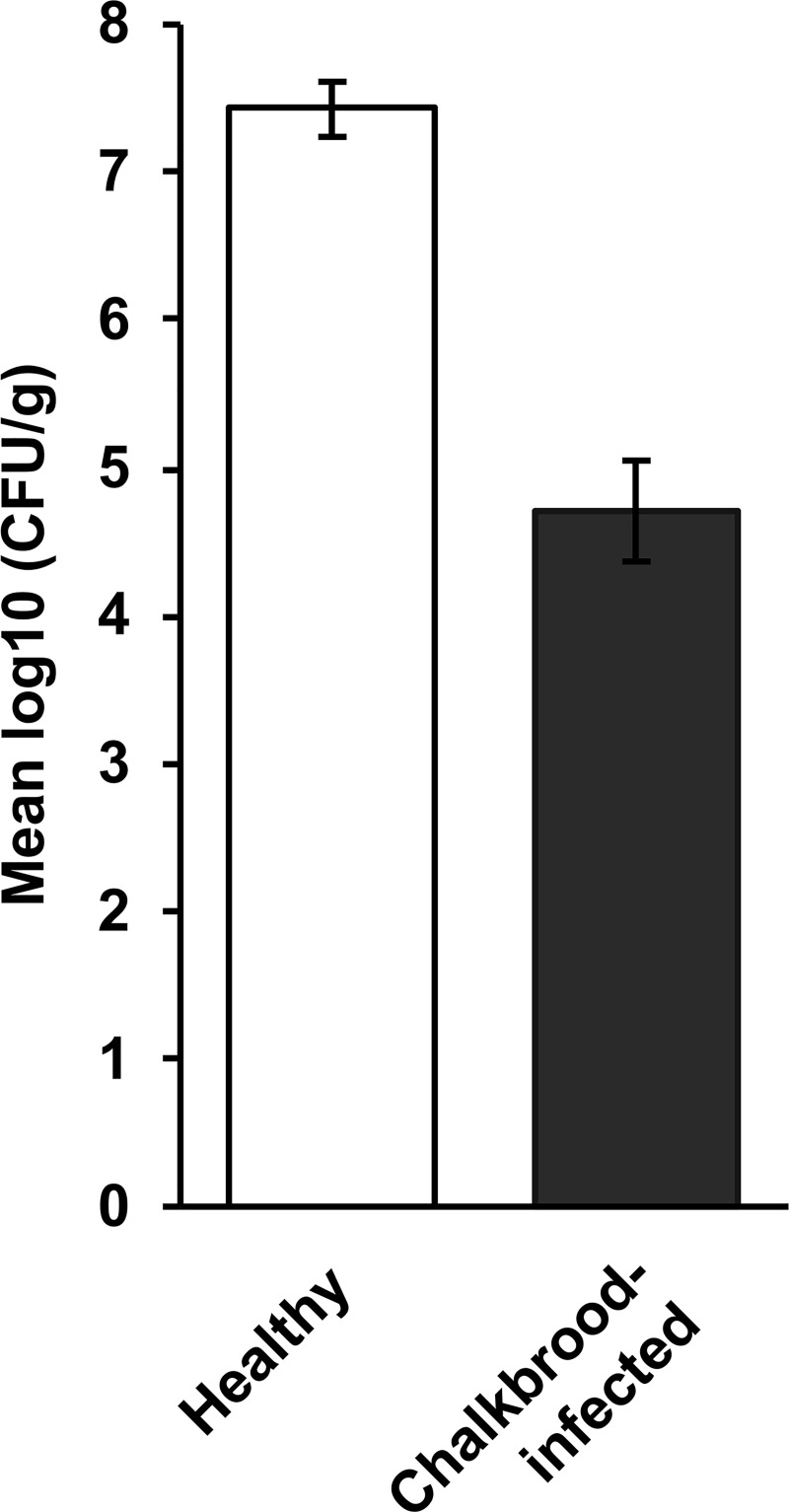
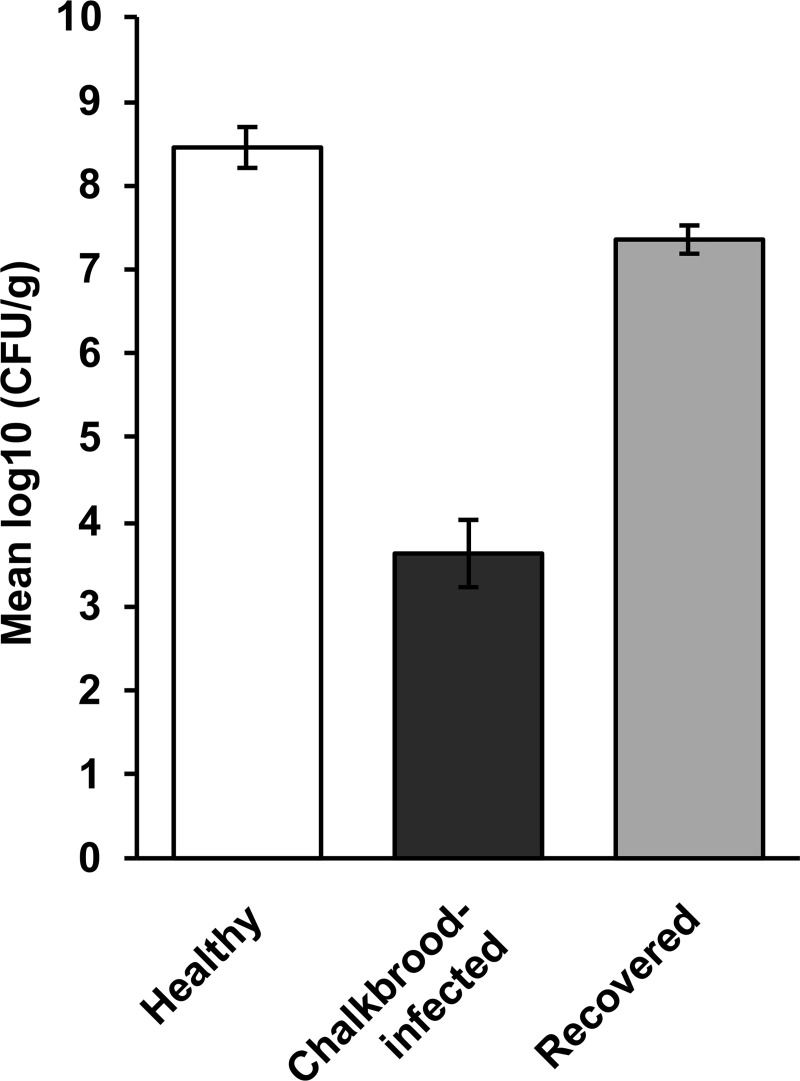
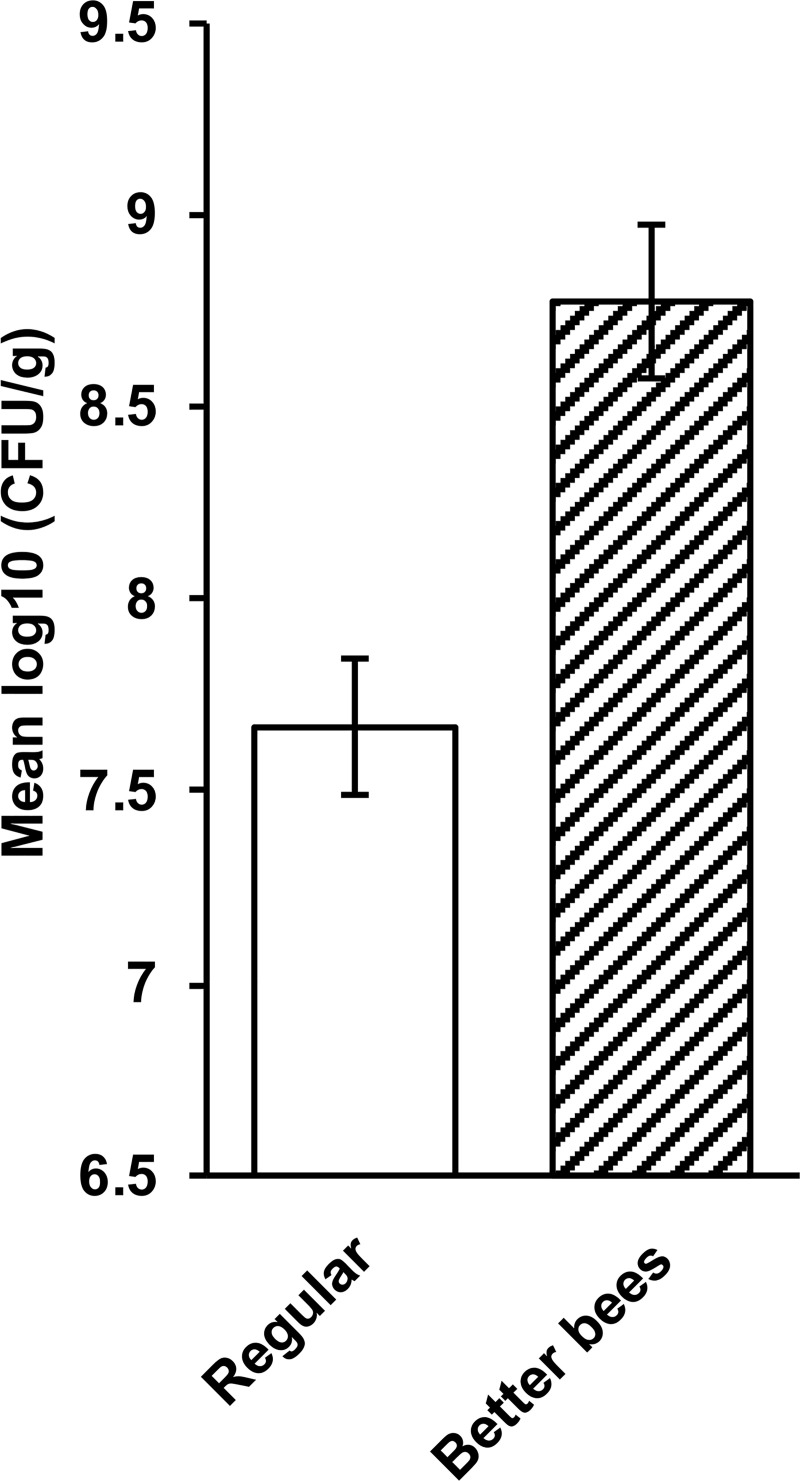
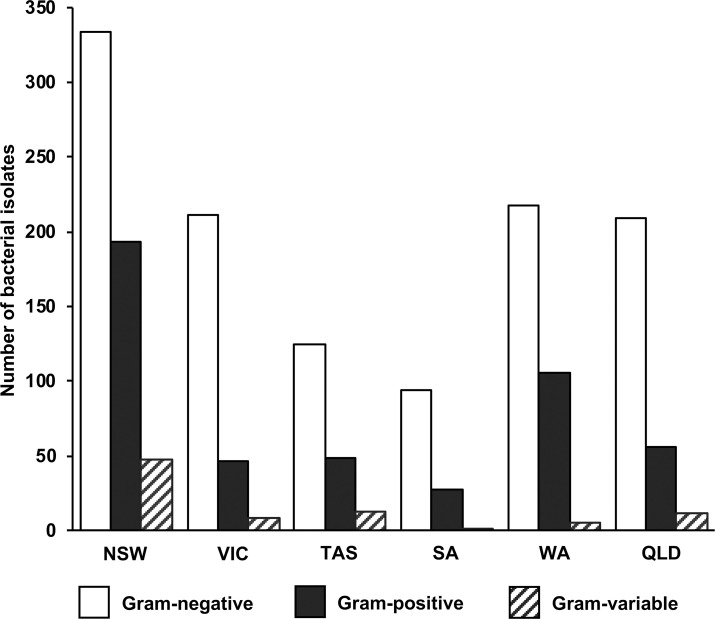
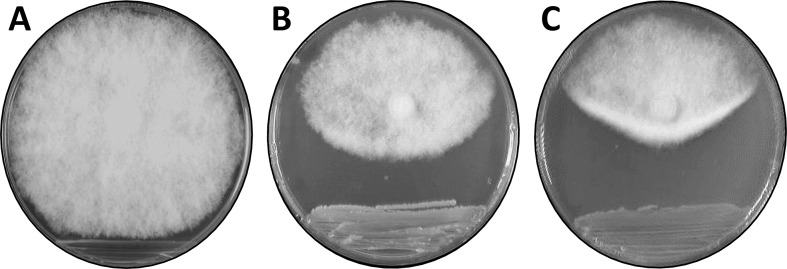
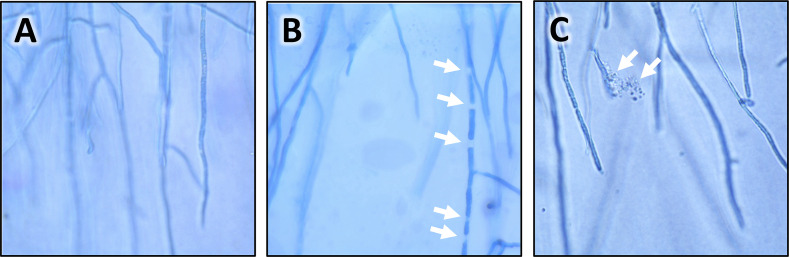
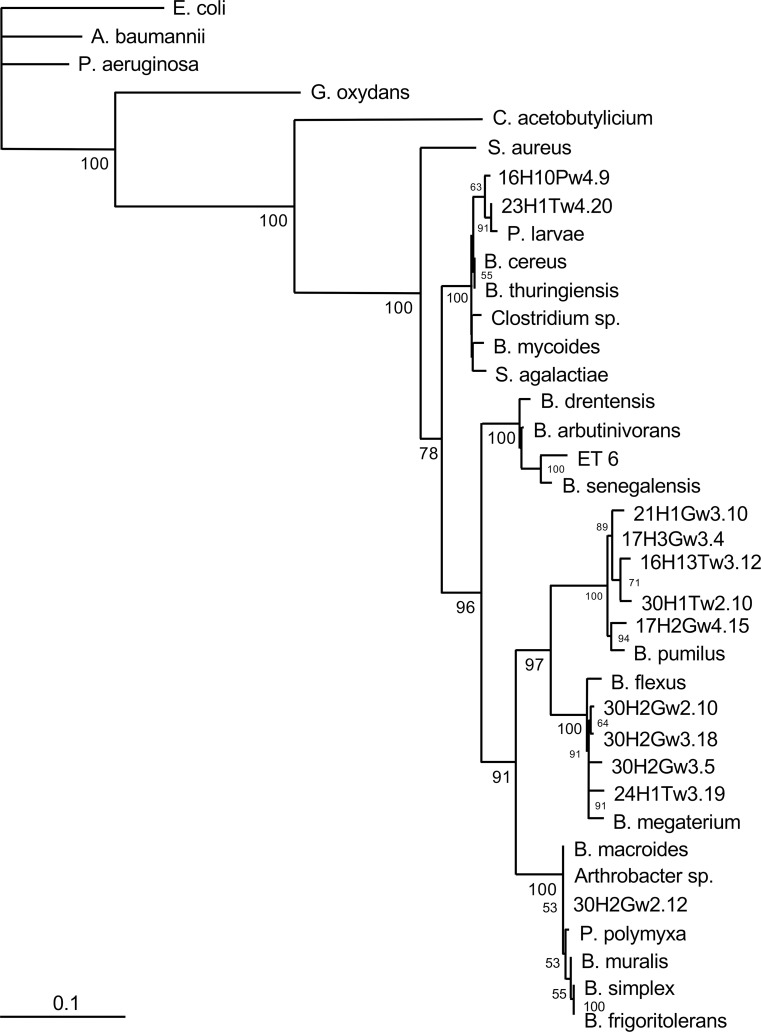
We report on aerobic "environmental" bacteria isolated from European honey bees (Apis mellifera). We determined the number of culturable aerobic bacteria in the gut of nurse bees sampled from locations around Australia. Bees from healthy colonies had 107-108 aerobic bacteria per g of bee gut, while bees from colonies with chalkbrood consistently had significantly fewer bacteria (104-105 bacteria per g). When colonies recovered from chalkbrood, bacterial numbers returned to normal levels, suggesting that counting aerobic bacteria in the gut could be used to predict an outbreak of the disease. Furthermore, Western Australian bees from the "Better Bees" program (bred to promote hygienic behaviour) had significantly higher numbers of aerobic gut bacteria compared to regular bees from healthy colonies. Bacteria with the ability to inhibit the chalkbrood pathogen were found in most bees from regular colonies (> 60%) but only in a few "Better Bees" (10%). Phylogenetic analysis of aerobic bacterial isolates that inhibited the chalkbrood pathogen revealed a close relationship (>97% sequence identity) to the genera Bacillus, Klebsiella, Pantoea, Hafnia, and Enterobacter (bacteria that have previously been isolated from honey bees), but we also isolated Maccrococcus and Frigoribacterium species (bacteria that were not previously identified in bees). Finally, we investigated the ability of bacteria to inhibit the chalkbrood fungus Ascosphaera apis. Mass spectroscopy analysis revealed that the bee gut isolates Frigoribacterium sp. and Bacillus senegalensis produce gluconic acid. We further found that this simple sugar is involved in chalkbrood fungal hyphal lysis and cytoplasmic leakage. Our findings suggest that "environmental" gut bacteria may help bees to control the chalkbrood pathogen.
我们报告了从欧洲蜜蜂(Apis mellifera)中分离出的需氧“环境”细菌。我们测定了从澳大利亚各地采集的保育蜂肠道中可培养需氧细菌的数量。健康蜂群的蜜蜂肠道中每克有 107-108 个需氧细菌,而患有白垩病的蜂群的细菌数量明显较少(每克 104-105 个)。当蜂群从白垩病中恢复时,细菌数量恢复到正常水平,这表明可以通过计算肠道中的需氧细菌数量来预测疾病的爆发。此外,来自西澳大利亚“更好蜜蜂”计划的蜜蜂(经过培育以促进卫生行为)的肠道需氧细菌数量明显高于健康蜂群中的常规蜜蜂。在大多数常规蜂群的蜜蜂中都发现了具有抑制白垩病病原体能力的细菌(> 60%),但在少数“更好蜜蜂”中仅发现了少数(10%)。对抑制白垩病病原体的需氧细菌分离物进行系统发育分析表明,它们与芽孢杆菌属、克雷伯氏菌属、泛菌属、哈夫尼亚菌属和肠杆菌属(先前从蜜蜂中分离出的细菌)密切相关(> 97%的序列同一性),但我们还分离到了巨球菌属和弗雷格利菌属(以前在蜜蜂中未鉴定到的细菌)。最后,我们研究了细菌抑制白垩病真菌球孢白僵菌的能力。质谱分析表明,蜜蜂肠道分离物弗雷格利菌属和塞内加尔芽孢杆菌产生葡萄糖酸。我们进一步发现,这种简单的糖参与了白垩病真菌菌丝裂解和细胞质渗漏。我们的研究结果表明,“环境”肠道细菌可能有助于蜜蜂控制白垩病病原体。