Program in Solid Tumors, Center for Applied Medical Research (CIMA), Pamplona, Spain; Centro de Investigación Biomédica en Red Cáncer (CIBERONC), Madrid, Spain; Navarra's Health Research Institute (IDISNA), Pamplona, Spain; Department of Biochemistry and Genetics, School of Sciences, University of Navarra, Pamplona, Spain.
Program in Solid Tumors, Center for Applied Medical Research (CIMA), Pamplona, Spain; Centro de Investigación Biomédica en Red Cáncer (CIBERONC), Madrid, Spain; Navarra's Health Research Institute (IDISNA), Pamplona, Spain.
Transl Res. 2021 Jul;233:77-91. doi: 10.1016/j.trsl.2021.02.009. Epub 2021 Feb 19.
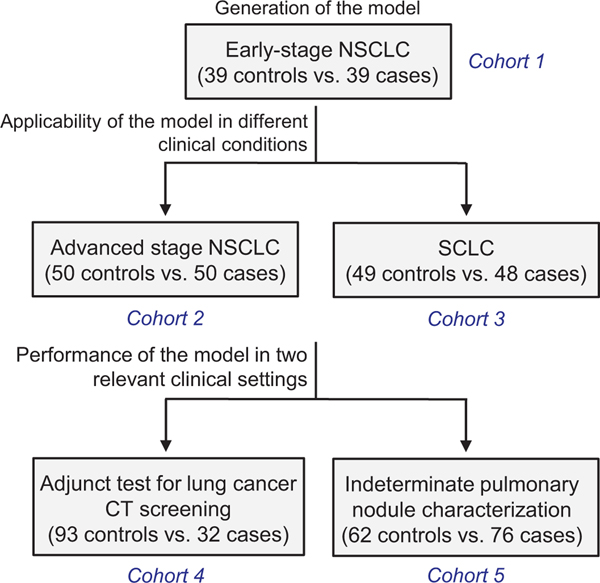
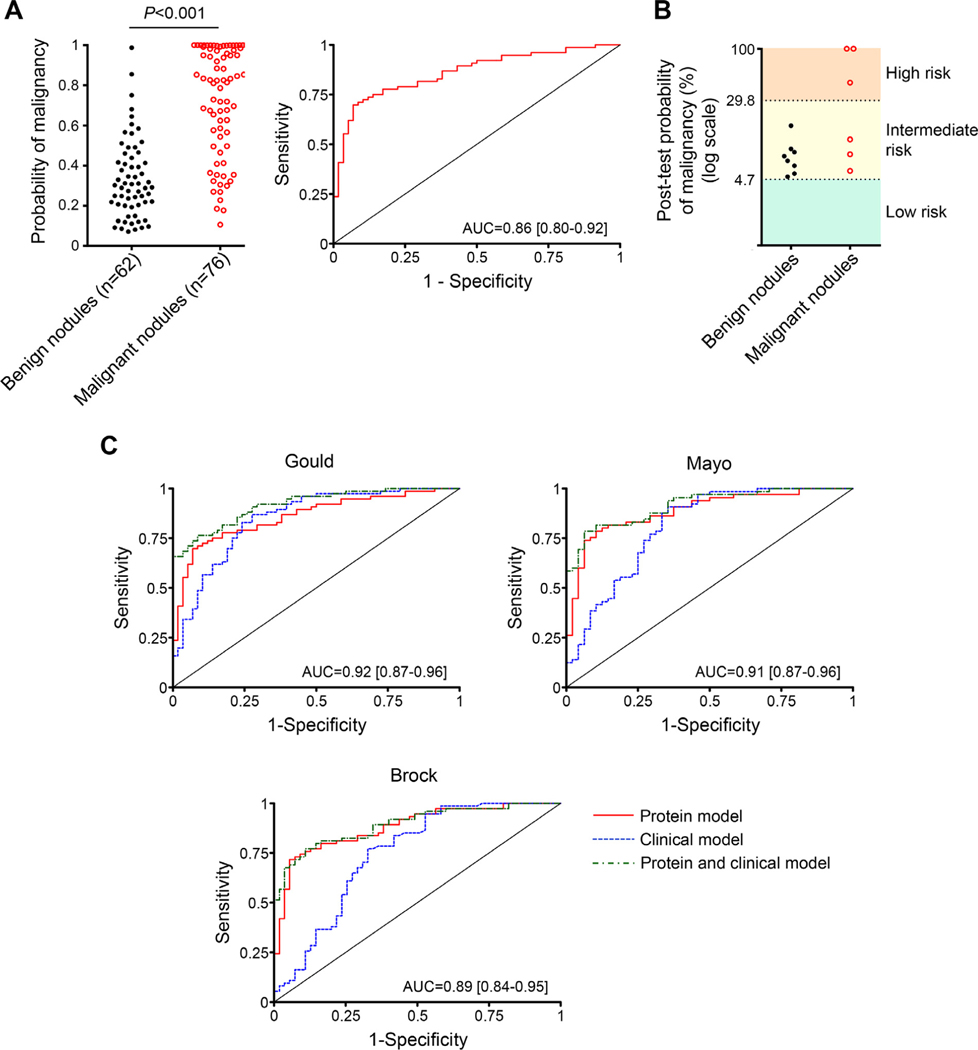
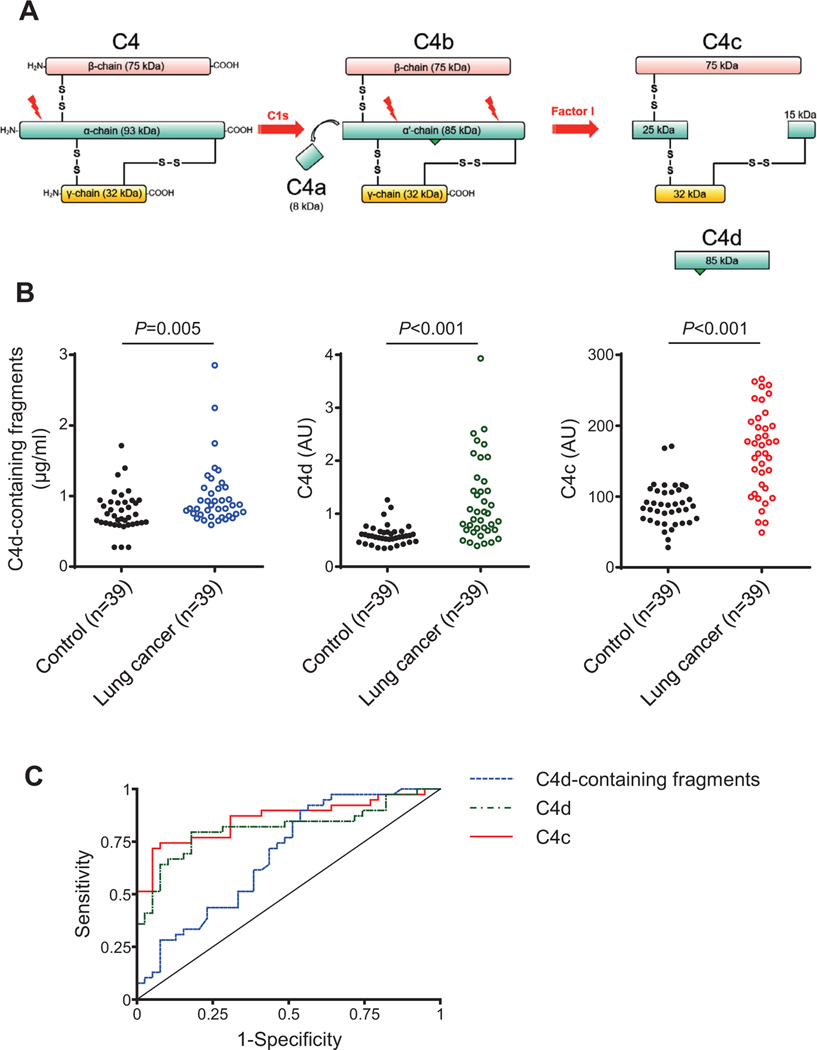
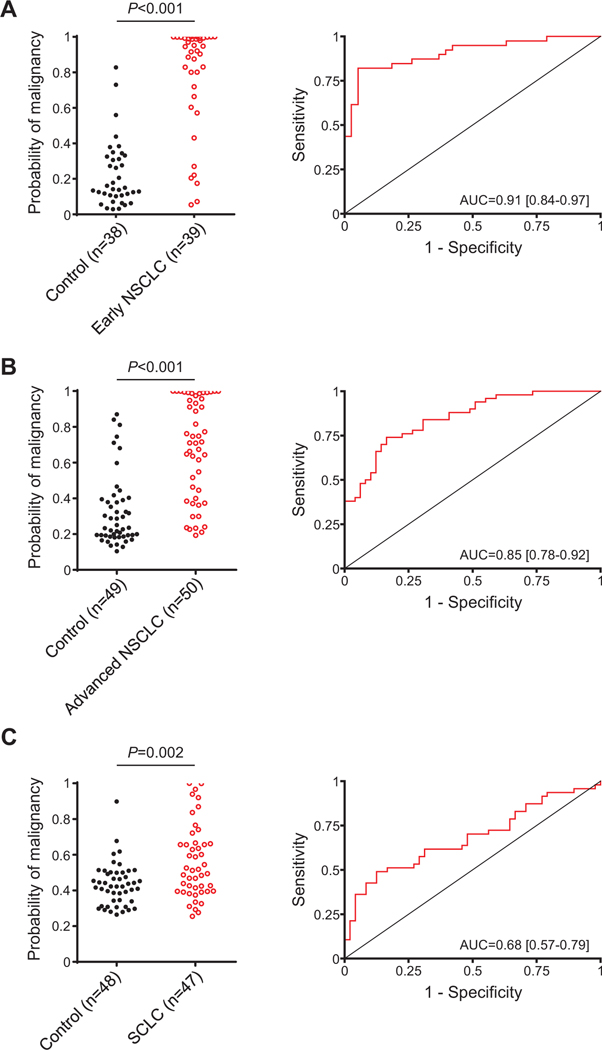
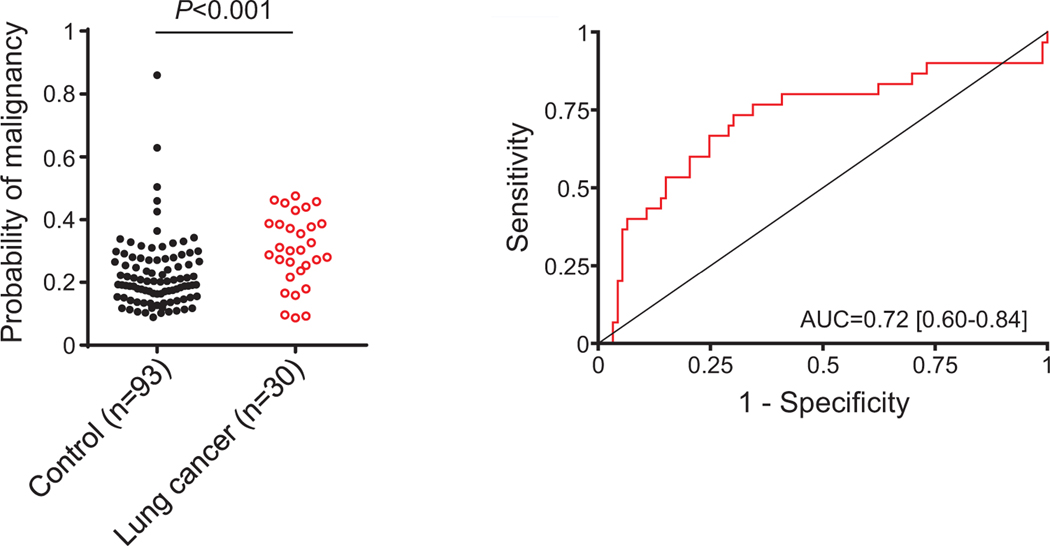
Lung cancer screening detects early-stage cancers, but also a large number of benign nodules. Molecular markers can help in the lung cancer screening process by refining inclusion criteria or guiding the management of indeterminate pulmonary nodules. In this study, we developed a diagnostic model based on the quantification in plasma of complement-derived fragment C4c, cytokeratin fragment 21-1 (CYFRA 21-1) and C-reactive protein (CRP). The model was first validated in two independent cohorts, and showed a good diagnostic performance across a range of lung tumor types, emphasizing its high specificity and positive predictive value. We next tested its utility in two clinically relevant contexts: assessment of lung cancer risk and nodule malignancy. The scores derived from the model were associated with a significantly higher risk of having lung cancer in asymptomatic individuals enrolled in a computed tomography (CT)-screening program (OR = 1.89; 95% CI = 1.20-2.97). Our model also served to discriminate between benign and malignant pulmonary nodules (AUC: 0.86; 95% CI = 0.80-0.92) with very good specificity (92%). Moreover, the model performed better in combination with clinical factors, and may be used to reclassify patients with intermediate-risk indeterminate pulmonary nodules into patients who require a more aggressive work-up. In conclusion, we propose a new diagnostic biomarker panel that may dictate which incidental or screening-detected pulmonary nodules require a more active work-up.
肺癌筛查可发现早期癌症,但也会发现大量良性结节。分子标志物可通过细化纳入标准或指导不确定肺部结节的管理,在肺癌筛查过程中提供帮助。在这项研究中,我们开发了一种基于血浆中补体衍生片段 C4c、细胞角蛋白片段 21-1(CYFRA 21-1)和 C 反应蛋白(CRP)定量的诊断模型。该模型首先在两个独立队列中得到验证,在一系列肺癌肿瘤类型中表现出良好的诊断性能,强调其高特异性和阳性预测值。我们接下来在两个临床相关背景下测试了其用途:评估肺癌风险和结节恶性程度。该模型得出的评分与无症状个体参加计算机断层扫描(CT)筛查计划时患肺癌的风险显著升高相关(OR=1.89;95%CI=1.20-2.97)。我们的模型还可用于区分良性和恶性肺结节(AUC:0.86;95%CI=0.80-0.92),特异性非常高(92%)。此外,该模型与临床因素结合使用效果更好,可用于将具有中等风险的不确定肺部结节患者重新分类为需要更积极检查的患者。总之,我们提出了一种新的诊断生物标志物组合,可确定哪些偶然发现或筛查发现的肺部结节需要更积极的检查。