CSIRO, Future Industries, Clayton, Victoria3800, Australia.
Chemical Engineering, Monash University, Clayton, Victoria 3800, Australia.
ACS Nano. 2021 Mar 23;15(3):4321-4334. doi: 10.1021/acsnano.0c07478. Epub 2021 Feb 23.
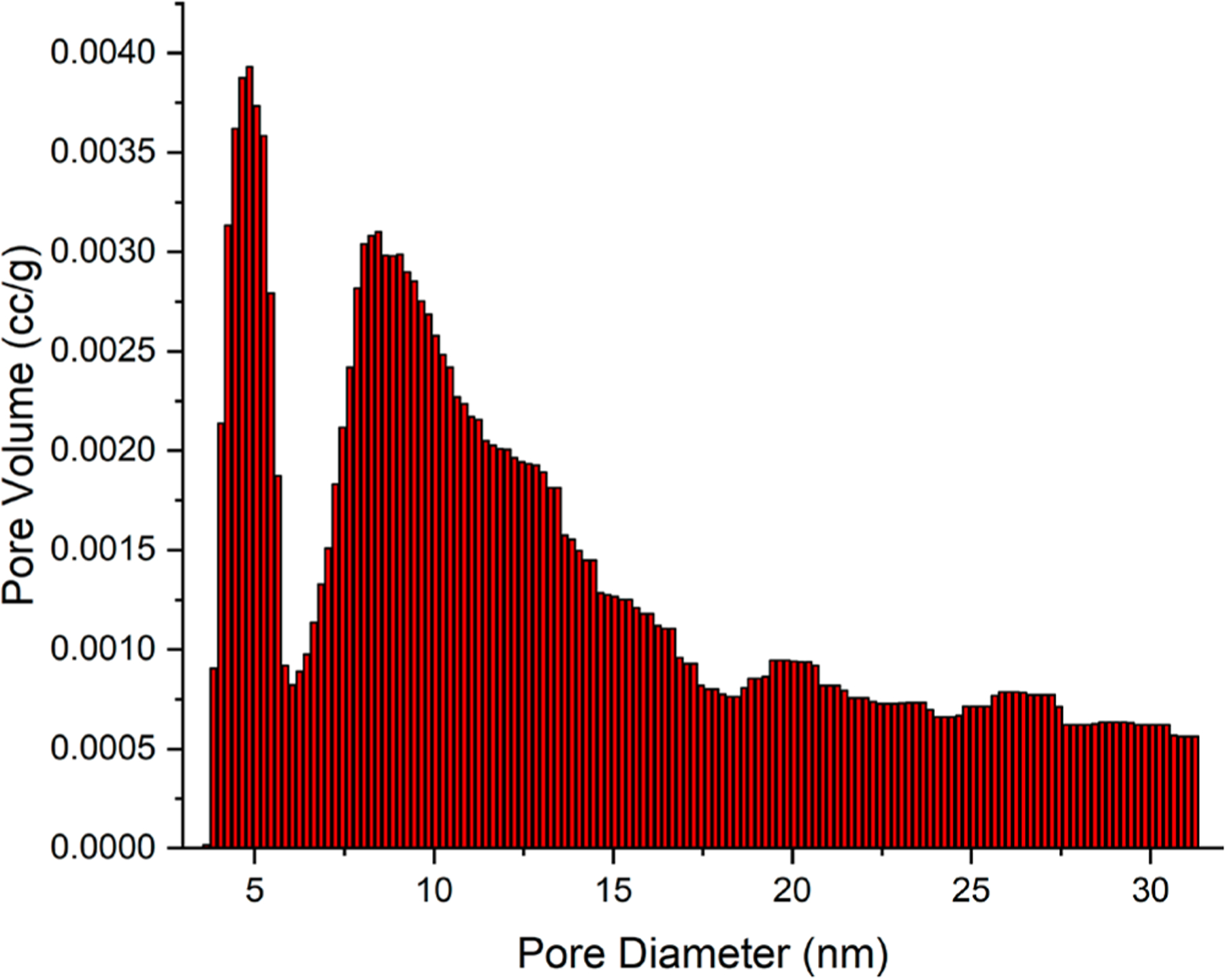
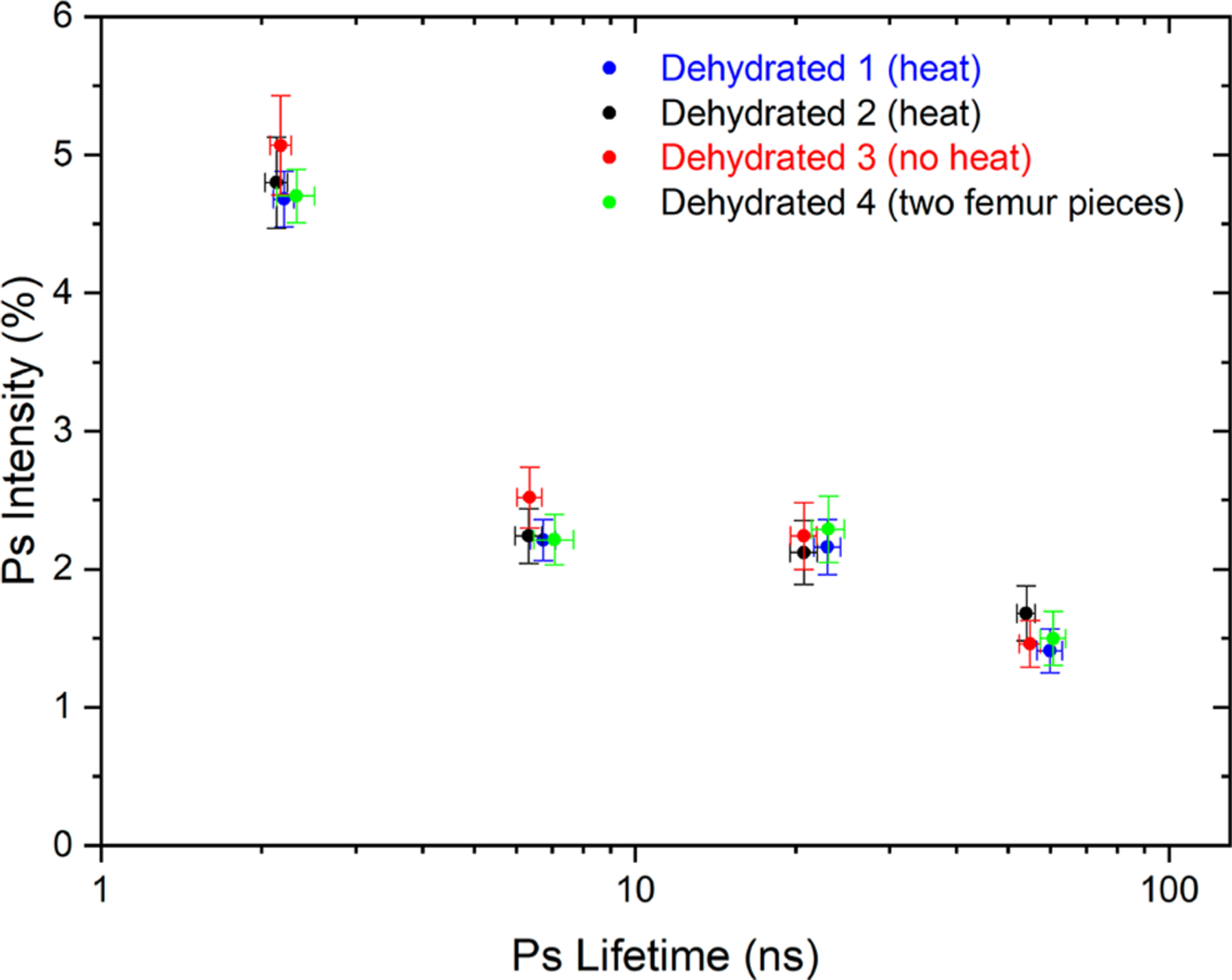
Bone is a hierarchical material primarily composed of collagen, water, and mineral that is organized into discrete molecular, nano-, micro-, and macroscale structural components. In contrast to the structural knowledge of the collagen and mineral domains, the nanoscale porosity of bone is poorly understood. In this study, we introduce a well-established pore characterization technique, positron annihilation lifetime spectroscopy (PALS), to probe the nanoscale size and distribution of each component domain by analyzing pore sizes inherent to hydrated bone together with pores generated by successive removal of water and then organic matrix (including collagen and noncollagenous proteins) from samples of cortical bovine femur. Combining the PALS results with simulated pore size distribution (PSD) results from collagen molecule and microfibril structure, we identify pores with diameter of 0.6 nm that suggest porosity within the collagen molecule regardless of the presence of mineral and water. We find that water occupies three larger domain size regions with nominal mean diameters of 1.1, 1.9, and 4.0 nm-spaces that are hypothesized to associate with intercollagen molecular spaces, terminal segments (-spacing) within collagen microfibrils, and interface spacing between collagen and mineral structure, respectively. Subsequent removal of the organic matrix determines a structural pore size of 5-6 nm for deproteinized bone-suggesting the average spacing between mineral lamella. An independent method to deduce the average mineral spacing from specific surface area (SSA) measurements of the deproteinized sample is presented and compared with the PALS results. Together, the combined PALS and SSA results set a range on the mean mineral lamella thickness of 4-8 nm.
骨骼是一种分层材料,主要由胶原蛋白、水和矿物质组成,这些物质组织成离散的分子、纳米、微观和宏观结构成分。与胶原蛋白和矿物质域的结构知识相比,骨骼的纳米级孔隙率还知之甚少。在这项研究中,我们引入了一种成熟的孔隙特征化技术——正电子湮没寿命谱(PALS),通过分析含水骨骼固有的孔径以及通过连续去除水和然后从牛股骨皮质样本中去除有机基质(包括胶原蛋白和非胶原蛋白)生成的孔,来探测每个成分域的纳米级大小和分布。将 PALS 结果与来自胶原蛋白分子和微纤维结构的模拟孔径分布(PSD)结果相结合,我们确定了直径为 0.6nm 的孔,这些孔表明无论是否存在矿物质和水,胶原蛋白分子内都存在孔隙率。我们发现水占据了三个较大的域尺寸区域,标称平均直径分别为 1.1、1.9 和 4.0nm——这些空间被假设与胶原蛋白分子之间的空间、胶原蛋白微纤维中的末端段(-间距)以及胶原蛋白和矿物质结构之间的界面间距分别相关。随后去除有机基质确定了脱蛋白骨的结构孔径为 5-6nm-表明矿物质层之间的平均间距。提出了一种从脱蛋白样品的比表面积(SSA)测量值推断平均矿物质间距的独立方法,并与 PALS 结果进行了比较。综合 PALS 和 SSA 结果确定了平均矿物质层厚度的范围为 4-8nm。