Wolfson Centre for Personalised Medicine, Molecular & Clinical Pharmacology, University of Liverpool, Liverpool, UK.
MRC Centre for Drug Safety Science, Molecular & Clinical Pharmacology, University of Liverpool, Liverpool, UK.
BMC Public Health. 2021 Feb 24;21(1):190. doi: 10.1186/s12889-021-10208-x.
Understanding the relationship between occupation and alcohol use offers opportunities to provide health promotion programmes based on evidence of need. We aimed to determine associations between occupation and heavy alcohol consumption in working individuals aged 40-69 years.
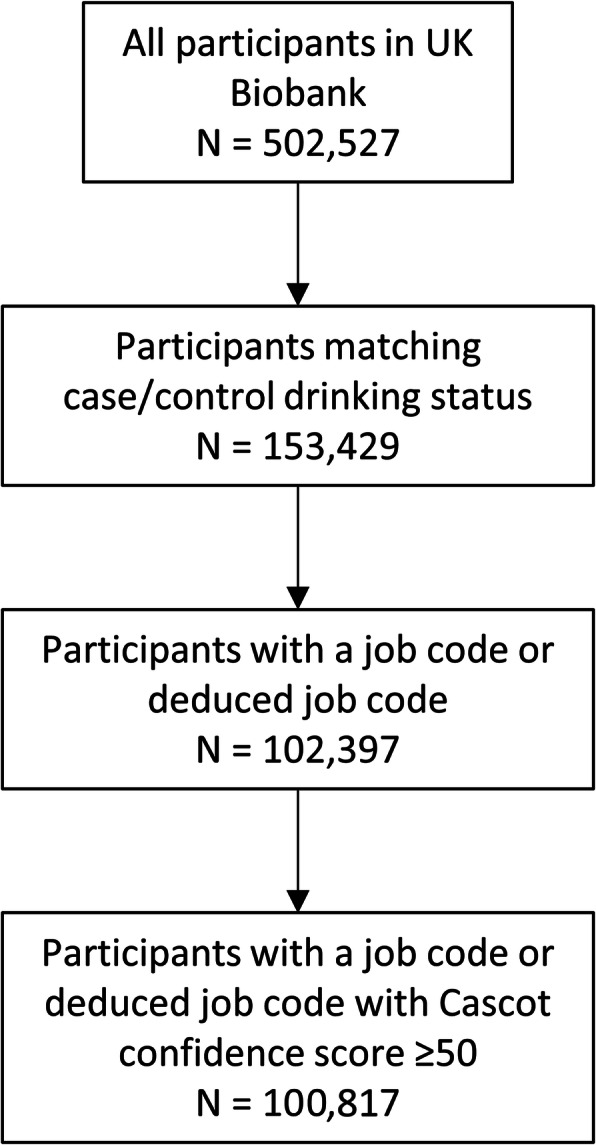
A cross-sectional study was conducted using 100,817 people from the UK Biobank: 17,907 participants categorised as heavy drinkers, defined as > 35 units/week for women and > 50 units/week for men, and 82,910 drinking controls. Prevalence ratios (PRs) and 95% CIs were calculated for gender-specific heavy drinking in 353 occupations using Standard Occupational Classification, V.2000.
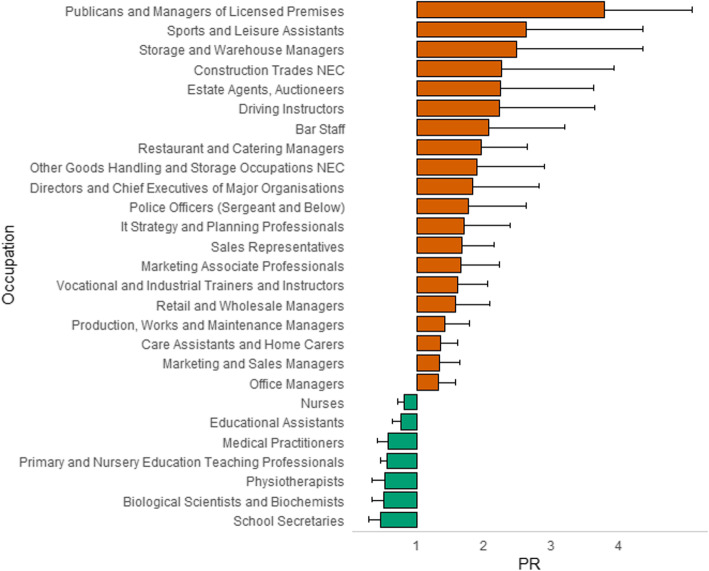
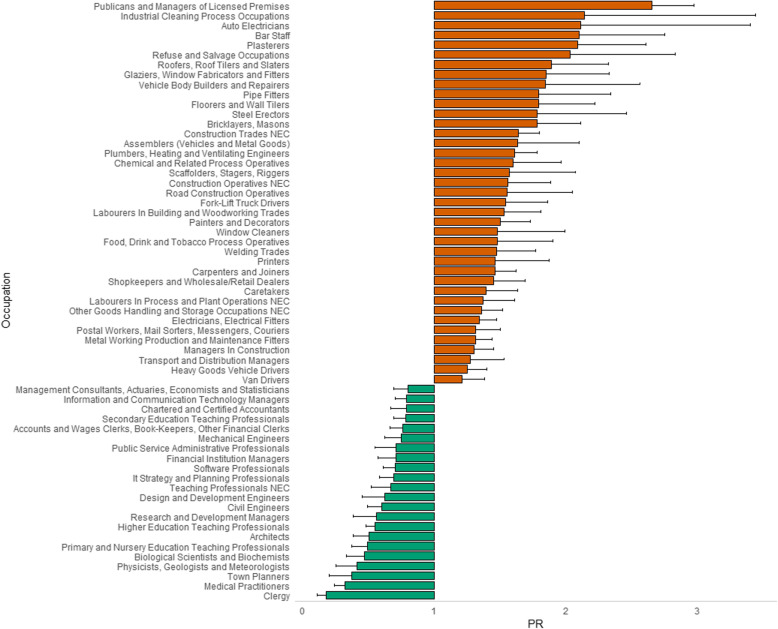
Seventy-seven occupations were associated with level of alcohol consumption in drinkers. The largest ratios for heavy drinkers were observed for publicans and managers of licenced premises (PR = 2.81, 95%CI 2.52-3.14); industrial cleaning process occupations (PR = 2.09, 1.33-3.28); and plasterers (PR = 2.07, 1.66-2.59). Clergy (PR = 0.20, 0.13-0.32); physicists, geologists and meteorologists (PR = 0.40, 0.25-0.65); and medical practitioners (PR = 0.40, 0.32-0.50) were least likely to be heavy drinkers. There was evidence of gender-specific outcomes with the proportion of jobs associated with heavy drinking accounted for by skilled trade occupations being 0.44 for males and 0.05 for females, and 0.10 for males and 0.40 for females when considering managers and senior officials.
In the largest study of its kind, we found evidence for associations between a wider variety of occupations and the risk of heavy alcohol consumption than identified previously, particularly in females, although causality cannot be assumed. These results help determine which jobs and broader employment sectors may benefit most from prevention programmes.
了解职业与饮酒之间的关系为提供基于需求证据的健康促进计划提供了机会。我们旨在确定 40-69 岁工作人群的职业与重度饮酒之间的关联。
使用英国生物库中的 100817 人进行了一项横断面研究:17907 名参与者被归类为重度饮酒者,定义为女性每周>35 单位,男性每周>50 单位,82910 名饮酒对照者。使用标准职业分类,V.2000,计算了 353 种职业中性别特异性重度饮酒的患病率比(PR)和 95%置信区间(CI)。
77 种职业与饮酒者的饮酒水平有关。观察到重度饮酒者的最大比值出现在酒保和持牌场所经理(PR=2.81,95%CI 2.52-3.14);工业清洁过程职业(PR=2.09,1.33-3.28);和 plasterers(PR=2.07,1.66-2.59)。神职人员(PR=0.20,0.13-0.32);物理学家、地质学家和气象学家(PR=0.40,0.25-0.65);和医务人员(PR=0.40,0.32-0.50)不太可能是重度饮酒者。有证据表明,性别特异性结果与重度饮酒相关的工作比例由熟练技工职业占据,男性为 0.44,女性为 0.05,男性为 0.10,女性为 0.40,考虑到经理和高级官员。
在同类研究中,我们发现了比之前研究更多的职业与重度饮酒风险之间的关联证据,尤其是在女性中,尽管不能假设因果关系。这些结果有助于确定哪些工作和更广泛的就业部门可能从预防计划中受益最多。