Research group Experimental Pharmacology (EFAR), Department of Pharmaceutical Chemistry, Drug Analysis and Drug Information (FASC), Center for Neurosciences (C4N), Vrije Universiteit Brussel, Laarbeeklaan 103, 1090, Brussels, Belgium.
Department of Neurology, UZ Brussel, Center for Neurosciences (C4N), Vrije Universiteit Brussel, Laarbeeklaan 101, 1090, Brussels, Belgium.
Alzheimers Res Ther. 2021 Feb 23;13(1):52. doi: 10.1186/s13195-021-00788-6.
The search for new Alzheimer's disease (AD) cerebrospinal fluid (CSF) and blood biomarkers with potential pathophysiological and clinical relevance continues, as new biomarkers might lead to improved early and differential diagnosis, monitoring of disease progression and might even identify new druggable targets. Melatonin might be an interesting biomarker as an inverse correlation between CSF melatonin levels, and severity of the neuropathology as measured by Braak stages has been described. Melatonin can be measured in different body fluids, such as CSF, blood, saliva and urine.
The aim of this systematic review was to review all available studies regarding melatonin levels in different body fluids in the AD continuum and give an extensive overview of reported outcomes.
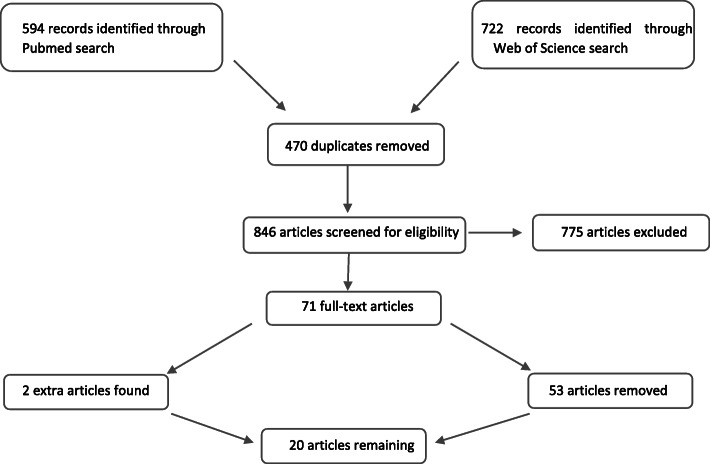
We included papers comparing melatonin levels between healthy controls and human patients belonging to the AD continuum. A systematic search of PubMed and Web of Science led to inclusion of 20 full-length English papers following exclusion of duplicates.
This systematic literature search showed that disruptions in melatonin levels occur with age, but also in AD when compared to age-matched controls. Night-time melatonin levels were found to be lower in CSF and blood of AD patients as compared to controls. Literature was not conclusive regarding alterations in blood daytime melatonin levels or regarding saliva melatonin in AD patients. Decreased total and night-time melatonin production has been described in urine of AD patients.
Our systematic review shows evidence for disruptions in (night-time) melatonin levels in AD as compared to age-matched controls. Although more studies are needed to understand the contribution of disruption of the melatonergic system to the pathophysiology of AD, the potential anti-AD effects that have been attributed to melatonin, renders research on this topic relevant for the discovery of potential future treatment effects of melatonin for AD. The use of melatonin as potential blood biomarker for disease progression should also be further investigated.
由于新的生物标志物可能有助于改善早期和鉴别诊断、监测疾病进展,甚至可能发现新的可治疗靶点,因此,人们一直在寻找具有潜在病理生理学和临床相关性的阿尔茨海默病(AD)脑脊液(CSF)和血液生物标志物。褪黑素可能是一种很有前途的生物标志物,因为已经描述了 CSF 褪黑素水平与 Braak 阶段测量的神经病理学严重程度之间的反比关系。褪黑素可以在不同的体液中测量,如 CSF、血液、唾液和尿液。
本系统综述的目的是回顾 AD 连续体中不同体液中褪黑素水平的所有可用研究,并对报告的结果进行广泛概述。
我们纳入了比较健康对照组和 AD 连续体患者之间褪黑素水平的研究论文。通过对 PubMed 和 Web of Science 的系统搜索,排除重复项后纳入了 20 篇全文英文论文。
这项系统文献检索表明,褪黑素水平的紊乱随着年龄的增长而发生,但与年龄匹配的对照组相比,在 AD 中也会发生。与对照组相比,AD 患者的 CSF 和血液中的夜间褪黑素水平较低。关于 AD 患者血液日间褪黑素水平或唾液褪黑素的变化,文献尚无定论。AD 患者尿液中的总褪黑素和夜间褪黑素生成减少。
我们的系统综述表明,与年龄匹配的对照组相比,AD 患者(夜间)褪黑素水平存在紊乱。尽管需要更多的研究来了解褪黑素系统紊乱对 AD 病理生理学的贡献,但已归因于褪黑素的潜在抗 AD 作用,使得该主题的研究与发现褪黑素治疗 AD 的潜在未来治疗效果相关。还应进一步研究褪黑素作为疾病进展的潜在血液生物标志物的用途。