Department of Respiratory and Critical Care Medicine, Clinical Research Center for Respiratory Disease, West China Hospital, Sichuan University, Chengdu, 610041, Sichuan, China.
Laboratory of Pulmonary Immunology and Inflammation, Frontiers Science Center for Disease-related Molecular Network, Sichuan University, Chengdu, 610041, Sichuan, China.
BMC Infect Dis. 2021 Feb 24;21(1):206. doi: 10.1186/s12879-020-05728-7.
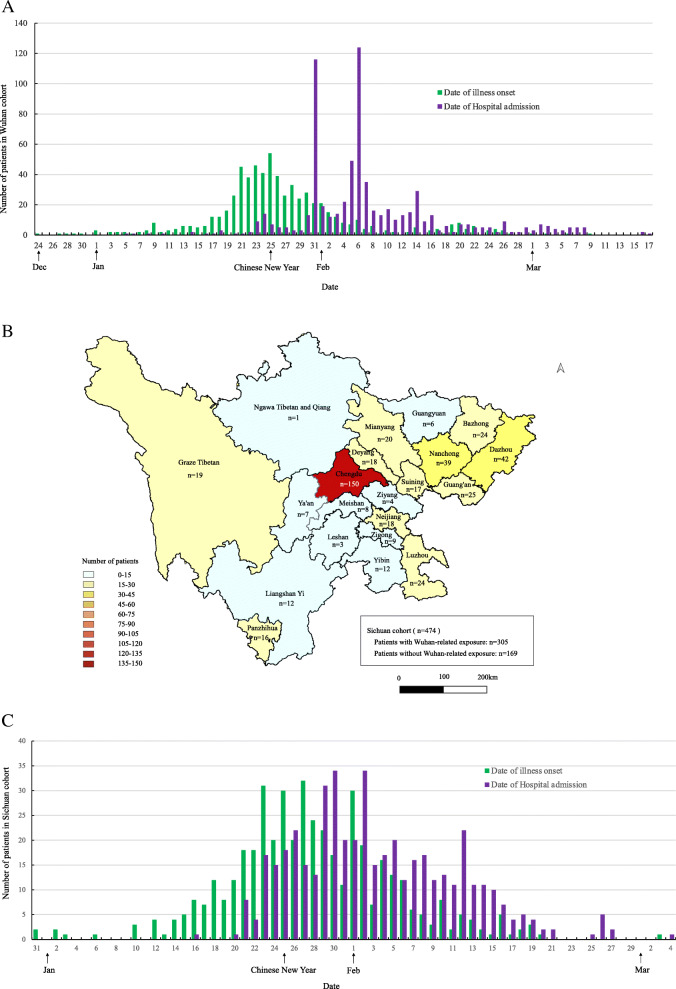
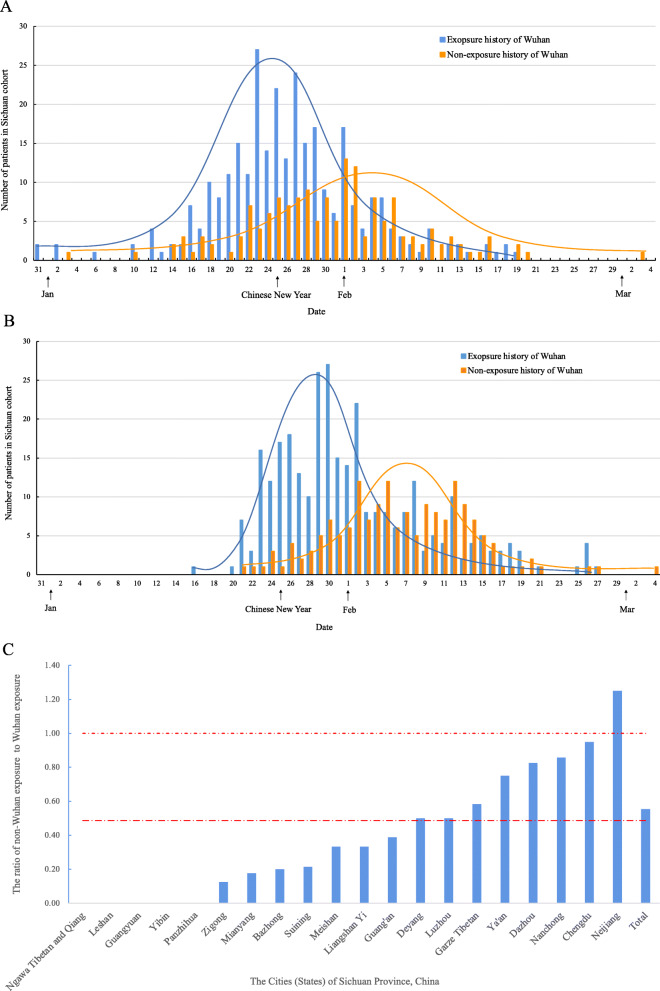
There is limited information on the difference in epidemiology, clinical characteristics and outcomes of the initial outbreak of the coronavirus disease (COVID-19) in Wuhan (the epicenter) and Sichuan (the peripheral area) in the early phase of the COVID-19 pandemic. This study was conducted to investigate the differences in the epidemiological and clinical characteristics of patients with COVID-19 between the epicenter and peripheral areas of pandemic and thereby generate information that would be potentially helpful in formulating clinical practice recommendations to tackle the COVID-19 pandemic.
The Sichuan & Wuhan Collaboration Research Group for COVID-19 established two retrospective cohorts that separately reflect the epicenter and peripheral area during the early pandemic. The epidemiology, clinical characteristics and outcomes of patients in the two groups were compared. Multivariate regression analyses were used to estimate the adjusted odds ratios (aOR) with regard to the outcomes.
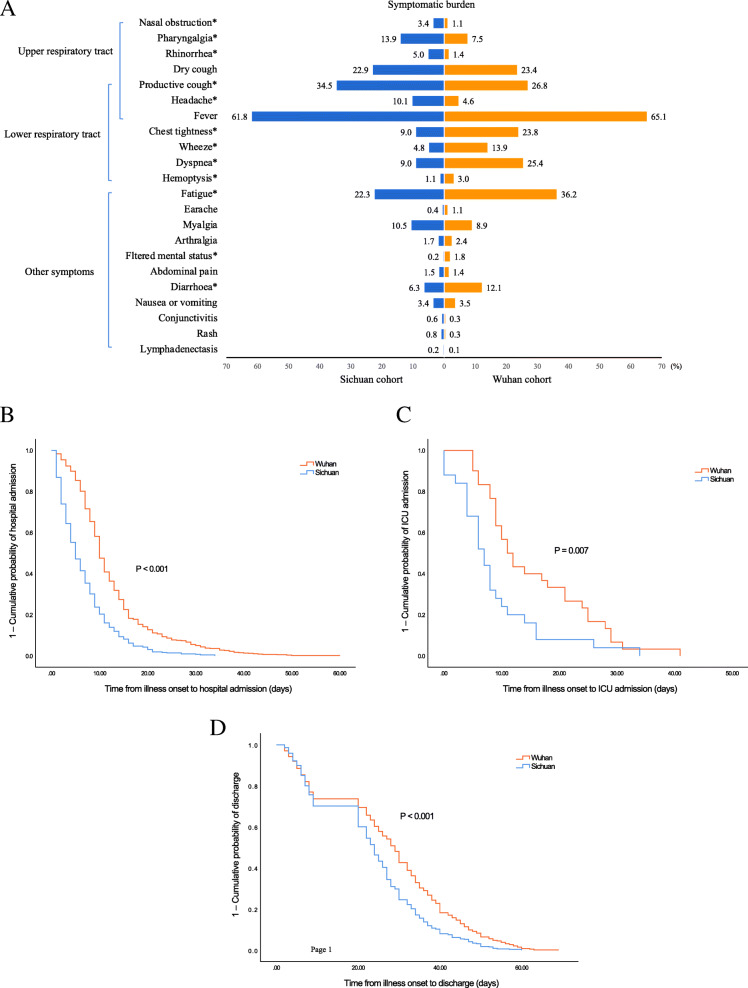
The Wuhan (epicenter) cohort included 710 randomly selected patients, and the peripheral (Sichuan) cohort included 474 consecutive patients. A higher proportion of patients from the periphery had upper airway symptoms, whereas a lower proportion of patients in the epicenter had lower airway symptoms and comorbidities. Patients in the epicenter had a higher risk of death (aOR=7.64), intensive care unit (ICU) admission (aOR=1.66), delayed time from illness onset to hospital and ICU admission (aOR=6.29 and aOR=8.03, respectively), and prolonged duration of viral shedding (aOR=1.64).
The worse outcomes in the epicenter could be explained by the prolonged time from illness onset to hospital and ICU admission. This could potentially have been associated with elevated systemic inflammation secondary to organ dysfunction and prolonged duration of virus shedding independent of age and comorbidities. Thus, early supportive care could achieve better clinical outcomes.
在 COVID-19 大流行早期,关于冠状病毒病(COVID-19)首发于武汉(震中)和四川(外围地区)的流行病学、临床特征和结局的差异信息有限。本研究旨在调查震中和大流行外围地区 COVID-19 患者的流行病学和临床特征差异,从而为制定临床实践建议以应对 COVID-19 大流行提供潜在有用的信息。
COVID-19 四川和武汉协作研究组建立了两个回顾性队列,分别反映大流行早期的震中和外围地区。比较了两组患者的流行病学、临床特征和结局。采用多变量回归分析估计结局的调整优势比(aOR)。
武汉(震中)队列纳入了 710 例随机选择的患者,外围(四川)队列纳入了 474 例连续患者。来自外围地区的患者中,上呼吸道症状的比例较高,而震中地区患者中,下呼吸道症状和合并症的比例较低。震中地区患者死亡风险较高(aOR=7.64),入住重症监护病房(ICU)的风险较高(aOR=1.66),从发病到住院和 ICU 入住的时间延迟(aOR=6.29 和 aOR=8.03),病毒脱落持续时间延长(aOR=1.64)。
震中地区结局较差的原因可能是从发病到住院和 ICU 入住的时间延长。这可能与器官功能障碍引起的全身炎症反应升高和病毒脱落持续时间延长有关,而与年龄和合并症无关。因此,早期支持性治疗可以获得更好的临床结局。