Department of Respiratory and Critical Care Medicine, Shanghai General Hospital, Shanghai Jiaotong University School of medicine (originally named "Shanghai First People's Hospital"), Shanghai, China.
Department of Cardiology, Nanjing Medical University Affiliated Huai'an First People's Hospital, Huai'an, Jiangsu, china.
Int J Med Sci. 2021 Jan 28;18(6):1415-1422. doi: 10.7150/ijms.54987. eCollection 2021.
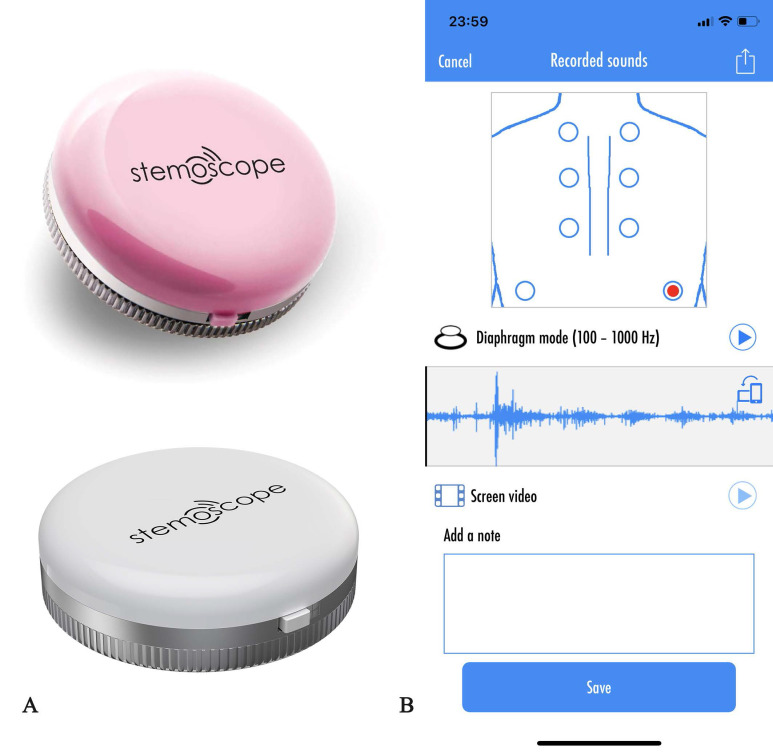
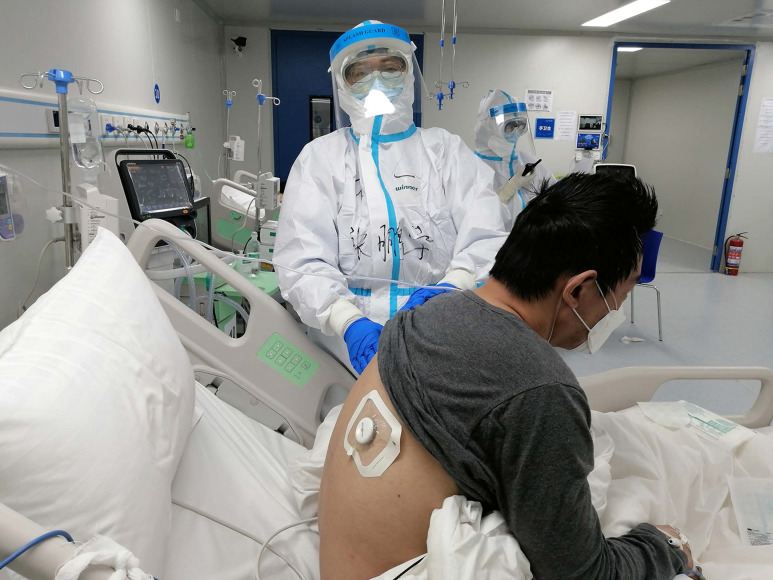
SARS-CoV-2 (originally named COVID-2019) pneumonia is currently prevalent worldwide. The number of cases has increased rapidly but the auscultatory characteristics of affected patients and how to use it to predict who is most likely to survive or die are not available. This study aims to describe the auscultatory characteristics and its clinical relativity of SARS-CoV-2 pneumonia by using a wireless stethoscope. A cross-sectional, observational, single-center case series of 30 consecutive hospitalized patients with confirmed SARS-CoV-2 pneumonia at Leishenshan Hospital in Wuhan, China, were enrolled from March 9 to April 5, 2020. Clinical, laboratory, radiological, treatment data and lung auscultation were collected and analyzed. Lung auscultation was acquired by a wireless electronic stethoscope. Auscultatory characteristics of the moderate, severe, and critically ill patients were compared. Kinds of crackles including fine crackles and wheezing were heard and recorded in these patients. Velcro crackles were heard in most critically ill patients (6/10). Besides, patients with Velcro crackles were all dead (6/6). There was no positive lung auscultatory finding in the moderate group and little positive lung auscultatory findings (4/10) in the severe group. Velcro crackles can be auscultated by this newly designed electronic wireless stethoscope in most critically ill patients infected by SARS-CoV-2 and predicts a poor prognosis. Moderate and severe patients without positive auscultatory findings may have a better prognosis.
严重急性呼吸综合征冠状病毒 2 型(最初命名为 2019 年冠状病毒病)肺炎目前在全球范围内流行。病例数量迅速增加,但受影响患者的听诊特征以及如何利用这些特征来预测哪些患者最有可能存活或死亡尚不清楚。本研究旨在使用无线听诊器描述严重急性呼吸综合征冠状病毒 2 型肺炎的听诊特征及其临床相关性。
本研究是一项横断面、观察性、单中心的病例系列研究,纳入了 2020 年 3 月 9 日至 4 月 5 日期间在中国武汉雷神山医院住院的 30 例确诊为严重急性呼吸综合征冠状病毒 2 型肺炎的连续患者。收集并分析了临床、实验室、影像学、治疗数据和肺部听诊结果。肺部听诊采用无线电子听诊器进行采集。比较了中、重度和危重症患者的听诊特征。
在这些患者中可听到并记录到细湿啰音和哮鸣音等各种爆裂音。大多数危重症患者(6/10)可听到捻发音。此外,患有捻发音的患者均已死亡(6/6)。中度组无阳性肺部听诊结果,重度组仅有 4/10 例阳性肺部听诊结果。
新型电子无线听诊器可在大多数感染严重急性呼吸综合征冠状病毒 2 型的危重症患者中听诊到捻发音,且提示预后不良。无阳性听诊结果的中、重度患者可能具有更好的预后。