Key Laboratory of Pathobiology, Ministry of Education, Department of Pathophysiology, College of Basic Medical Sciences, Jilin University, Changchun 130000, China.
Department of Hepatology, The First Hospital of Jilin University, Changchun 130000, China.
Cancer Biol Med. 2021 Feb 15;18(1):172-183. doi: 10.20892/j.issn.2095-3941.2020.0211.
Macrophages are a major component of the tumor microenvironment. M1 macrophages secrete pro-inflammatory factors that inhibit tumor growth and development, whereas tumor-associated macrophages (TAMs) mainly exhibit an M2 phenotype. Our previous studies have shown that the interleukin-33/ST2 (IL-33/ST2) axis is essential for activation of the M1 phenotype. This study investigates the role of the IL-33/ST2 axis in TAMs, its effects on tumor growth, and whether it participates in the mutual conversion between the M1 and M2 phenotypes.
Bone marrow-derived macrophages were extracted from wildtype, ST2 knockout (ST2), and Il33-overexpressing mice and differentiated with IL-4. The mitochondrial and lysosomal number and location, and the expression of related proteins were used to analyze mitophagy. Oxygen consumption rates and glucose and lactate levels were measured to reveal metabolic changes.
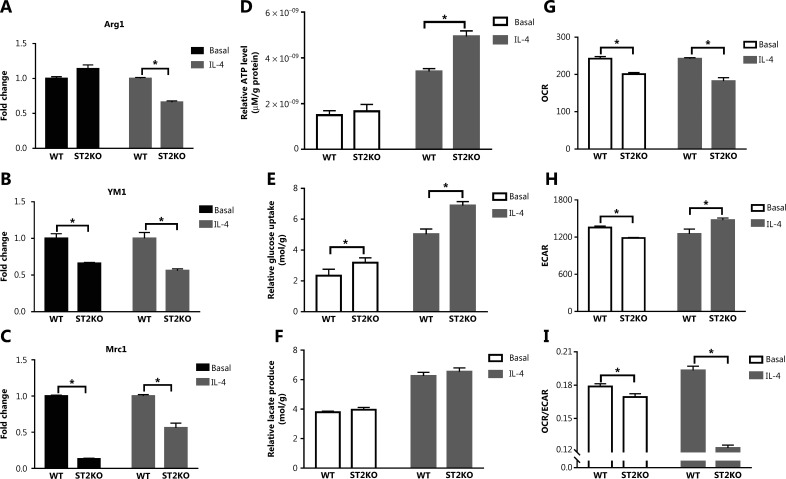
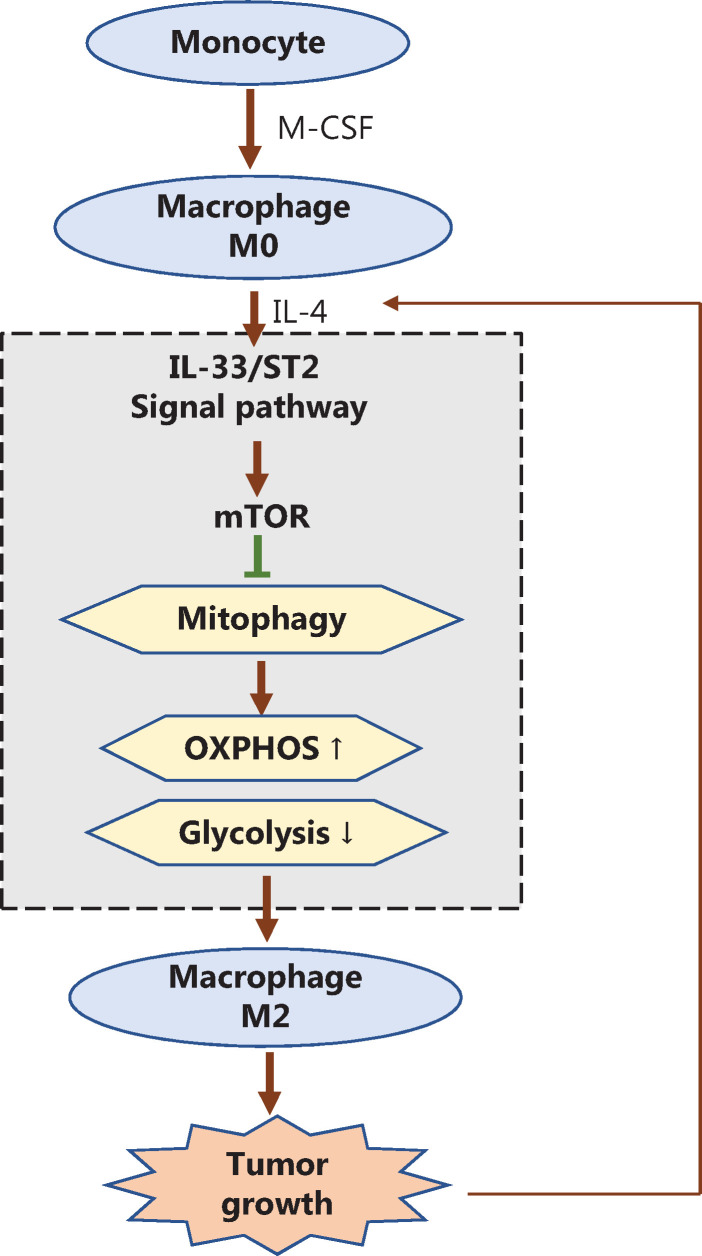
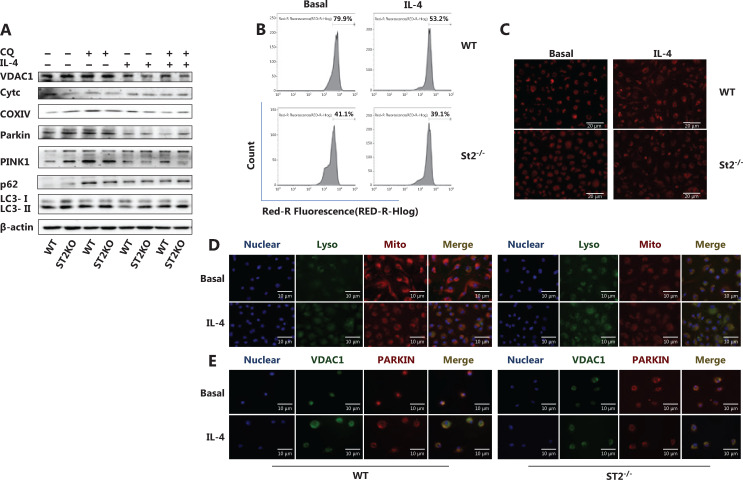
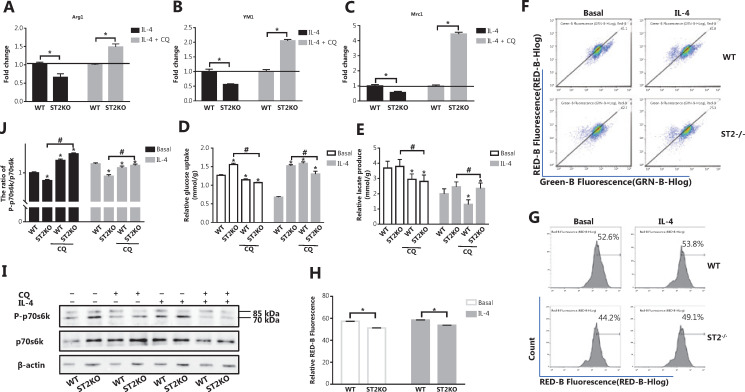
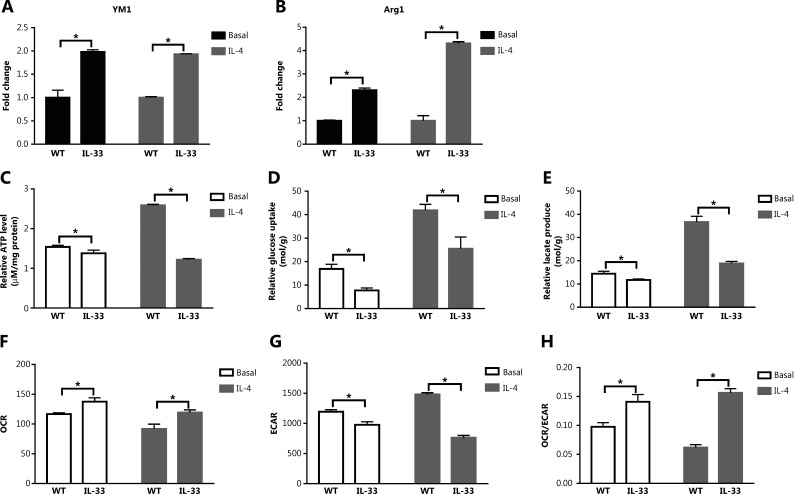
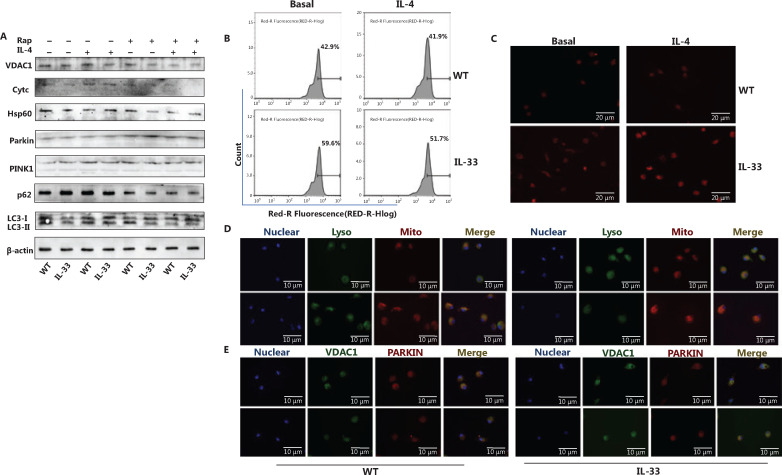
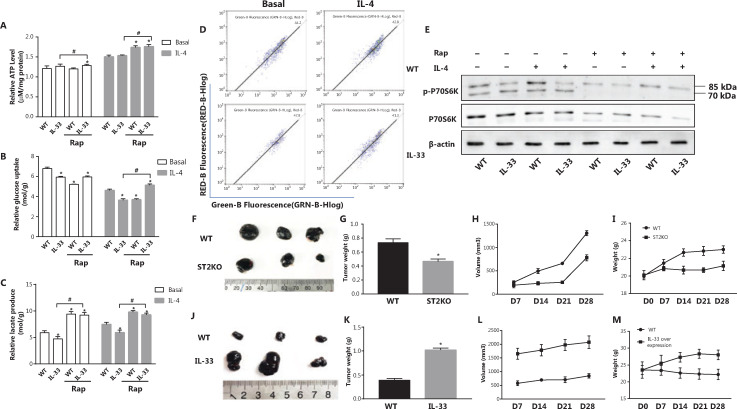
The IL-33/ST2 axis was demonstrated to play an important role in the metabolic conversion of macrophages from OXPHOS to glycolysis by altering mitophagy levels. The IL-33/ST2 axis promoted enhanced cell oxidative phosphorylation, thereby further increasing M2 polarization gene expression and ultimately promoting tumor growth ( < 0.05) (). This metabolic shift was not due to mitochondrial damage, because the mitochondrial membrane potential was not significantly altered by IL-4 stimulation or ST2 knockout; however, it might be associated with the mTOR activity.
These results clarify the interaction between the IL-33/ST2 pathway and macrophage polarization, and may pave the way to the development of new cancer immunotherapies targeting the IL-33/ST2 axis.
巨噬细胞是肿瘤微环境的主要组成部分。M1 巨噬细胞分泌促炎因子,抑制肿瘤生长和发展,而肿瘤相关巨噬细胞(TAMs)主要表现为 M2 表型。我们之前的研究表明,白细胞介素 33/ST2(IL-33/ST2)轴对于激活 M1 表型至关重要。本研究探讨了 IL-33/ST2 轴在 TAMs 中的作用、对肿瘤生长的影响,以及它是否参与 M1 和 M2 表型的相互转化。
从野生型、ST2 敲除(ST2)和 Il33 过表达小鼠中提取骨髓来源的巨噬细胞,并通过 IL-4 进行分化。线粒体和溶酶体的数量和位置,以及相关蛋白的表达,用于分析自噬。氧消耗率、葡萄糖和乳酸水平用于揭示代谢变化。
IL-33/ST2 轴通过改变自噬水平,在巨噬细胞从氧化磷酸化向糖酵解代谢转换中发挥重要作用。IL-33/ST2 轴促进增强细胞氧化磷酸化,从而进一步增加 M2 极化基因表达,最终促进肿瘤生长(<0.05)()。这种代谢转变不是由于线粒体损伤引起的,因为 IL-4 刺激或 ST2 敲除不会显著改变线粒体膜电位;然而,它可能与 mTOR 活性有关。
这些结果阐明了 IL-33/ST2 途径与巨噬细胞极化之间的相互作用,可能为开发针对 IL-33/ST2 轴的新癌症免疫疗法铺平道路。