Dept. of Food Science, Purdue University, 745 Agriculture Mall Dr, W Lafayette, IN 47907, USA.
Food Funct. 2021 Mar 21;12(6):2442-2456. doi: 10.1039/d0fo03457f. Epub 2021 Feb 25.
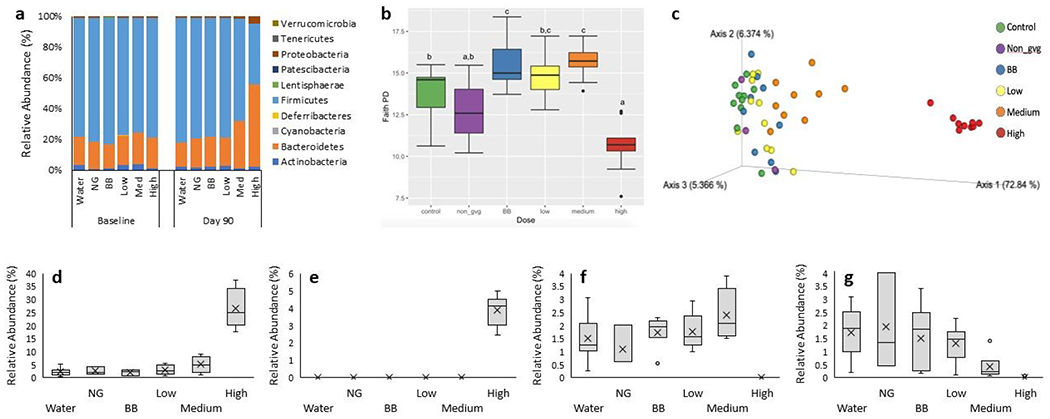
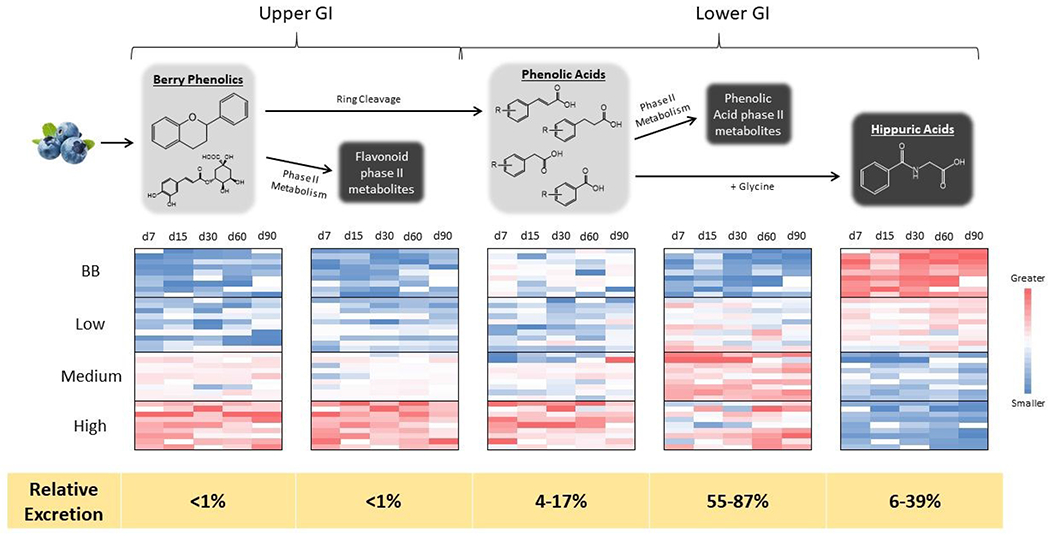
Consuming polyphenol-rich fruits and vegetables, including blueberries, is associated with beneficial health outcomes. Interest in enhancing polyphenol intakes via dietary supplements has grown, though differences in fruit versus supplement matrix on gut microbiota and ultimate phenolic metabolism to bioactive metabolites are unknown. To evaluate this, 5-month-old, ovariectomized, Sprague-Dawley rats were gavaged for 90 d with a purified extract of blueberry polyphenols (0, 50, 250, or 1000 mg total polyphenols per kg bw per d) or lyophilized blueberries (50 mg total polyphenols per kg bw per d, equivalent to 150 g fresh blueberries per day in humans). Urine, feces, and tissues were assessed for gut microbiota and phenolic metabolism. Significant dose- and food matrix-dependent effects were observed at all endpoints measured. Gut microbial populations showed increased diversity at moderate doses but decreased diversity at high doses. Urinary phenolic metabolites were primarily observed as microbially derived metabolites and underwent extensive host xenobiotic phase II metabolism. Thus, blueberry polyphenols in fruit and supplements induce differences in gut microbial communities and phenolic metabolism, which may alter intended health effects.
食用富含多酚的水果和蔬菜,包括蓝莓,与有益的健康结果有关。人们对通过饮食补充剂来增加多酚的摄入量越来越感兴趣,尽管水果与补充剂基质在肠道微生物群和最终酚类代谢物到生物活性代谢物方面的差异尚不清楚。为了评估这一点,5 月龄去卵巢 Sprague-Dawley 大鼠用蓝莓多酚的纯化提取物(每天每公斤体重 0、50、250 或 1000 毫克总多酚)或冻干蓝莓(每天每公斤体重 50 毫克总多酚,相当于人类每天 150 克新鲜蓝莓)灌胃 90 天。评估尿液、粪便和组织中的肠道微生物群和酚类代谢物。在所有测量的终点都观察到了剂量和食物基质依赖性的显著影响。肠道微生物群的多样性在中等剂量时增加,但在高剂量时减少。尿酚类代谢物主要作为微生物衍生的代谢物存在,并经历广泛的宿主异生物质 II 期代谢。因此,水果和补充剂中的蓝莓多酚会引起肠道微生物群落和酚类代谢的差异,从而可能改变预期的健康效果。