• 文献检索
  • 文档翻译
  • 深度研究
  • 学术资讯
  • Suppr Zotero 插件Zotero 插件
  • 邀请有礼
  • 套餐&价格
  • 历史记录
应用&插件
Suppr Zotero 插件Zotero 插件浏览器插件Mac 客户端Windows 客户端微信小程序
定价
高级版会员购买积分包购买API积分包
服务
文献检索文档翻译深度研究API 文档MCP 服务
关于我们
关于 Suppr公司介绍联系我们用户协议隐私条款
关注我们

Suppr 超能文献

核心技术专利:CN118964589B侵权必究
粤ICP备2023148730 号-1Suppr @ 2026

文献检索

告别复杂PubMed语法,用中文像聊天一样搜索,搜遍4000万医学文献。AI智能推荐,让科研检索更轻松。

立即免费搜索

文件翻译

保留排版,准确专业,支持PDF/Word/PPT等文件格式,支持 12+语言互译。

免费翻译文档

深度研究

AI帮你快速写综述,25分钟生成高质量综述,智能提取关键信息,辅助科研写作。

立即免费体验

描述学习外源性运动动力学影响的晕动病计算模型。

Computational Model of Motion Sickness Describing the Effects of Learning Exogenous Motion Dynamics.

作者信息

Wada Takahiro

机构信息

College of Information Science and Engineering, Ritsumeikan University, Kusatsu, Japan.

出版信息

Front Syst Neurosci. 2021 Feb 9;15:634604. doi: 10.3389/fnsys.2021.634604. eCollection 2021.

DOI:10.3389/fnsys.2021.634604
PMID:33633547
原文链接:https://pmc.ncbi.nlm.nih.gov/articles/PMC7899976/
Abstract

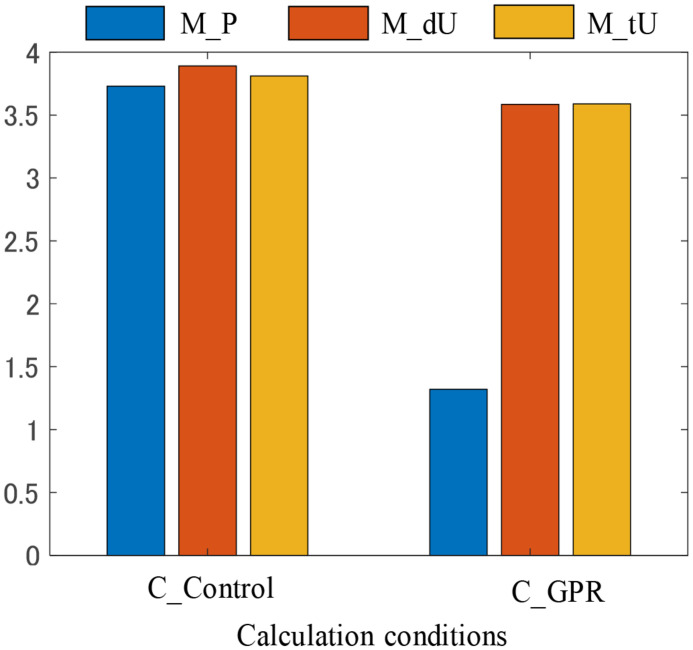
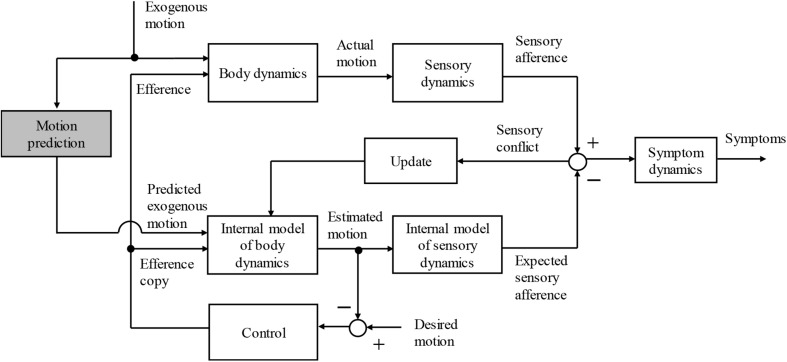
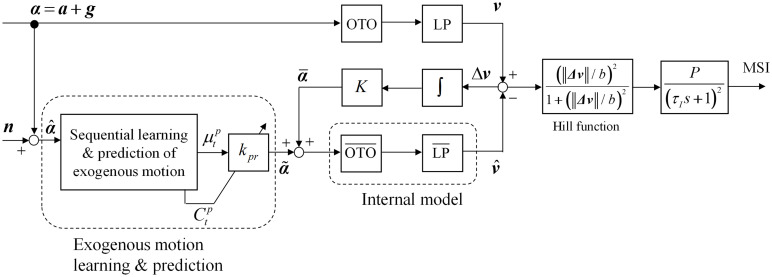
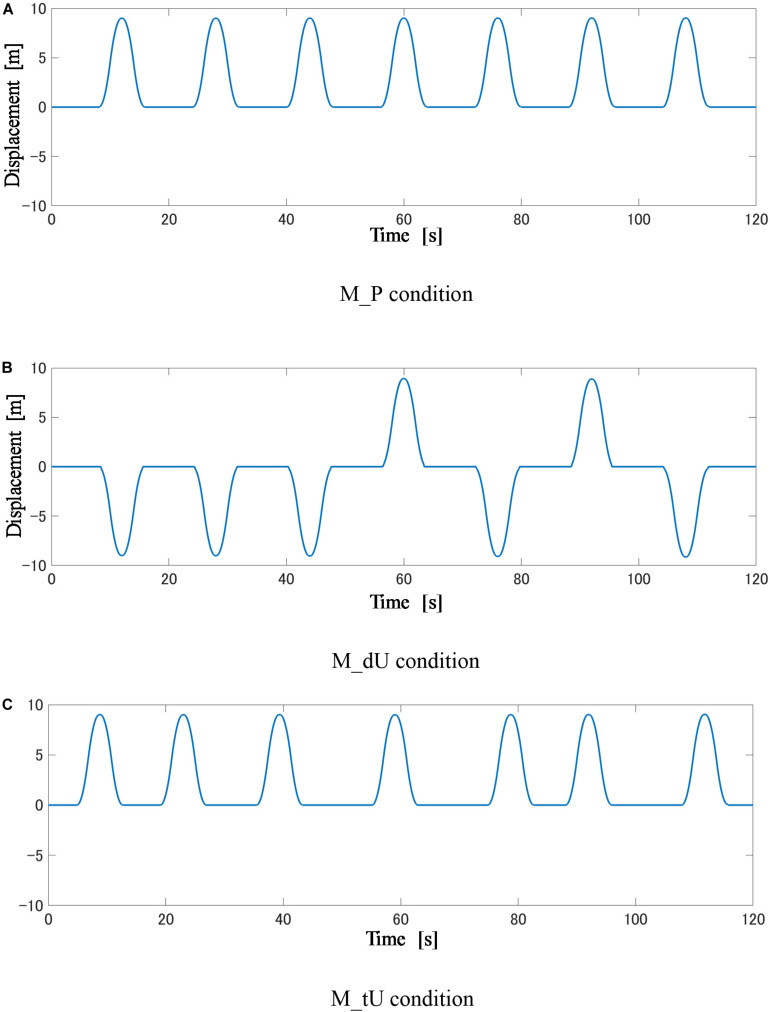
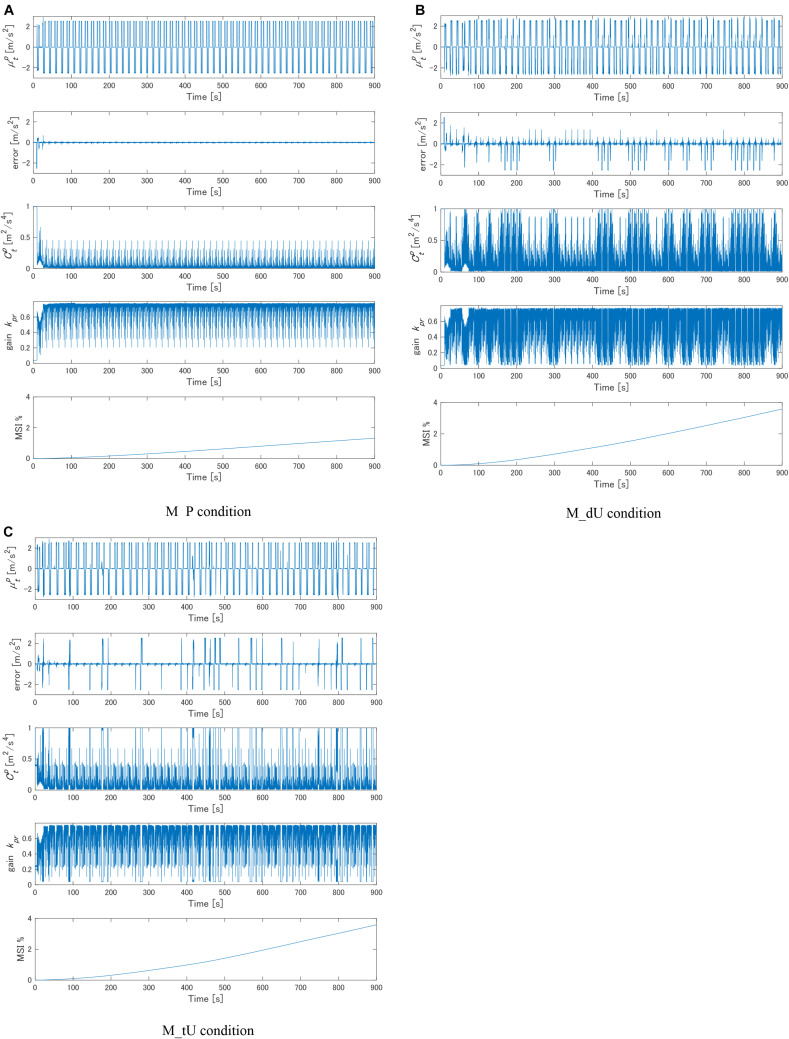
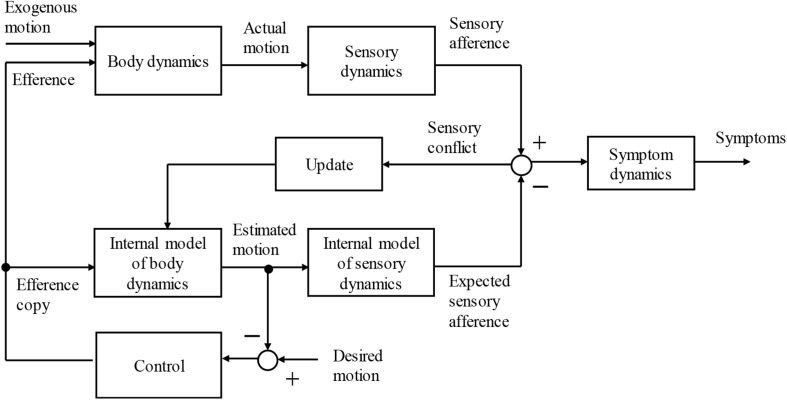
The existing computational models used to estimate motion sickness are incapable of describing the fact that the predictability of motion patterns affects motion sickness. Therefore, the present study proposes a computational model to describe the effect of the predictability of dynamics or the pattern of motion stimuli on motion sickness. In the proposed model, a submodel - in which a recursive Gaussian process regression is used to represent human features of online learning and future prediction of motion dynamics - is combined with a conventional model of motion sickness based on an observer theory. A simulation experiment was conducted in which the proposed model predicted motion sickness caused by a 900 s horizontal movement. The movement was composed of a 9 m repetitive back-and-forth movement pattern with a pause. Regarding the motion condition, the direction and timing of the motion were varied as follows: (a) Predictable motion (M_P): the direction of the motion and duration of the pause were set to 8 s; (b) Motion with unpredicted direction (M_dU): the pause duration was fixed as in (M_P), but the motion direction was randomly determined; (c) Motion with unpredicted timing (M_tU): the motion direction was fixed as in (M_P), but the pause duration was randomly selected from 4 to 12 s. The results obtained using the proposed model demonstrated that the predicted motion sickness incidence for (M_P) was smaller than those for (M_dU) and (M_tU) and no considerable difference was found between M_dU and M_tU. This tendency agrees with the sickness patterns observed in a previous experimental study in which the human participants were subject to motion conditions similar to those used in our simulations. Moreover, no significant differences were found in the predicted motion sickness incidences at different conditions when the conventional model was used.

摘要

现有的用于估计晕动病的计算模型无法描述运动模式的可预测性会影响晕动病这一事实。因此,本研究提出了一种计算模型,以描述动力学可预测性或运动刺激模式对晕动病的影响。在所提出的模型中,一个子模型(其中使用递归高斯过程回归来表示人类在线学习和运动动力学未来预测的特征)与基于观察者理论的传统晕动病模型相结合。进行了一项模拟实验,在所提出的模型中预测了由900秒水平运动引起的晕动病。该运动由一个9米的重复来回运动模式和一个停顿组成。关于运动条件,运动的方向和停顿时间如下变化:(a) 可预测运动(M_P):运动方向和停顿持续时间设定为8秒;(b) 方向不可预测的运动(M_dU):停顿持续时间与(M_P)中相同,但运动方向随机确定;(c) 时间不可预测的运动(M_tU):运动方向与(M_P)中相同,但停顿持续时间从4到12秒中随机选择。使用所提出的模型获得的结果表明,(M_P)的预测晕动病发病率低于(M_dU)和(M_tU),并且在M_dU和M_tU之间未发现显著差异。这种趋势与先前一项实验研究中观察到的晕动病模式一致,在该实验研究中,人类参与者所经历的运动条件与我们模拟中使用的条件相似。此外,当使用传统模型时,在不同条件下预测的晕动病发病率未发现显著差异。
https://cdn.ncbi.nlm.nih.gov/pmc/blobs/014c/7899976/279f2340c560/fnsys-15-634604-g006.jpg
https://cdn.ncbi.nlm.nih.gov/pmc/blobs/014c/7899976/27518b287fcf/fnsys-15-634604-g001.jpg
https://cdn.ncbi.nlm.nih.gov/pmc/blobs/014c/7899976/1e2a0375d5d9/fnsys-15-634604-g002.jpg
https://cdn.ncbi.nlm.nih.gov/pmc/blobs/014c/7899976/5dc1af632c55/fnsys-15-634604-g003.jpg
https://cdn.ncbi.nlm.nih.gov/pmc/blobs/014c/7899976/e5d904ca5023/fnsys-15-634604-g004.jpg
https://cdn.ncbi.nlm.nih.gov/pmc/blobs/014c/7899976/3341d8a223fa/fnsys-15-634604-g005.jpg
https://cdn.ncbi.nlm.nih.gov/pmc/blobs/014c/7899976/279f2340c560/fnsys-15-634604-g006.jpg
https://cdn.ncbi.nlm.nih.gov/pmc/blobs/014c/7899976/27518b287fcf/fnsys-15-634604-g001.jpg
https://cdn.ncbi.nlm.nih.gov/pmc/blobs/014c/7899976/1e2a0375d5d9/fnsys-15-634604-g002.jpg
https://cdn.ncbi.nlm.nih.gov/pmc/blobs/014c/7899976/5dc1af632c55/fnsys-15-634604-g003.jpg
https://cdn.ncbi.nlm.nih.gov/pmc/blobs/014c/7899976/e5d904ca5023/fnsys-15-634604-g004.jpg
https://cdn.ncbi.nlm.nih.gov/pmc/blobs/014c/7899976/3341d8a223fa/fnsys-15-634604-g005.jpg
https://cdn.ncbi.nlm.nih.gov/pmc/blobs/014c/7899976/279f2340c560/fnsys-15-634604-g006.jpg

相似文献

1
Computational Model of Motion Sickness Describing the Effects of Learning Exogenous Motion Dynamics.描述学习外源性运动动力学影响的晕动病计算模型。
Front Syst Neurosci. 2021 Feb 9;15:634604. doi: 10.3389/fnsys.2021.634604. eCollection 2021.
2
Validating models of sensory conflict and perception for motion sickness prediction.验证用于晕车预测的感觉冲突和感知模型。
Biol Cybern. 2023 Jun;117(3):185-209. doi: 10.1007/s00422-023-00959-8. Epub 2023 Mar 27.
3
A computational model of motion sickness dynamics during passive self-motion in the dark.黑暗中被动自运动期间晕动病动力学的计算模型。
Exp Brain Res. 2023 Sep;241(9):2311-2332. doi: 10.1007/s00221-023-06684-9. Epub 2023 Aug 17.
4
Individual motion perception parameters and motion sickness frequency sensitivity in fore-aft motion.前后运动中个体的运动感知参数与晕动病频率敏感性
Exp Brain Res. 2021 Jun;239(6):1727-1745. doi: 10.1007/s00221-021-06093-w. Epub 2021 Mar 29.
5
Evaluating sensory conflict and postural instability. Theories of motion sickness.评估感觉冲突与姿势不稳。晕动病的理论。
Brain Res Bull. 1998 Nov 15;47(5):465-9. doi: 10.1016/s0361-9230(98)00090-2.
6
On the road to comfort: Evaluating the influence of motion predictability on motion sickness in automated vehicles.通往舒适之路:评估运动可预测性对自动驾驶车辆晕动病的影响。
Ergonomics. 2025 May;68(5):697-715. doi: 10.1080/00140139.2024.2372704. Epub 2024 Jul 31.
7
Knowing What's Coming: Unpredictable Motion Causes More Motion Sickness.预知未来:不可预测的运动会导致更严重的晕车。
Hum Factors. 2020 Dec;62(8):1339-1348. doi: 10.1177/0018720819876139. Epub 2019 Oct 7.
8
Modelling motion sickness and subjective vertical mismatch detailed for vertical motions.针对垂直运动详细建模晕动病和主观垂直不匹配。
Brain Res Bull. 1998 Nov 15;47(5):537-42. doi: 10.1016/s0361-9230(98)00088-4.
9
Motion sickness: a synthesis and evaluation of the sensory conflict theory.晕动病:感觉冲突理论的综合与评价
Can J Physiol Pharmacol. 1990 Feb;68(2):294-303. doi: 10.1139/y90-044.
10
Sensory and motor conflict in motion sickness.晕动病中的感觉与运动冲突。
Brain Behav Evol. 1983;23(1-2):32-5. doi: 10.1159/000121485.

引用本文的文献

1
Theoretical considerations on models of vestibular self-motion perception as inherent in computational frameworks of motion sickness.关于晕动病计算框架中所固有的前庭自我运动感知模型的理论思考。
Biol Cybern. 2025 Aug 7;119(4-6):22. doi: 10.1007/s00422-025-01018-0.
2
Construction of a computational model of individual progression of motion sickness symptoms based on subjective vertical conflict theory.基于主观垂直冲突理论构建晕动病症状个体进展的计算模型。
Exp Brain Res. 2025 Apr 5;243(5):108. doi: 10.1007/s00221-025-07052-5.
3
CyPVICS: A framework to prevent or minimise cybersickness in immersive virtual clinical simulation.

本文引用的文献

1
Knowing what's coming: Anticipatory audio cues can mitigate motion sickness.预知即能预防:预期性听觉提示可减轻晕动病。
Appl Ergon. 2020 May;85:103068. doi: 10.1016/j.apergo.2020.103068. Epub 2020 Feb 6.
2
Knowing What's Coming: Unpredictable Motion Causes More Motion Sickness.预知未来:不可预测的运动会导致更严重的晕车。
Hum Factors. 2020 Dec;62(8):1339-1348. doi: 10.1177/0018720819876139. Epub 2019 Oct 7.
3
Unstable coupling of body sway with imposed motion precedes visually induced motion sickness.身体摆动与施加运动的不稳定耦合先于视觉诱发的晕动病。
CyPVICS:一种预防或减轻沉浸式虚拟临床模拟中网络晕动症的框架。
Heliyon. 2024 Apr 15;10(8):e29595. doi: 10.1016/j.heliyon.2024.e29595. eCollection 2024 Apr 30.
4
Modeling orientation perception adaptation to altered gravity environments with memory of past sensorimotor states.基于过去感觉运动状态记忆的对改变重力环境的方向知觉适应建模。
Front Neural Circuits. 2023 Jul 20;17:1190582. doi: 10.3389/fncir.2023.1190582. eCollection 2023.
5
Validating models of sensory conflict and perception for motion sickness prediction.验证用于晕车预测的感觉冲突和感知模型。
Biol Cybern. 2023 Jun;117(3):185-209. doi: 10.1007/s00422-023-00959-8. Epub 2023 Mar 27.
6
Amplitude and Temporal Dynamics of Motion Sickness.晕动病的幅度与时间动态变化
Front Syst Neurosci. 2022 May 9;16:866503. doi: 10.3389/fnsys.2022.866503. eCollection 2022.
Hum Mov Sci. 2019 Apr;64:389-397. doi: 10.1016/j.humov.2019.03.006. Epub 2019 Mar 12.
4
Effect of passengers' active head tilt and opening/closure of eyes on motion sickness in lateral acceleration environment of cars.乘客主动头部倾斜及眼睛开闭对汽车横向加速环境下晕动病的影响
Ergonomics. 2016 Aug;59(8):1050-9. doi: 10.1080/00140139.2015.1109713. Epub 2015 Dec 23.
5
The time constant of the somatogravic illusion.躯体重力学错觉的时间常数。
Exp Brain Res. 2013 Feb;224(3):313-21. doi: 10.1007/s00221-012-3313-3. Epub 2012 Nov 4.
6
On Strong Anticipation.论强烈的预期。
Cogn Syst Res. 2010 Jun 1;11(2):148-164. doi: 10.1016/j.cogsys.2009.03.003.
7
Motion sickness: advances in pathogenesis, prediction, prevention, and treatment.晕动病:发病机制、预测、预防及治疗的进展
Aviat Space Environ Med. 2006 Dec;77(12):1213-23.
8
Visual field effects on motion sickness in cars.汽车中视野对晕动病的影响。
Aviat Space Environ Med. 2004 Sep;75(9):739-48.
9
Merging the senses into a robust percept.将各种感官整合为一个可靠的感知。
Trends Cogn Sci. 2004 Apr;8(4):162-9. doi: 10.1016/j.tics.2004.02.002.
10
Motion sickness in public road transport: the effect of driver, route and vehicle.公共道路运输中的晕动病:驾驶员、路线和车辆的影响
Ergonomics. 1999 Dec;42(12):1646-64. doi: 10.1080/001401399184730.