Wada Takahiro, Bos Jelte E
Division of Information Science, Nara Institute of Science and Technology, 8916-5, Takayama-cho, Ikoma, Nara, 630-0192, Japan.
Research Organization of Science and Technology, Ritsumeikan University, 1-1-1, Noji- higashi, Kusatsu, 525-8577, Shiga, Japan.
Biol Cybern. 2025 Aug 7;119(4-6):22. doi: 10.1007/s00422-025-01018-0.
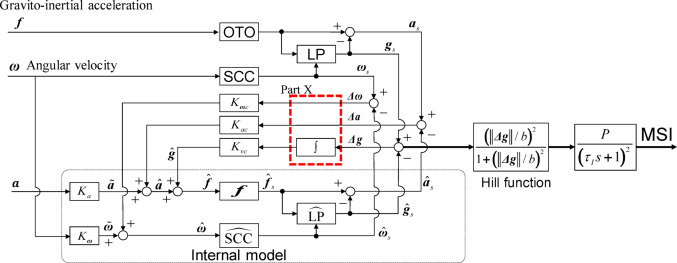
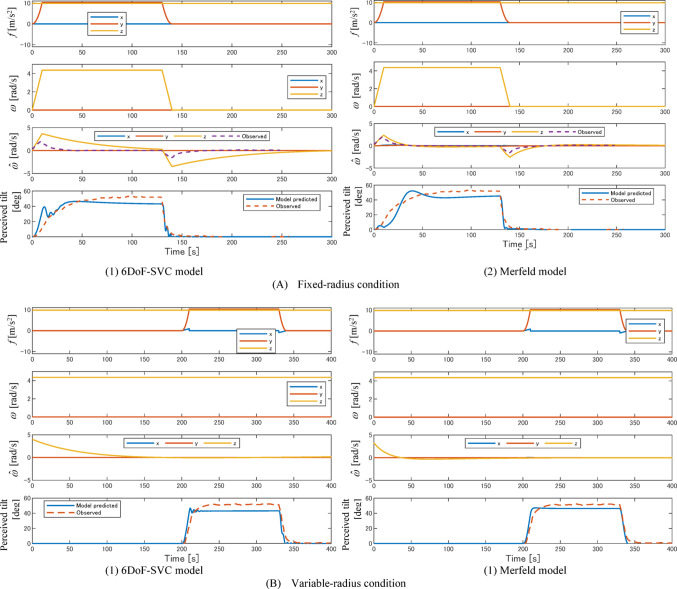
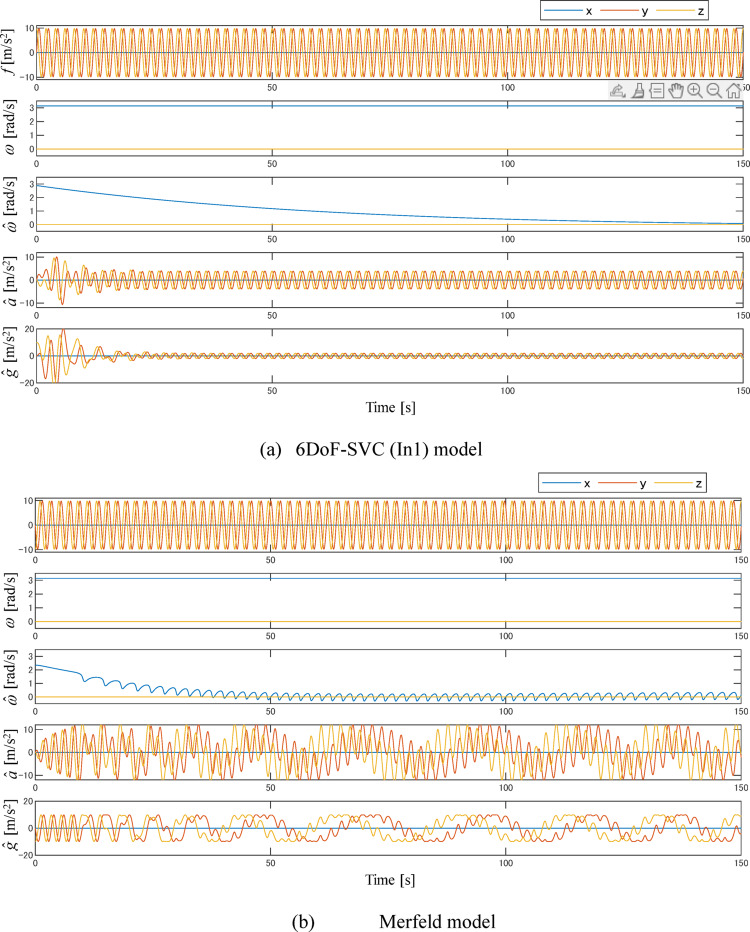
This study examines self-motion perception incorporated into motion sickness models. Research on modeling self-motion perception and motion sickness has advanced independently, though both are thought to share neural mechanisms, making the construction of a unified model opportune. Models based on the Subjective Vertical Conflict (SVC) theory, a refinement of the neural mismatch theory, have primarily focused on motion sickness, with limited validation for self-motion perception. Emerging studies have begun evaluating the perceptual validity of these models, suggesting that some models can reproduce perception in specific paradigms, while they often struggle to jointly capture motion perception and sickness. One prior study demonstrated that one of the SVC models could replicate illusory tilt during centrifugation, while others produced unrealistic responses, such as persistent tilt after motion cessation. In reality, under steady-state conditions such as being motionless, perceived motion is expected to settle to an appropriate state regardless of prior states. Based on the idea that this behavior is closely related to the equilibrium points and stability of the model dynamics, this study theoretically analyzed 6DoF-SVC models with a focus on them. Results confirmed that only one model ensures convergence from any state to a unique equilibrium point corresponding to plausible perception. In contrast, other SVC models and a conventional self-motion perception model converged to values dependent on earlier states. Further analysis showed that only this model captured both the somatogravic and Ferris wheel illusion. In conclusion, this 6DoF-SVC model unifies motion perception and sickness modeling, with theoretical convergence of the perceptual state.
本研究考察了纳入晕动病模型中的自我运动感知。尽管自我运动感知建模和晕动病研究被认为共享神经机制,使得构建统一模型成为可能,但它们各自独立发展。基于神经失配理论改进的主观垂直冲突(SVC)理论的模型主要聚焦于晕动病,对自我运动感知的验证有限。新兴研究已开始评估这些模型的感知有效性,表明一些模型能够在特定范式中重现感知,但它们往往难以同时捕捉运动感知和晕动病。一项先前的研究表明,其中一个SVC模型能够在离心过程中复制错觉倾斜,而其他模型则产生不现实的反应,比如运动停止后持续倾斜。实际上,在诸如静止不动等稳态条件下,无论先前状态如何,感知到的运动都应稳定到适当状态。基于这种行为与模型动力学的平衡点和稳定性密切相关的观点,本研究对六自由度SVC模型进行了理论分析,并重点关注这些方面。结果证实,只有一个模型能确保从任何状态收敛到与合理感知相对应的唯一平衡点。相比之下,其他SVC模型和一个传统的自我运动感知模型收敛到依赖于早期状态的值。进一步分析表明,只有这个模型同时捕捉到了躯体重力错觉和摩天轮错觉。总之,这个六自由度SVC模型统一了运动感知和晕动病建模,实现了感知状态的理论收敛。