Igarashi Kensuke, Kato Souichiro
Bioproduction Research Institute, National Institute of Advanced Industrial Science and Technology (AIST), Sapporo, Japan.
Division of Applied Bioscience, Graduate School of Agriculture, Hokkaido University, Sapporo, Japan.
Front Microbiol. 2021 Feb 1;12:600808. doi: 10.3389/fmicb.2021.600808. eCollection 2021.
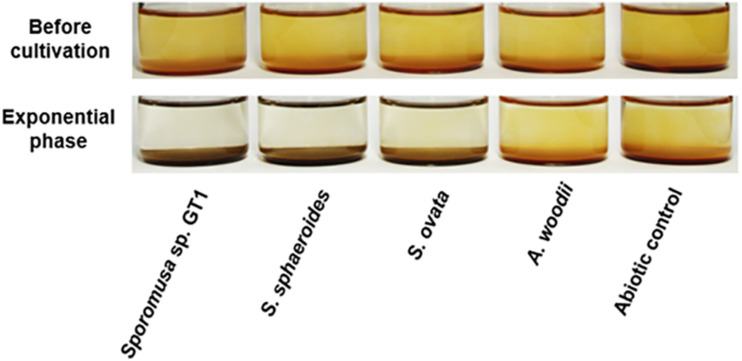
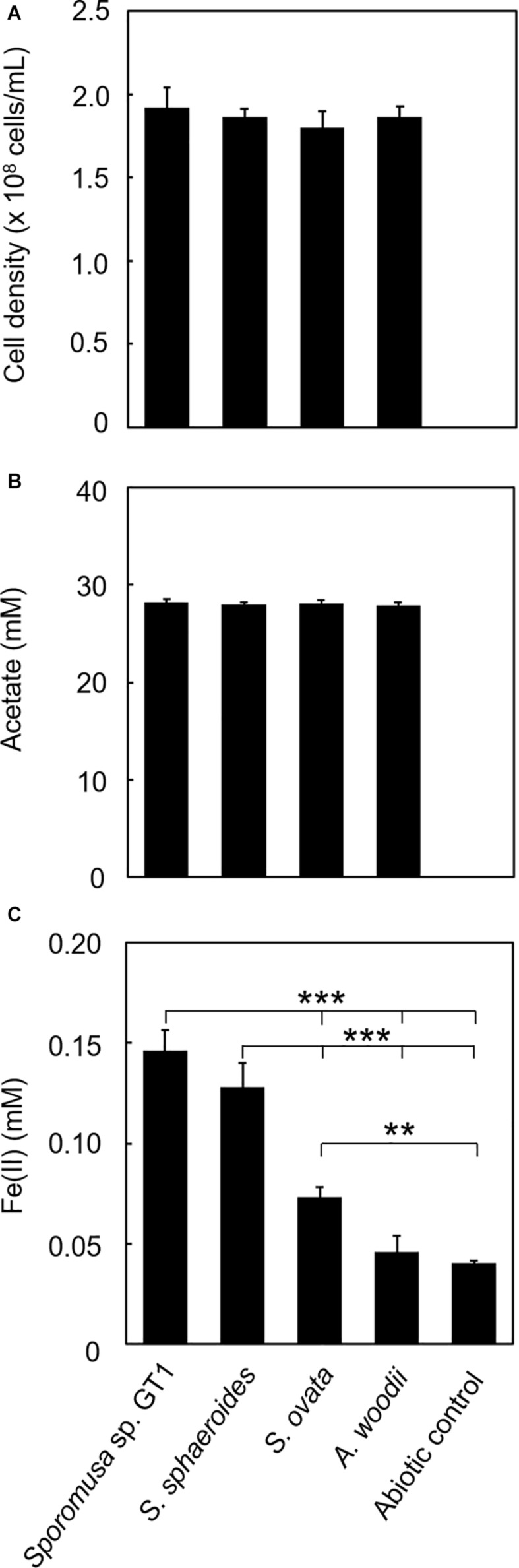
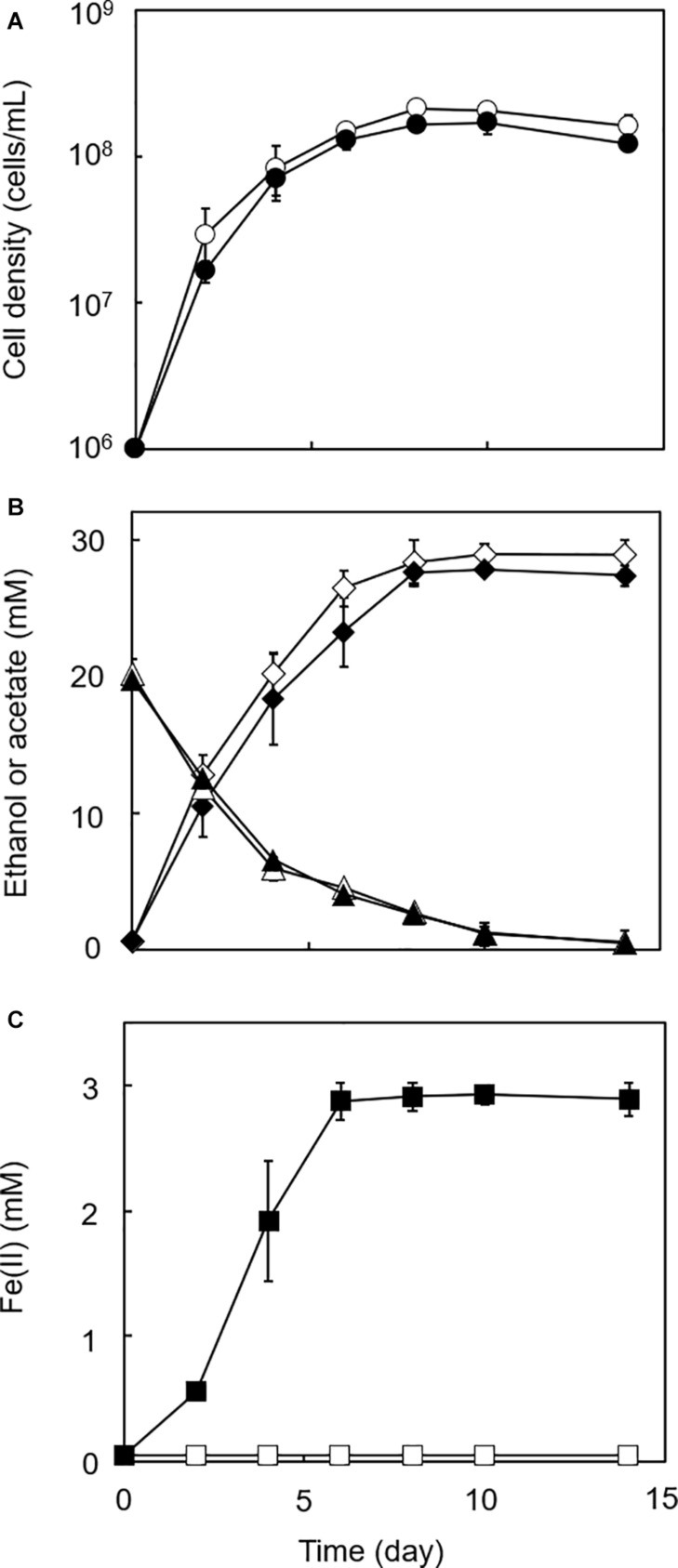
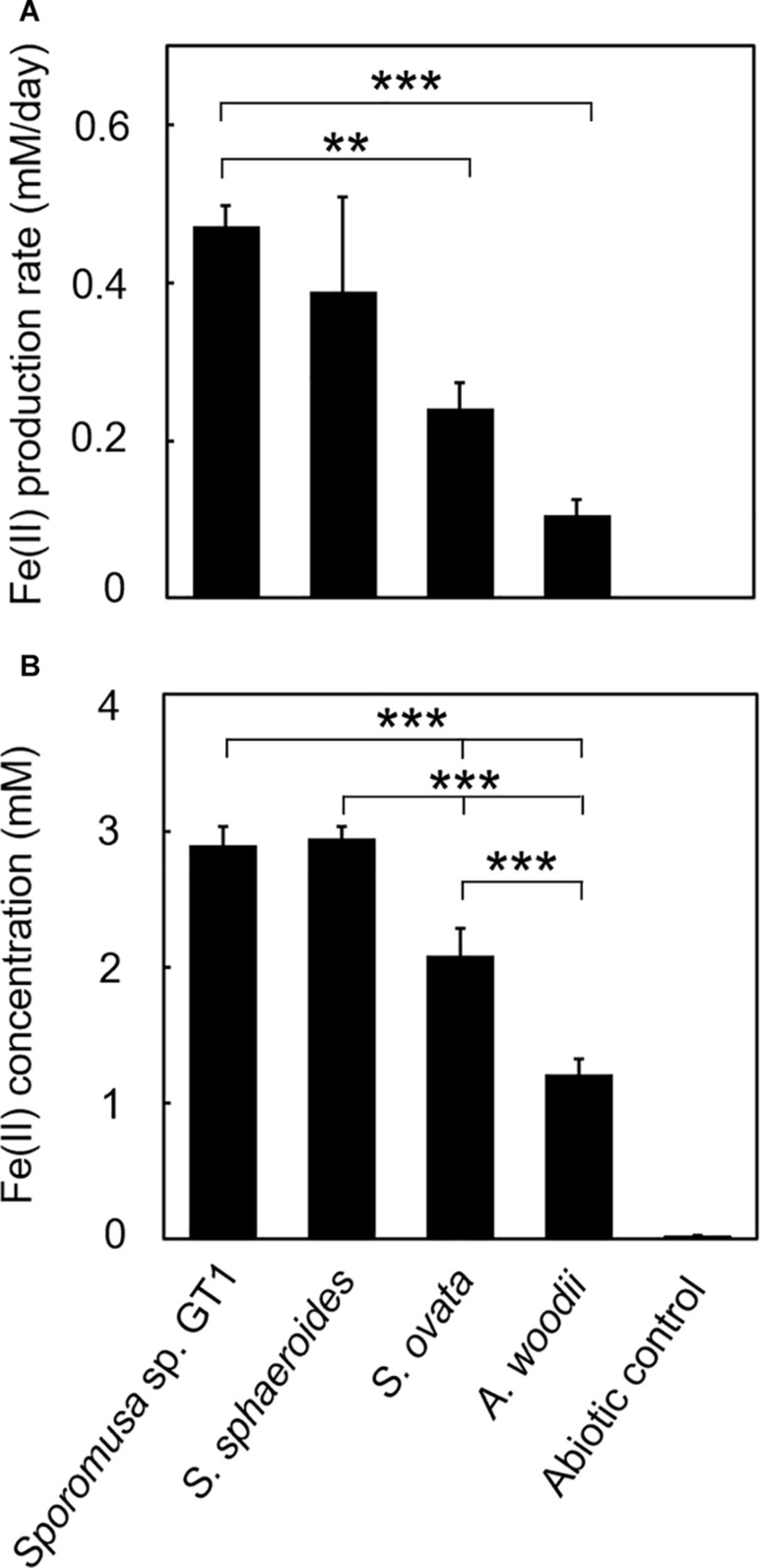
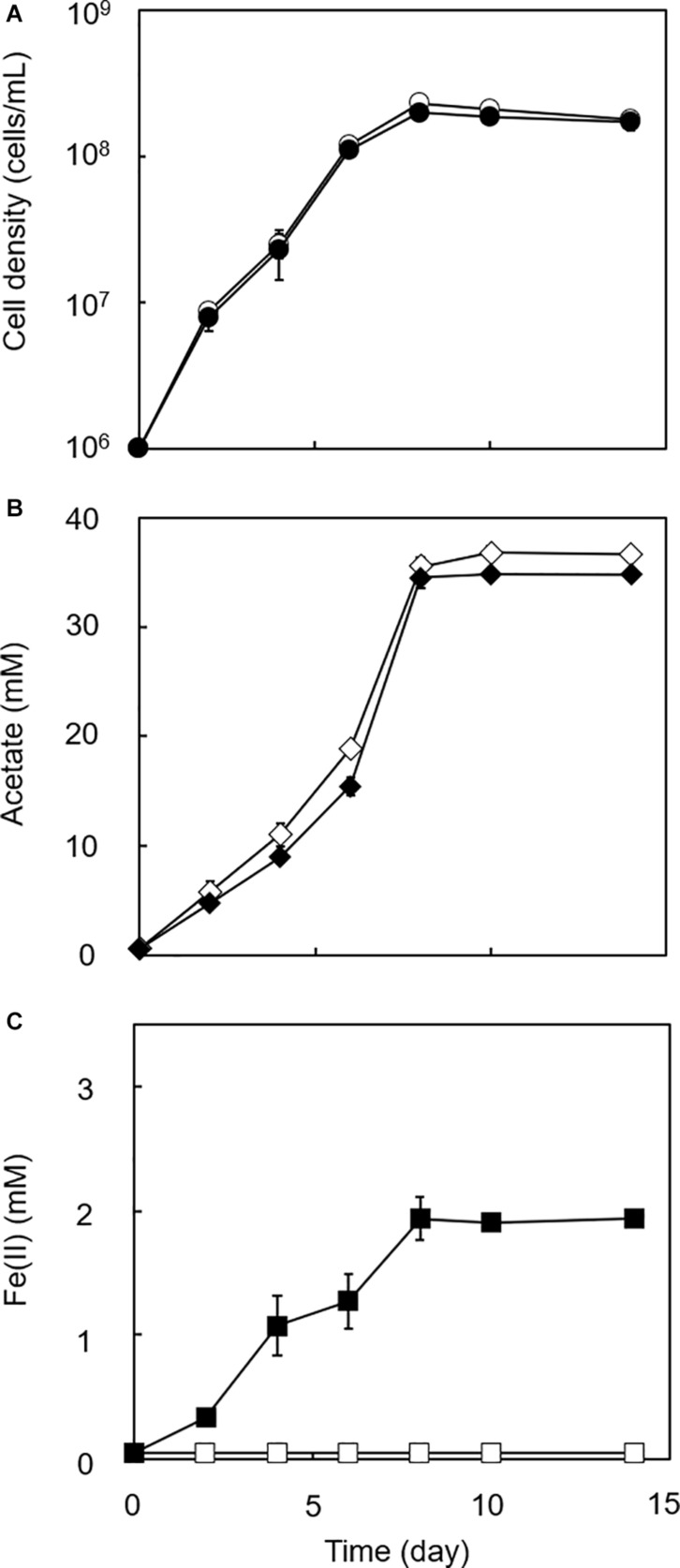
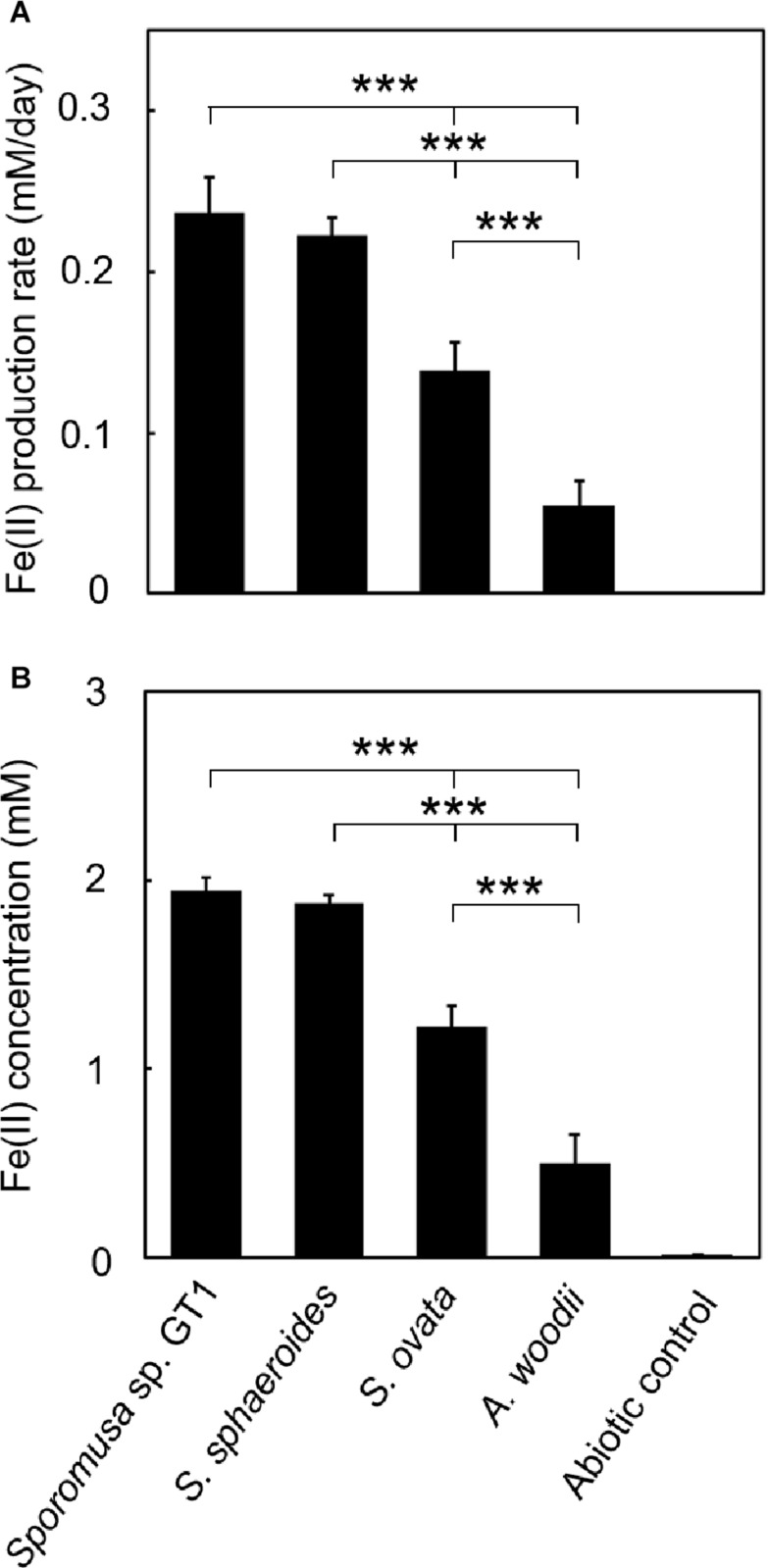
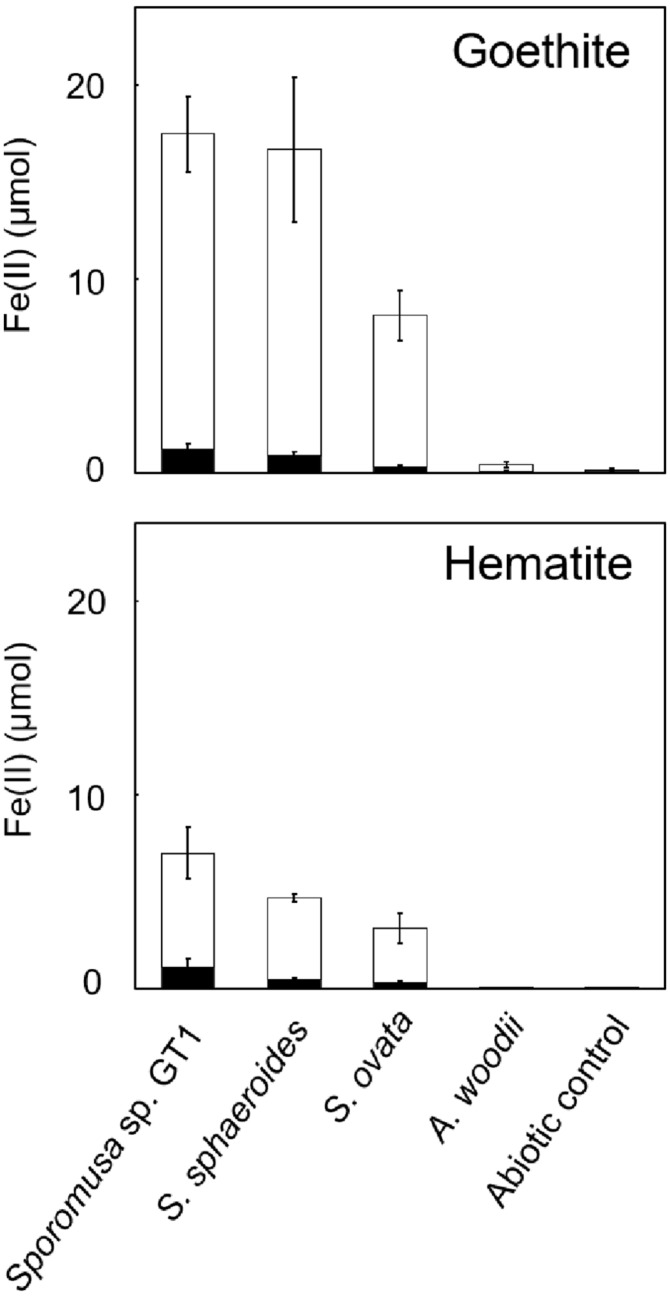
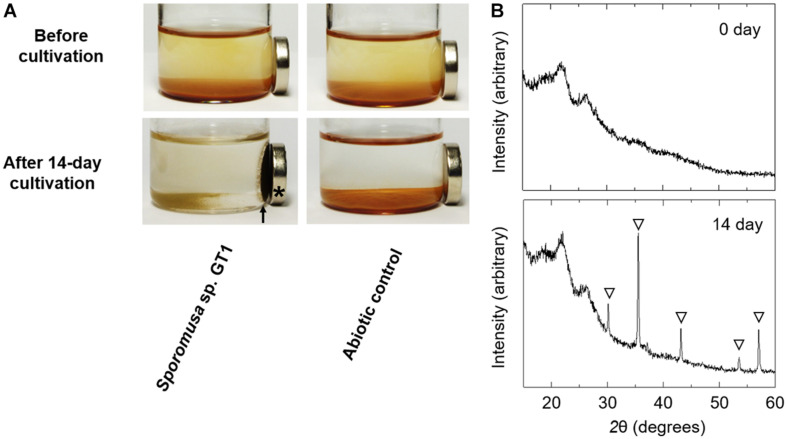
Microbial reduction of iron contributes to the dissolution and transformation of iron-containing minerals in nature. Diverse groups of homoacetogenic bacteria (homoacetogens) have been reported to reduce insoluble Fe(III) oxides, such as hydrous ferric oxide (HFO), an Fe(III) mineral commonly found in soils and sediments. Several members of genus reportedly oxidize Fe(0), indicating the presence of an extracellular electron-uptake mechanism. However, the ability of the genus to reduce insoluble Fe(III) oxides is limited, and the underlying reduction mechanism remains to be elucidated. In this study, the HFO reduction ability of three spp. ( sp. strain GT1, , and ) and a homoacetogen of a different genus () were assayed under organotrophic (ethanol) and lithotrophic (H + CO) conditions without a chelator or reducing reagent. All tested homoacetogens showed acetogenic growth and concomitant reduction of HFO under both organotrophic and lithotrophic conditions. Analysis of the growth stoichiometry showed that Fe(III) reduction does not support direct energy conservation, thereby indicating that Fe(III) reduction is a side reaction of acetogenesis to dissipate the excess reducing power. HFO was reduced to a soluble Fe(II) form by microbial activity. In addition, we observed that strain GT1, , and reduced crystalline Fe(III) oxides, and HFO was reductively transformed into magnetite (FeO) under phosphate-limiting conditions. Separation of HFO by a dialysis membrane still permitted Fe(II) production, although the reduction rate was decreased, suggesting that Fe(III) reduction is at least partially mediated by soluble redox compound(s) secreted from the cells. Finally, culture experiments and comparative genomic analysis suggested that electron transfer by flavins and multiheme -type cytochrome were not directly correlated with Fe(III) reduction activity. This study reveals the capability of spp. in the reductive transformation of iron mineral and indicates the potential involvement of these organisms in iron and other mineral cycles in nature.
微生物对铁的还原作用有助于自然界中含铁矿物的溶解和转化。据报道,不同种类的同型产乙酸菌(同型产乙酸细菌)能够还原不溶性的Fe(III)氧化物,如含水氧化铁(HFO),这是一种常见于土壤和沉积物中的Fe(III)矿物。据报道,该属的几个成员能够氧化Fe(0),这表明存在细胞外电子摄取机制。然而,该属还原不溶性Fe(III)氧化物的能力有限,其潜在的还原机制仍有待阐明。在本研究中,在无螯合剂或还原剂的有机营养(乙醇)和无机营养(H₂ + CO₂)条件下,测定了三种菌株(菌株GT1、[此处原文缺失两个菌株名])以及另一个不同属的同型产乙酸菌([此处原文缺失该菌株名])的HFO还原能力。所有测试的同型产乙酸菌在有机营养和无机营养条件下均表现出乙酸生成生长以及伴随的HFO还原。生长化学计量分析表明,Fe(III)还原不支持直接的能量守恒,从而表明Fe(III)还原是产乙酸过程中消耗过量还原力的副反应。HFO通过微生物活性被还原为可溶性的Fe(II)形式。此外,我们观察到菌株GT1、[此处原文缺失两个菌株名]能够还原结晶态Fe(III)氧化物,并且在磷酸盐限制条件下,HFO被还原转化为磁铁矿(Fe₃O₄)。尽管还原速率降低,但通过透析膜分离HFO仍能产生Fe(II),这表明Fe(III)还原至少部分是由细胞分泌的可溶性氧化还原化合物介导的。最后,培养实验和比较基因组分析表明,黄素和多血红素型细胞色素介导的电子传递与Fe(III)还原活性没有直接关联。本研究揭示了[此处原文缺失属名]菌株在铁矿物还原转化方面的能力,并表明这些生物体可能参与自然界中铁和其他矿物循环。