Bernabè Giulia, Dal Pra Matteo, Ronca Vittoria, Pauletto Anthony, Marzaro Giovanni, Saluzzo Francesca, Stefani Annalisa, Artusi Ilaria, De Filippis Vincenzo, Ferlin Maria Grazia, Brun Paola, Castagliuolo Ignazio
Department of Molecular Medicine, University of Padua, Padua, Italy.
Department of Pharmaceutical and Pharmacological Sciences, University of Padua, Padua, Italy.
Front Microbiol. 2021 Feb 9;12:610859. doi: 10.3389/fmicb.2021.610859. eCollection 2021.
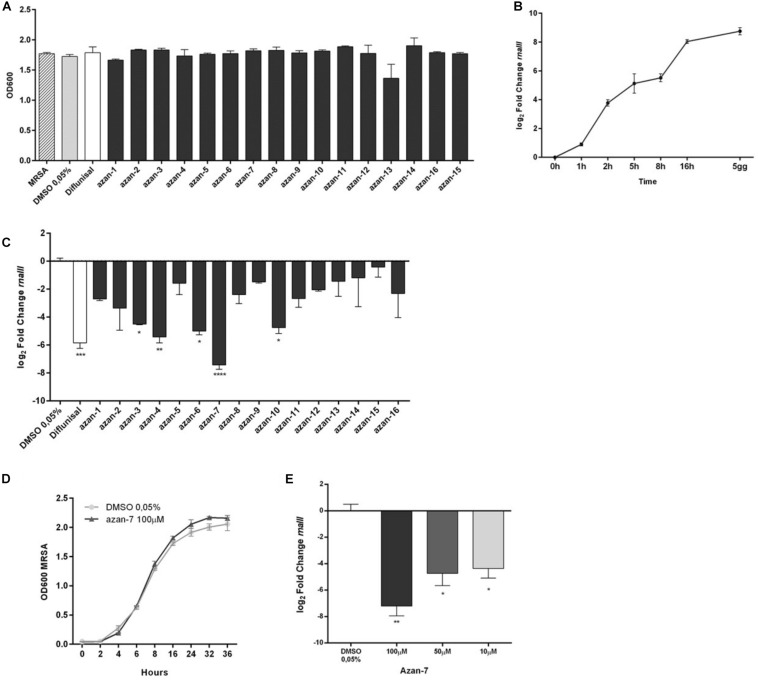
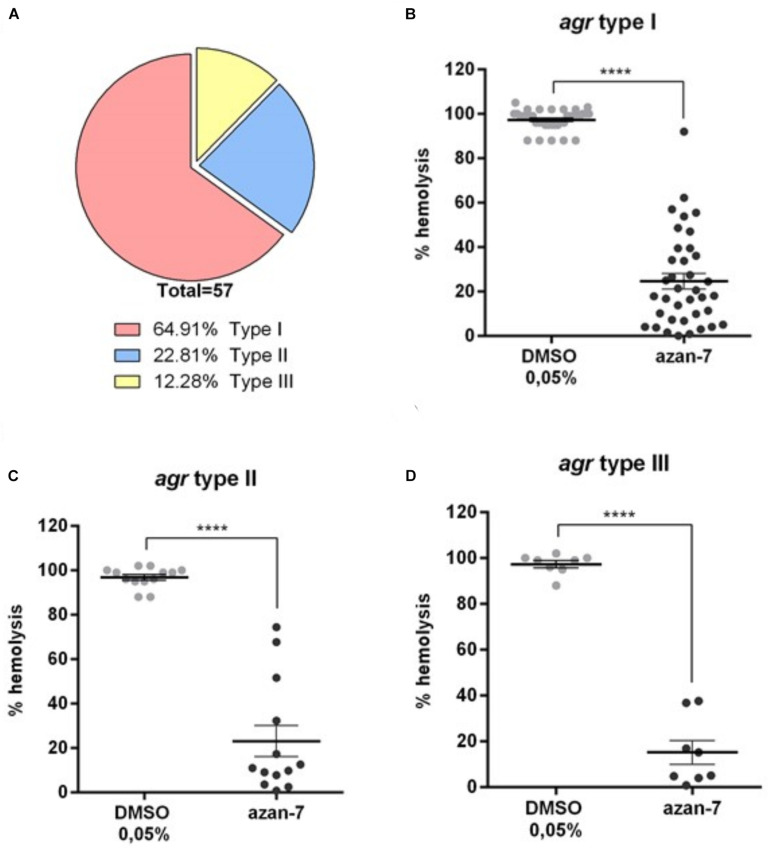
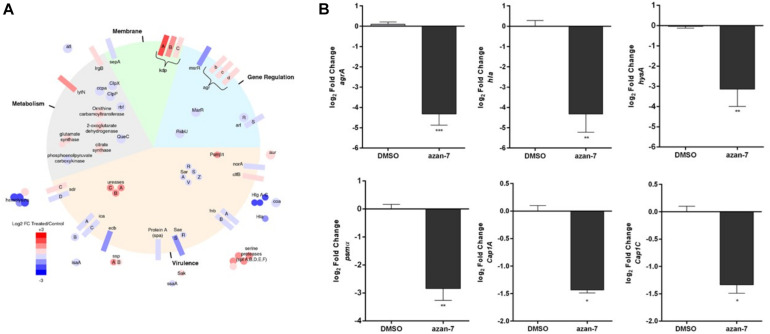
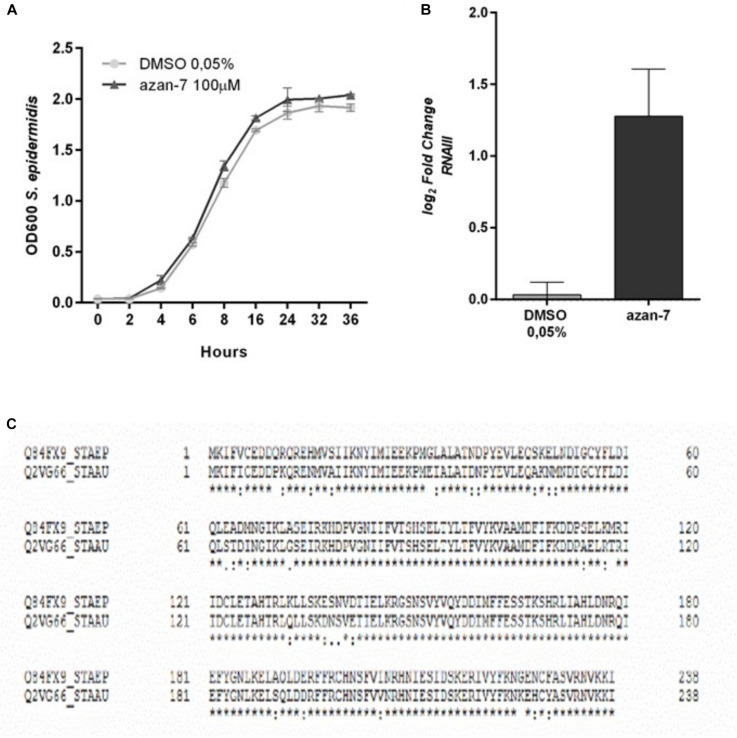
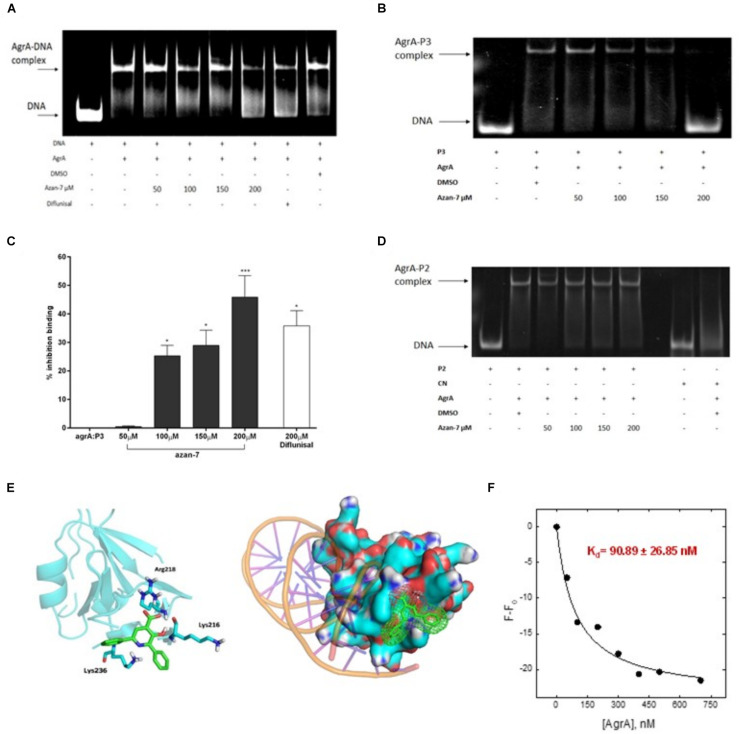
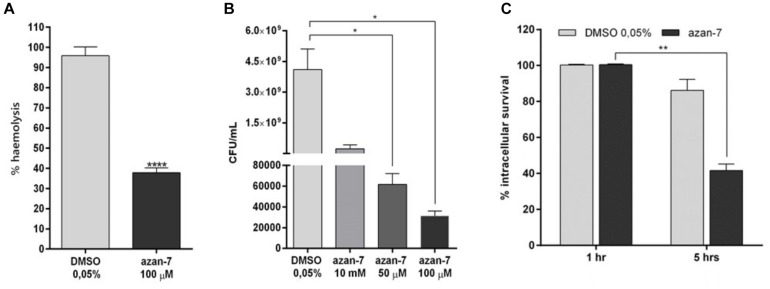
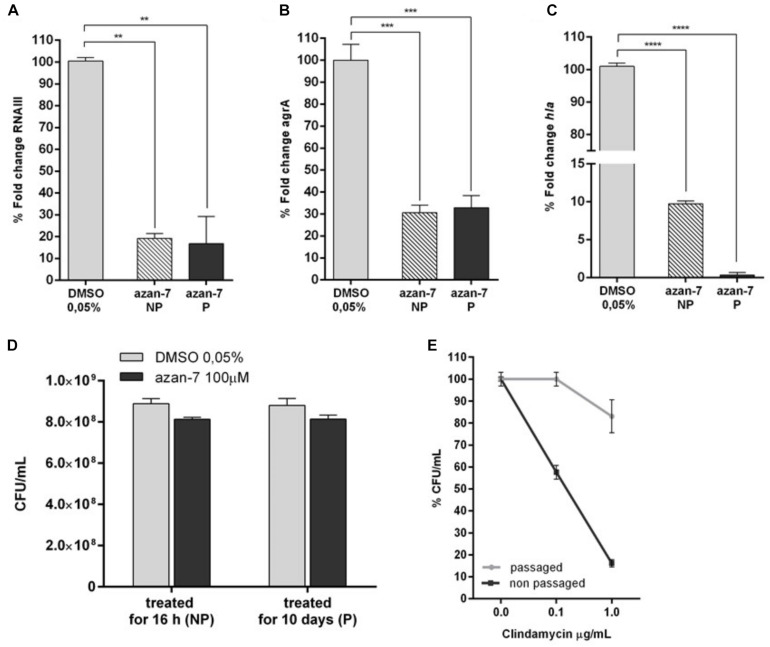
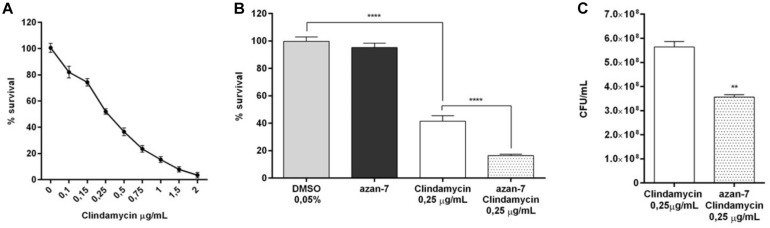
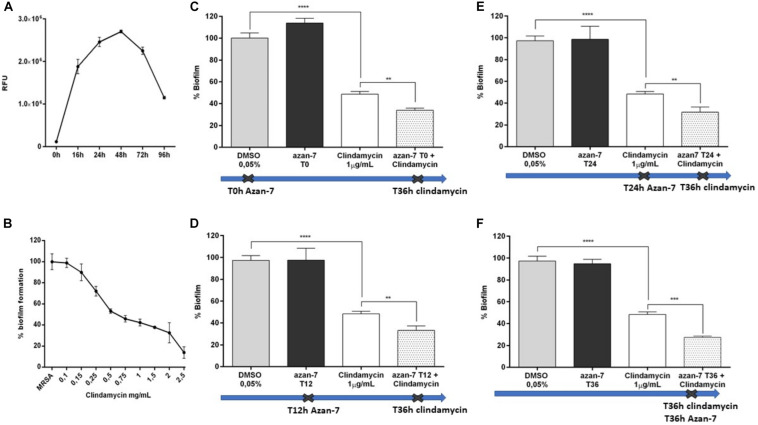
Increasing antibiotic resistance and diminishing pharmaceutical industry investments have increased the need for molecules that can treat infections caused by dangerous pathogens such as methicillin-resistant (MRSA). Quorum Sensing (QS) is a signaling mechanism that regulates bacterial virulence in pathogens. A report demonstrating that the anti-inflammatory drug Diflunisal reduces MRSA virulence factors' expression prompted us to design, synthesize and test 16 aza-analogs as inhibitors of virulence factors controlled by the accessory gene regulator () QS system. At first, we evaluated by qRT-PCR the activity of compounds on expression, a QS related gene. Azan-7 was the most active molecule tested and it did not show cytotoxic activity in human cell lines. Moreover, we demonstrated that it did not affect bacterial proliferation. Regulation of MRSA virulence genes by Azan-7 was investigated using qRT-PCR and RNAseq. Azan-7 significantly reduced , α, , , , and gene expression. docking demonstrated that Azan-7 binds the response regulator AgrA. This data was confirmed by electrophoretic mobility shift assay (EMSA) reporting that Azan-7 binding to AgrA protein strongly reduced the AgrA-DNA complex formation at the P3 promoter region involved in the regulation of transcription. Azan-7 inhibited MRSA-mediated haemolysis, reduced survival of the pathogen at low pH levels, and increased macrophage killing. In addition, Azan-7 enhanced MRSA susceptibility to clindamycin both in planktonic growth and biofilm. Azan-7 did not induce resistance over 10 days in culture. It was equally active against all the AgrA MRSA subtypes encountered among clinical isolates, but it was not active against , although the AgrA proteins show an approximate 80% homology. These results demonstrate that Azan-7 inhibits the expression of MRSA virulence factors by interfering in the QS and synergizes MRSA biofilm with clindamycin, indicating the compound as a promising candidate for the treatment of MRSA infections.
抗生素耐药性的增加以及制药行业投资的减少,使得人们对能够治疗由耐甲氧西林金黄色葡萄球菌(MRSA)等危险病原体引起的感染的分子的需求不断增加。群体感应(QS)是一种调节病原体中细菌毒力的信号传导机制。一份报告表明抗炎药双氟尼酸可降低MRSA毒力因子的表达,这促使我们设计、合成并测试16种氮杂类似物作为由辅助基因调节子(Agr)QS系统控制的毒力因子的抑制剂。首先,我们通过qRT-PCR评估了化合物对QS相关基因表达的活性。氮杂-7是测试的最具活性的分子,并且在人细胞系中未显示出细胞毒性活性。此外,我们证明它不影响细菌增殖。使用qRT-PCR和RNAseq研究了氮杂-7对MRSA毒力基因的调节作用。氮杂-7显著降低了、α、、、和基因的表达。对接表明氮杂-7与应答调节子AgrA结合。电泳迁移率变动分析(EMSA)证实了该数据,报告称氮杂-7与AgrA蛋白的结合强烈降低了参与转录调节的P3启动子区域的AgrA-DNA复合物的形成。氮杂-7抑制了MRSA介导的溶血作用,降低了病原体在低pH水平下的存活率,并增强了巨噬细胞的杀伤作用。此外,氮杂-7在浮游生长和生物膜中均增强了MRSA对克林霉素的敏感性。在培养10天内,氮杂-7未诱导耐药性。它对临床分离株中遇到的所有AgrA MRSA亚型均具有同等活性,但对无活性,尽管AgrA蛋白显示出约80%的同源性。这些结果表明,氮杂-7通过干扰QS抑制MRSA毒力因子的表达,并与克林霉素协同作用于MRSA生物膜,表明该化合物是治疗MRSA感染的有前景的候选药物。