Volpicelli Giovanni, Cardinale Luciano, Fraccalini Thomas, Calandri Marco, Piatti Clara, Geninatti Carlotta, Stranieri Giuseppe
Department of Emergency Medicine, San Luigi Gonzaga University Hospital, Torino, Italy.
Department of Oncology, Radiology Unit, San Luigi Gonzaga University Hospital, Torino, Italy.
Ultrasound J. 2021 Feb 26;13(1):11. doi: 10.1186/s13089-021-00215-9.
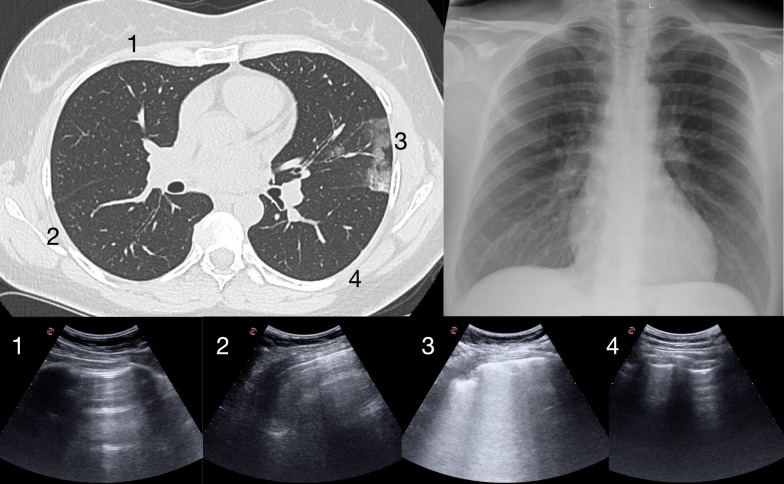
Lung ultrasound (LUS) and chest radiography (CXR) are the most used chest imaging tools in the early diagnosis of COVID-19 associated pneumonia. However, the relationship between LUS and CXR is not clearly defined. The aim of our study was to describe the comparison between LUS interpretation and CXR readings in the first approach to patients suspected of COVID-19.
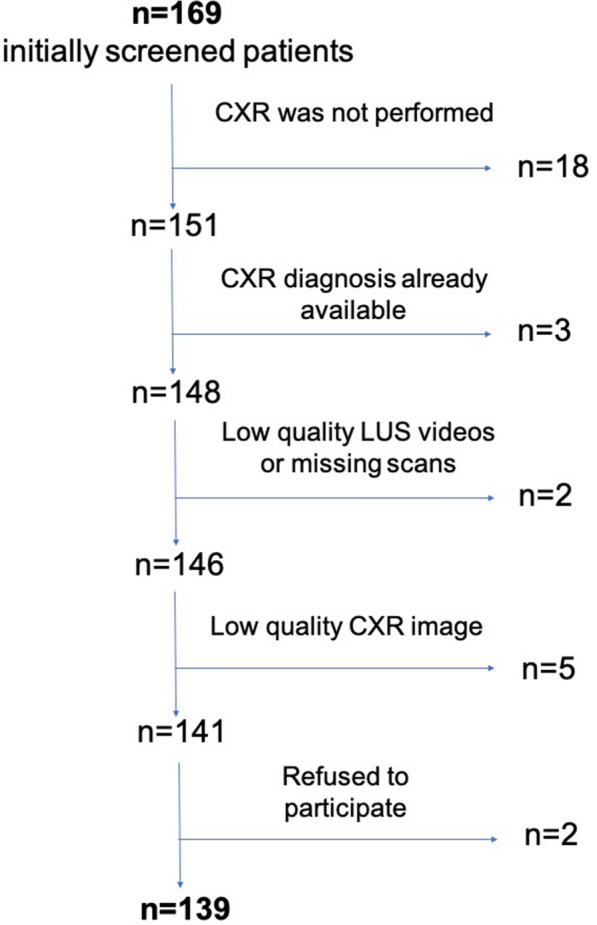
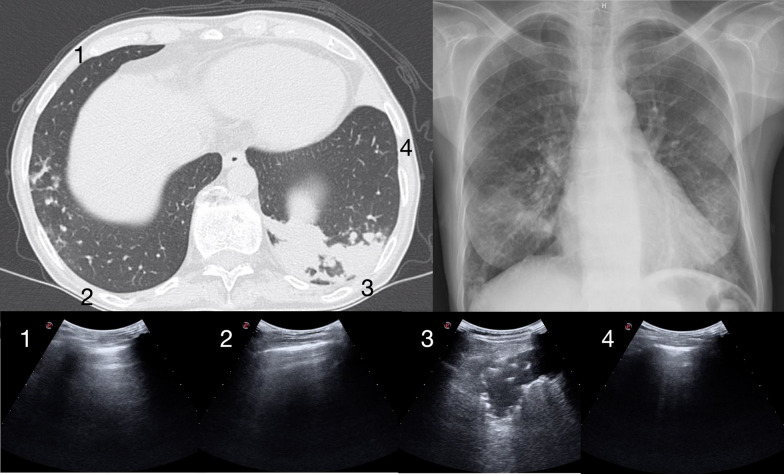
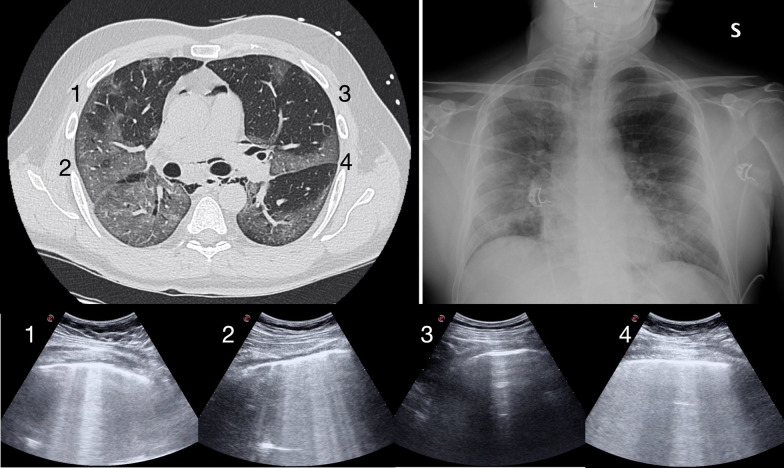
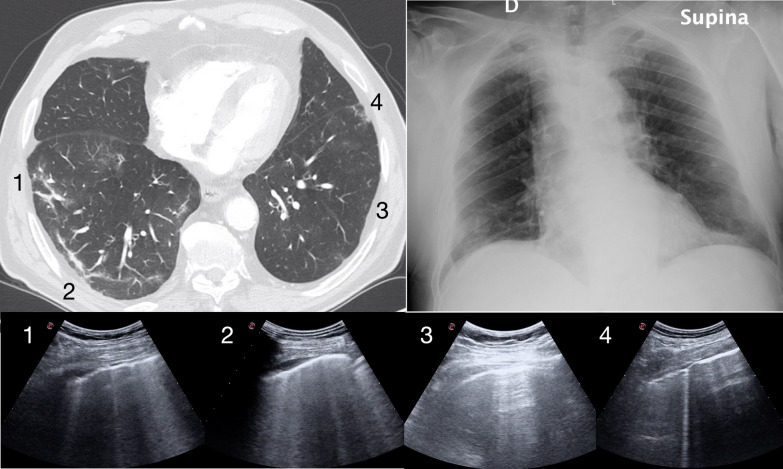
In the time of the first COVID-19 pandemic surge, we prospectively evaluated adult patients presenting to an emergency department complaining of symptoms raising suspicion of COVID-19. Patients were studied by LUS and only those performing also CXR were analyzed. All the patients performed viral reverse transcriptase-polymerase chain reaction (RT-PCR). LUS studies were classified in 4 categories of probabilities, based on the presence of typical or alternative signs of COVID-19-associated interstitial pneumonia. Accordingly, the CXR readings were retrospectively adapted by 2 experts in 4 categories following the standard language that describes the computed tomography (CT) findings. Patients were divided in two groups, based on the agreement of the LUS and CXR categories. Results were also compared to RT-PCR and, when available, to CT studies.
We analyzed 139 cases (55 women, mean age 59.1 ± 15.5 years old). The LUS vs CXR results disagreed in 60 (43.2%) cases. RT-PCR was positive in 88 (63.3%) cases. In 45 cases, a CT scan was also performed and only 4 disagreed with LUS interpretation versus 24 in the comparison between CT and CXR. In 18 cases, LUS detected signs of COVID-19 pneumonia (high and intermediate probabilities) while CXR reading was negative; in 14 of these cases, a CT scan or a RT-PCR-positive result confirmed the LUS interpretation. In 6 cases, LUS detected signs of alternative diagnoses to COVID-19 pneumonia while CXR was negative; in 4 of these cases, CT scan confirmed atypical findings.
Our study demonstrated a strong disagreement between LUS interpretation and CXR reading in the early approach to patients suspected of COVID-19. Comparison with CT studies and RT-PCR results seems to confirm the superiority of LUS over a second retrospective reading of CXR.
肺部超声(LUS)和胸部X线摄影(CXR)是新型冠状病毒肺炎(COVID-19)相关肺炎早期诊断中最常用的胸部成像工具。然而,LUS与CXR之间的关系尚未明确界定。我们研究的目的是描述在对疑似COVID-19患者的初次检查中LUS解读与CXR读数之间的比较。
在首次COVID-19大流行高峰期间,我们前瞻性地评估了因出现引起COVID-19怀疑症状而到急诊科就诊的成年患者。对患者进行LUS检查,仅分析那些也进行了CXR检查的患者。所有患者均进行了病毒逆转录聚合酶链反应(RT-PCR)检测。根据是否存在COVID-19相关间质性肺炎的典型或替代征象,LUS检查结果分为4类概率。相应地,2位专家按照描述计算机断层扫描(CT)结果的标准语言,将CXR读数回顾性地分为4类。根据LUS和CXR分类的一致性,将患者分为两组。结果还与RT-PCR结果进行比较,如有CT检查结果,也与CT检查结果进行比较。
我们分析了139例患者(55名女性,平均年龄59.1±15.5岁)。LUS与CXR结果不一致的有60例(43.2%)。RT-PCR检测阳性的有88例(63.3%)。45例患者还进行了CT扫描,其中只有4例与LUS解读结果不一致,而CT与CXR比较有24例不一致。18例患者中,LUS检测到COVID-19肺炎征象(高概率和中概率),而CXR读数为阴性;其中14例患者,CT扫描或RT-PCR阳性结果证实了LUS解读结果。6例患者中,LUS检测到COVID-19肺炎替代诊断的征象,而CXR为阴性;其中4例患者,CT扫描证实了非典型表现。
我们的研究表明,在对疑似COVID-19患者的早期检查中,LUS解读与CXR读数之间存在很大差异。与CT检查结果和RT-PCR结果的比较似乎证实了LUS优于对CXR的第二次回顾性读数。