Department of Molecular, Cellular, and Developmental Biology, University of Michigan, Ann Arbor, MI, USA.
Department of Microbiology and Immunology, University of Michigan, Ann Arbor, MI, USA.
Mol Microbiol. 2021 Jul;116(1):277-297. doi: 10.1111/mmi.14708. Epub 2021 Mar 8.
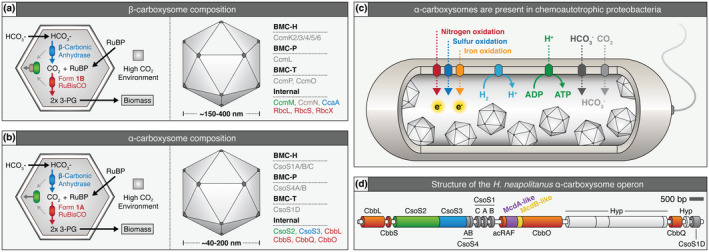
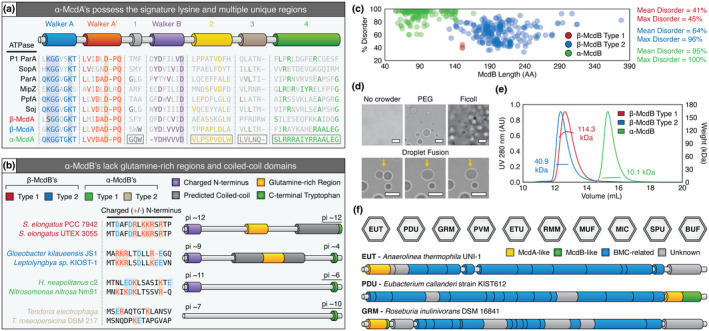
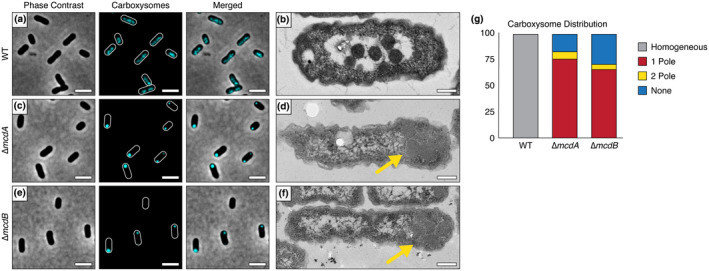
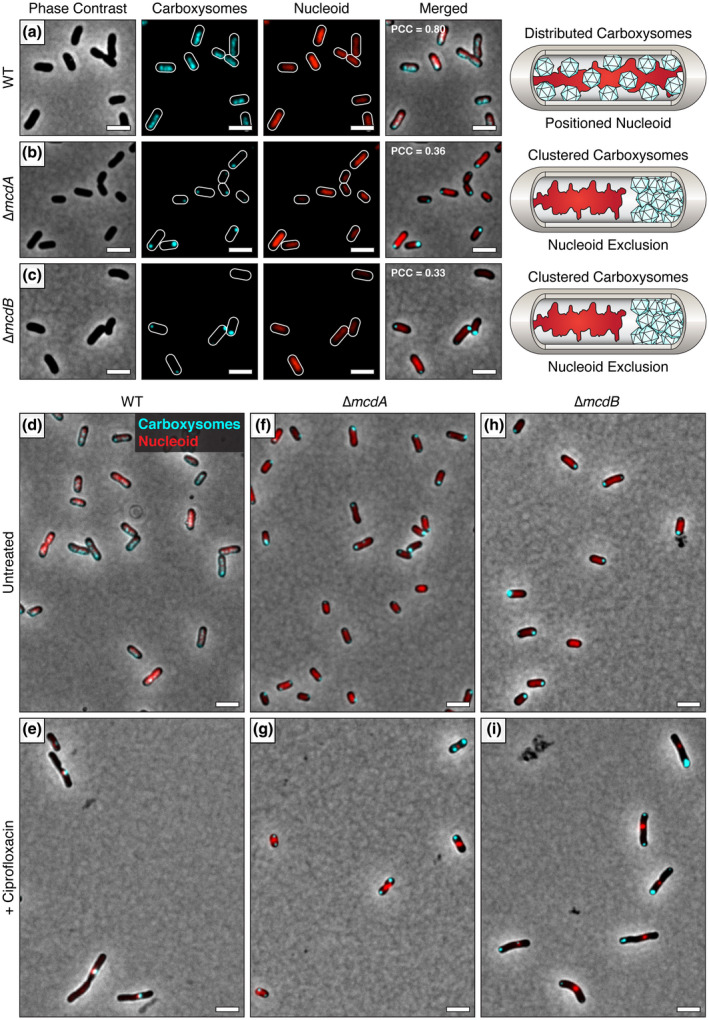
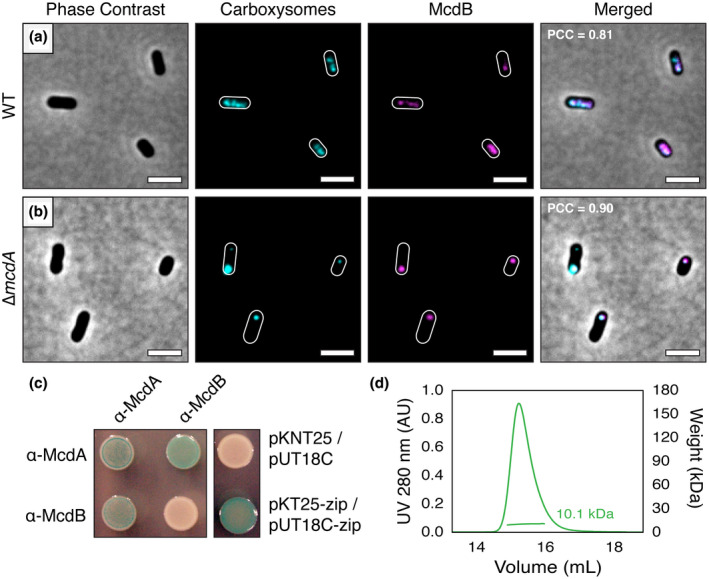
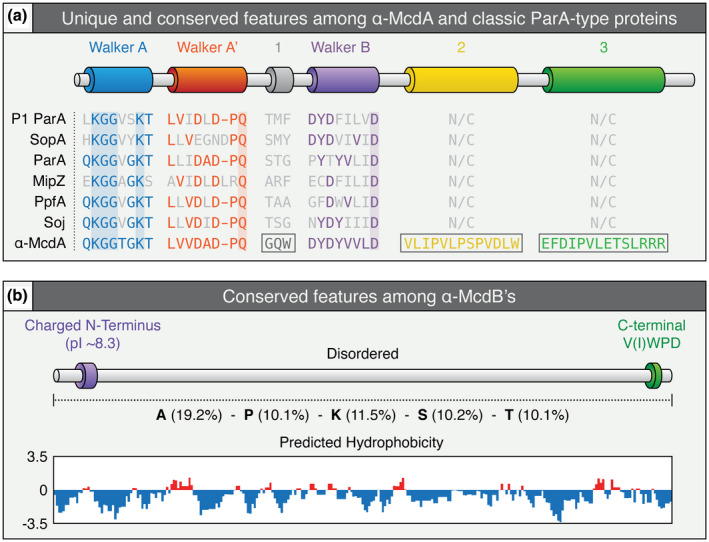
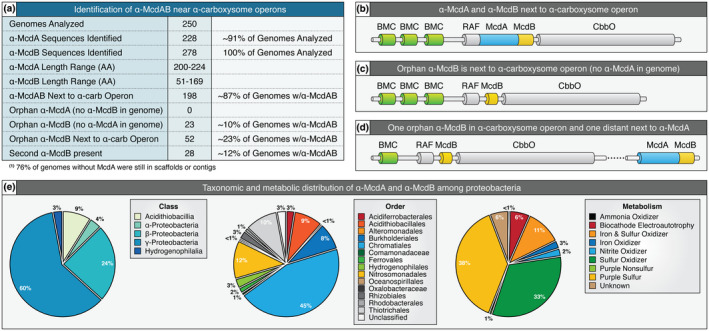
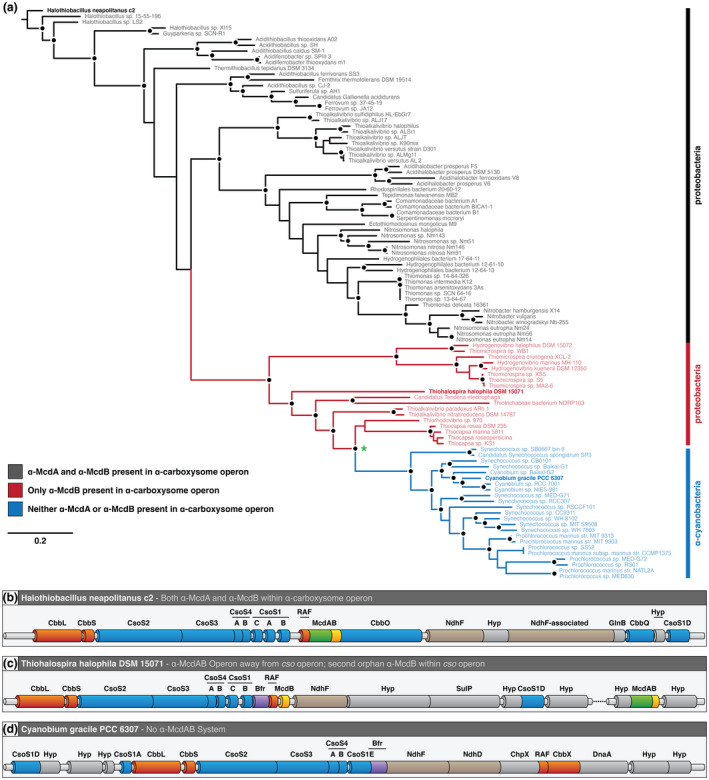
Carboxysomes are protein-based organelles essential for carbon fixation in cyanobacteria and proteobacteria. Previously, we showed that the cyanobacterial nucleoid is used to equally space out β-carboxysomes across cell lengths by a two-component system (McdAB) in the model cyanobacterium Synechococcus elongatus PCC 7942. More recently, we found that McdAB systems are widespread among β-cyanobacteria, which possess β-carboxysomes, but are absent in α-cyanobacteria, which possess structurally and phyletically distinct α-carboxysomes. Cyanobacterial α-carboxysomes are thought to have arisen in proteobacteria and then horizontally transferred into cyanobacteria, which suggests that α-carboxysomes in proteobacteria may also lack the McdAB system. Here, using the model chemoautotrophic proteobacterium Halothiobacillus neapolitanus, we show that a McdAB system distinct from that of β-cyanobacteria operates to position α-carboxysomes across cell lengths. We further show that this system is widespread among α-carboxysome-containing proteobacteria and that cyanobacteria likely inherited an α-carboxysome operon from a proteobacterium lacking the mcdAB locus. These results demonstrate that McdAB is a cross-phylum two-component system necessary for positioning both α- and β-carboxysomes. The findings have further implications for understanding the positioning of other protein-based bacterial organelles involved in diverse metabolic processes. PLAIN LANGUAGE SUMMARY: Cyanobacteria are well known to fix atmospheric CO into sugars using the enzyme Rubisco. Less appreciated are the carbon-fixing abilities of proteobacteria with diverse metabolisms. Bacterial Rubisco is housed within organelles called carboxysomes that increase enzymatic efficiency. Here we show that proteobacterial carboxysomes are distributed in the cell by two proteins, McdA and McdB. McdA on the nucleoid interacts with McdB on carboxysomes to equidistantly space carboxysomes from one another, ensuring metabolic homeostasis and a proper inheritance of carboxysomes following cell division. This study illuminates how widespread carboxysome positioning systems are among diverse bacteria. Carboxysomes significantly contribute to global carbon fixation; therefore, understanding the spatial organization mechanism shared across the bacterial world is of great interest.
羧基体是一种蛋白质细胞器,对于蓝细菌和变形菌的碳固定至关重要。此前,我们已经证明,在模式蓝细菌集胞藻 PCC 7942 中,通过一个由两个组件(McdAB)组成的系统,蓝细菌的核区被用来在细胞长度上均匀地隔开β-羧基体。最近,我们发现,McdAB 系统在β-蓝细菌中广泛存在,这些蓝细菌拥有β-羧基体,但在α-蓝细菌中却不存在,α-蓝细菌拥有结构和系统发育上截然不同的α-羧基体。人们认为,α-羧基体起源于变形菌,然后水平转移到蓝细菌中,这表明变形菌中的α-羧基体可能也缺乏 McdAB 系统。在这里,我们使用模式化的化能自养菌盐单胞菌属(Halothiobacillus neapolitanus)来证明,一个不同于β-蓝细菌的 McdAB 系统可以在细胞长度上定位α-羧基体。我们进一步证明,这个系统在含有α-羧基体的变形菌中广泛存在,而且蓝细菌可能从缺乏 mcdAB 基因座的变形菌中继承了一个α-羧基体操纵子。这些结果表明,McdAB 是一个跨门的双组分系统,对于定位α-和β-羧基体都是必要的。这些发现进一步说明了理解参与各种代谢过程的其他蛋白质细菌细胞器的定位的意义。