Department of Obstetrics and Gynecology, Key Laboratory for Major Obstetric Diseases of Guangdong Province, The Third Affiliated Hospital of Guangzhou Medical University, Guangzhou, Guangdong, China.
CAS Key Laboratory of Regenerative Biology, Guangdong Provincial Key Laboratory of Stem Cell and Regenerative Medicine, Guangzhou Institutes of Biomedicine and Health, Chinese Academy of Sciences, Guangzhou, China.
J Biol Chem. 2021 Jan-Jun;296:100464. doi: 10.1016/j.jbc.2021.100464. Epub 2021 Feb 25.
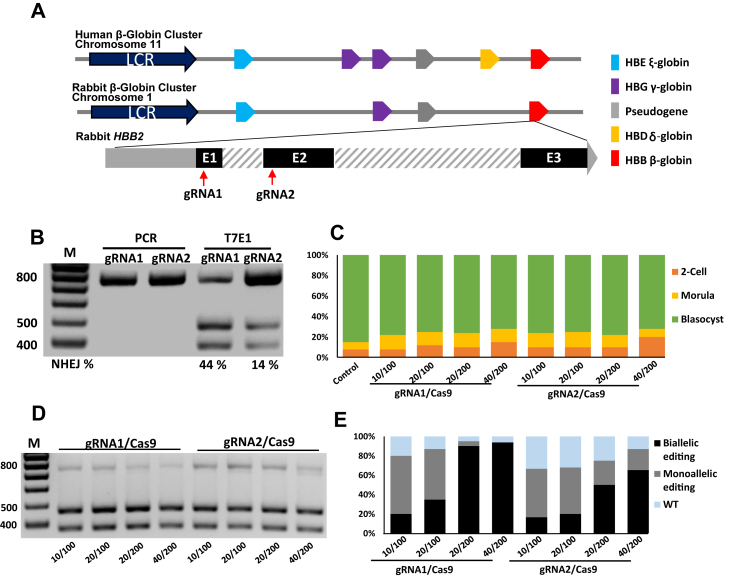
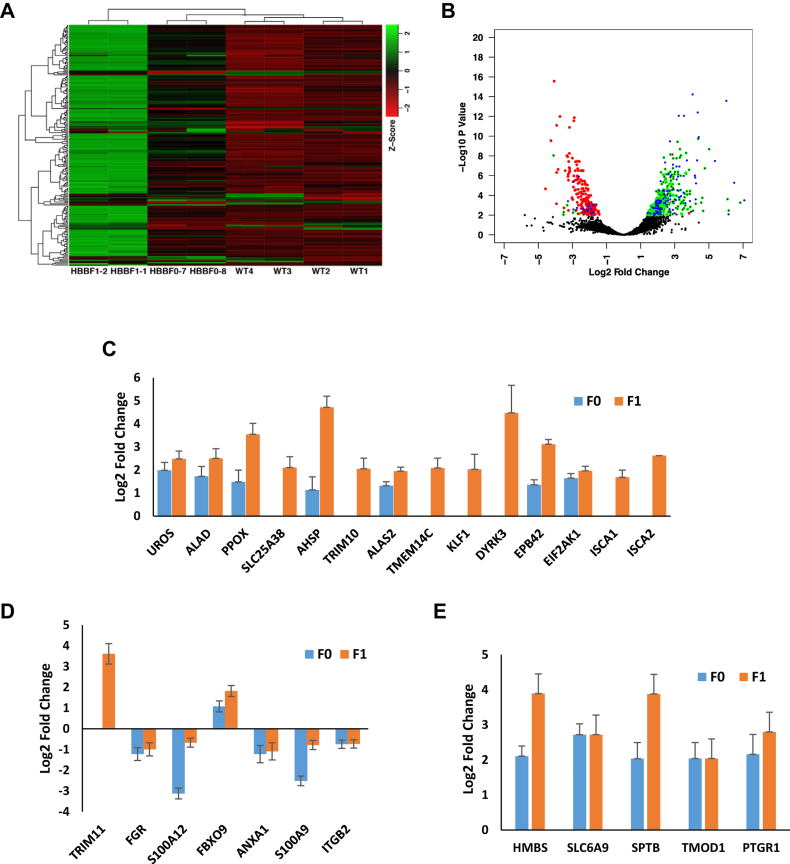
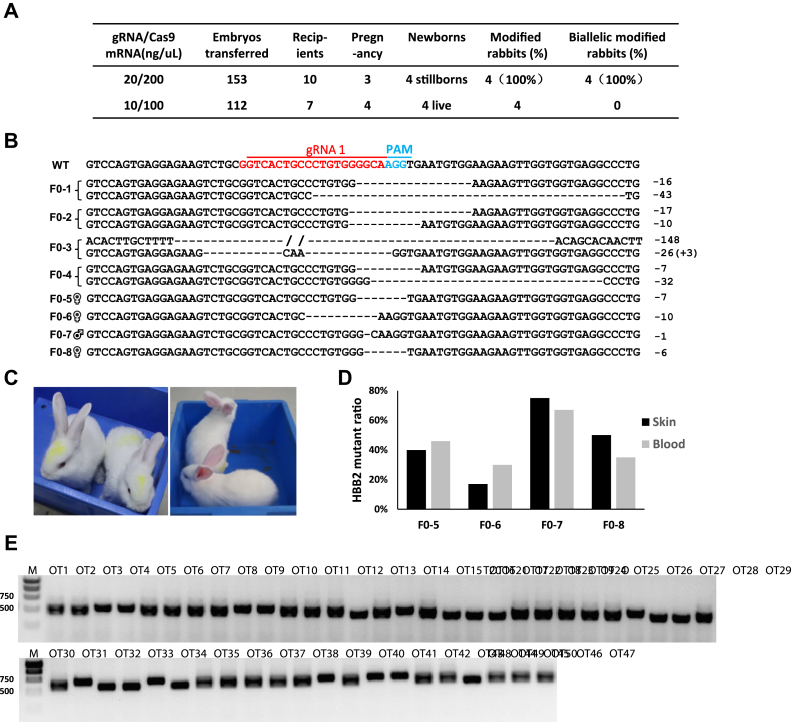
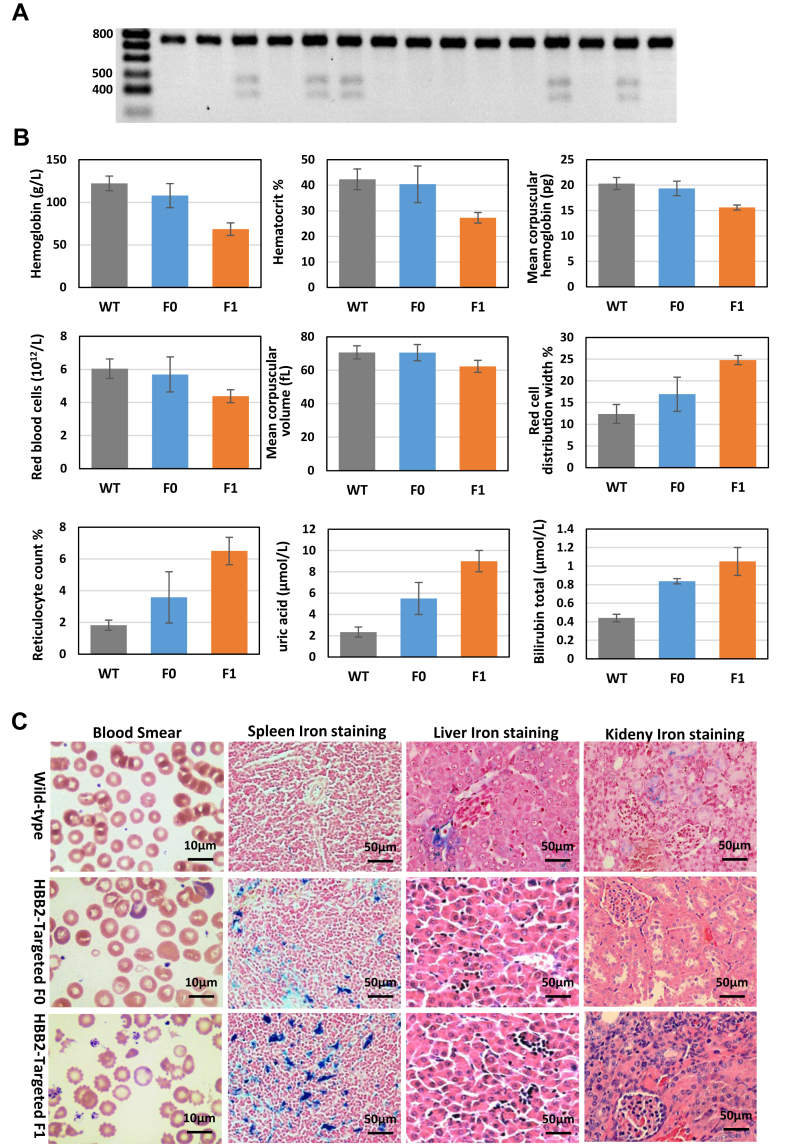
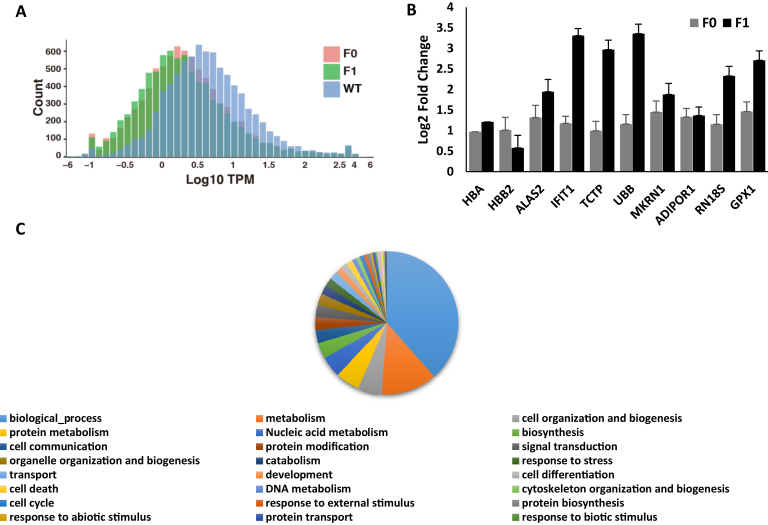
β-thalassemia, an autosomal recessive blood disorder that reduces the production of hemoglobin, is majorly caused by the point mutation of the HBB gene resulting in reduced or absent β-globin chains of the hemoglobin tetramer. Animal models recapitulating both the phenotype and genotype of human disease are valuable in the exploration of pathophysiology and for in vivo evaluation of novel therapeutic treatments. The docile temperament, short vital cycles, and low cost of rabbits make them an attractive animal model. However, β-thalassemia rabbit models are currently unavailable. Here, using CRISPR/Cas9-mediated genome editing, we point mutated the rabbit β-globin gene HBB2 with high efficiency and generated a β-thalassemia rabbit model. Hematological and histological analyses demonstrated that the genotypic mosaic F0 displayed a mild phenotype of anemia, and the heterozygous F1 exhibited typical characteristics of β-thalassemia. Whole-blood transcriptome analysis revealed that the gene expression was altered in HBB2-targeted when compared with WT rabbits. And the highly expressed genes in HBB2-targeted rabbits were enriched in lipid and iron metabolism, innate immunity, and hematopoietic processes. In conclusion, using CRISPR-mediated HBB2 knockout, we have created a β-thalassemia rabbit model that accurately recapitulates the human disease phenotype. We believe this tool will be valuable in advancing the investigation of pathogenesis and novel therapeutic targets of β-thalassemia and associated complications.
β-地中海贫血是一种常染色体隐性遗传性血液疾病,导致血红蛋白生成减少,主要由 HBB 基因突变引起,导致血红蛋白四聚体的β-珠蛋白链减少或缺失。重现人类疾病表型和基因型的动物模型对于探索病理生理学和新型治疗方法的体内评估非常有价值。兔子温顺的性情、较短的生命周期和较低的成本使它们成为有吸引力的动物模型。然而,目前尚无β-地中海贫血兔模型。在这里,我们使用 CRISPR/Cas9 介导的基因组编辑,高效地对点突变了兔子β-珠蛋白基因 HBB2,并生成了β-地中海贫血兔模型。血液学和组织学分析表明,基因型嵌合 F0 表现出轻度贫血表型,杂合子 F1 表现出典型的β-地中海贫血特征。全血转录组分析显示,与 WT 兔相比,HBB2 靶向的基因表达发生了改变。并且,HBB2 靶向兔中高表达的基因富集在脂质和铁代谢、固有免疫和造血过程中。总之,我们使用 CRISPR 介导的 HBB2 敲除,创建了一种β-地中海贫血兔模型,该模型准确地重现了人类疾病的表型。我们相信,这个工具将有助于推进对β-地中海贫血及其相关并发症的发病机制和新型治疗靶点的研究。