Hu Jinghua, Cui Jinluan, Xu Jin-Jing, Yin Xindao, Wu Yuanqing, Qi Jianwei
Department of Otolaryngology, Nanjing First Hospital, Nanjing Medical University, Nanjing, China.
Department of Radiology, Nanjing First Hospital, Nanjing Medical University, Nanjing, China.
Front Neurosci. 2021 Feb 11;15:621145. doi: 10.3389/fnins.2021.621145. eCollection 2021.
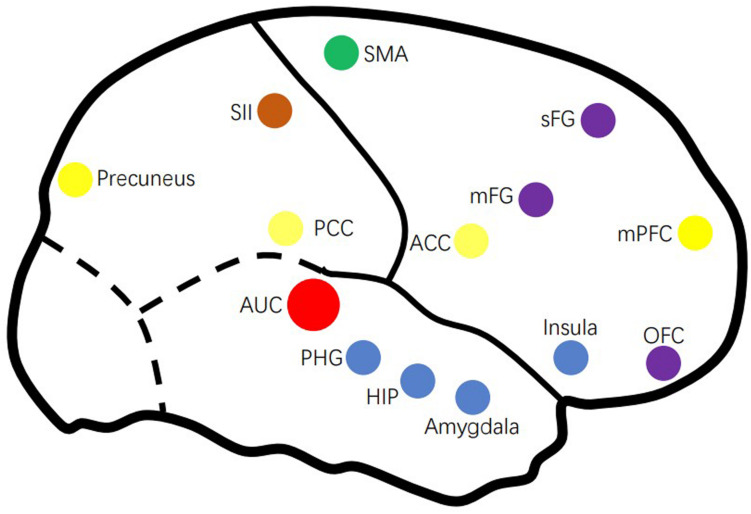
Tinnitus refers to sound perception in the absence of external sound stimulus. It has become a worldwide problem affecting all age groups especially the elderly. Tinnitus often accompanies hearing loss and some mood disorders like depression and anxiety. The comprehensive adverse effects of tinnitus on people determine the severity of tinnitus. Understanding the mechanisms of tinnitus and related discomfort may be beneficial to the prevention and treatment, and then getting patients out of tinnitus distress. Functional magnetic resonance imaging (fMRI) is a powerful technique for characterizing the intrinsic brain activity and making us better understand the tinnitus neural mechanism. In this article, we review fMRI studies published in recent years on the neuroimaging mechanisms of tinnitus. The results have revealed various neural network alterations in tinnitus patients, including the auditory system, limbic system, default mode network, attention system, and some other areas involved in memory, emotion, attention, and control. Moreover, changes in functional connectivity and neural activity in these networks are related to the perception, persistence, and severity of tinnitus. In summary, the neural mechanism of tinnitus is a complex regulatory mechanism involving multiple networks. Future research is needed to study these neural networks more accurately to refine the tinnitus models.
耳鸣是指在没有外部声音刺激的情况下感知到声音。它已成为一个影响所有年龄组尤其是老年人的全球性问题。耳鸣常伴有听力损失以及一些情绪障碍,如抑郁和焦虑。耳鸣对人们的综合不良影响决定了耳鸣的严重程度。了解耳鸣的机制及相关不适可能有助于预防和治疗,进而使患者摆脱耳鸣困扰。功能磁共振成像(fMRI)是一种用于表征大脑内在活动并让我们更好地理解耳鸣神经机制的强大技术。在本文中,我们综述了近年来发表的关于耳鸣神经影像学机制的功能磁共振成像研究。结果揭示了耳鸣患者各种神经网络的改变,包括听觉系统、边缘系统、默认模式网络、注意力系统以及其他一些涉及记忆、情绪、注意力和控制的区域。此外,这些网络中功能连接性和神经活动的变化与耳鸣的感知、持续存在和严重程度有关。总之,耳鸣的神经机制是一种涉及多个网络的复杂调节机制。未来需要更准确地研究这些神经网络以完善耳鸣模型。